Vinyl Fence Maintenance Across the Tri-State Region: What Actually Needs Doing and When

Vinyl fencing is genuinely low-maintenance. In practical terms, that means one annual cleaning and two short inspections. It does mean no maintenance at all, and the homeowners who treat those two things as identical end up with green-streaked panels, posts that lean a little more each spring, and gates that stopped closing right sometime around year three.

Based on what Tri-State sees across installations in Gloucester, Camden, and Burlington counties, the problems that show up on vinyl fences are almost always preventable. This guide covers what an installed vinyl fence actually needs: a realistic cleaning schedule, two seasonal inspections, and a clear line between what you can handle yourself and when the fence needs a professional.

Still deciding if vinyl is the right material for your yard? The pros and cons of vinyl fencing and vinyl fence lifespan pages cover what South Jersey conditions actually do to a fence over time, before you commit.

Contact Us

Success! Your quote request was submitted.
You will hear from one of our team members shortly.
Tri-State Fence & Deck Inc. License #13VH13604500.

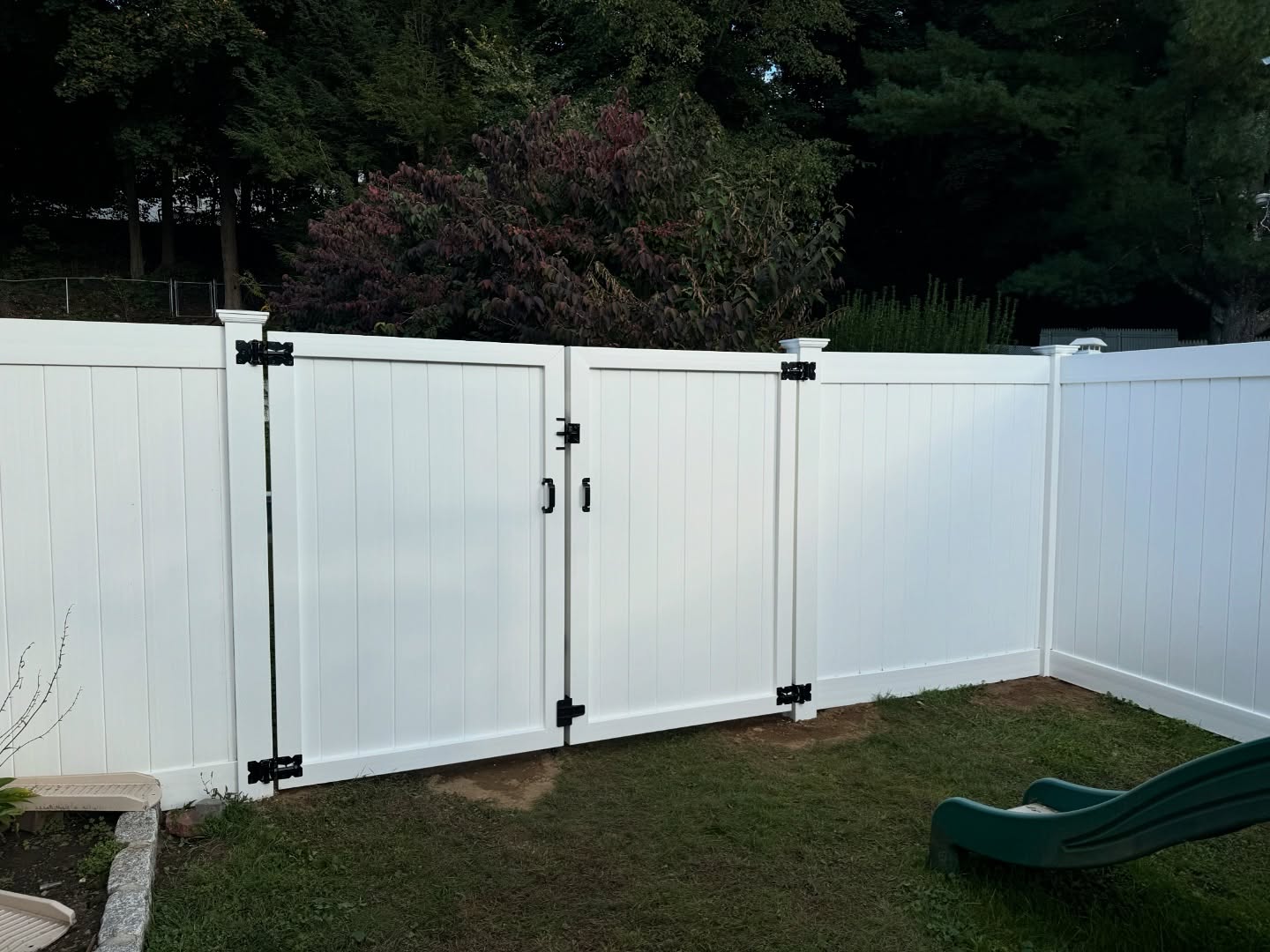
Full Privacy (Solid Panel)

Here is the realistic picture for most yards in this region:

  • One thorough cleaning per year (usually April or May)
  • A 20-minute spring inspection after the final hard frost
  • A 20-minute fall inspection before the ground freezes
  • Gate hardware is lubricated once annually

That is it for most fences in most years. Yards with heavy tree canopies, north-facing fence runs, or sections adjacent to mulched garden beds will require two cleanings annually. Open-lot properties in newer developments in Washington Township or Harrison Township rarely need more than spring cleaning.

Compare that to wood fencing, which needs staining or painting every two to three years, and the low-maintenance case holds up. The schedule directly affects your vinyl’s lifespan.

From the Field

The fences that age the worst in South Jersey are not the cheapest materials. They are the ones that got ignored for three or four years. A single annual cleaning prevents most of what we see when customers call to ask why their five-year-old fence looks ten years old.

What Affects South Jersey Area Vinyl Fences Over Time

Tongue-and-Groove Construction

Why South-Facing Panels Go Chalky
Post Stability and Ground Movement in South Jersey
Tri-State Fence & Deck Inc. License #13VH13604500.

How Soil and Frost Conditions Differ in Southeastern PA and Northern Delaware

Southeastern Pennsylvania — Chester County, Delaware County, Montgomery County — sits on the Piedmont, not the Coastal Plain. The soils here are heavier: weathered clay and silt over metamorphic bedrock, with slower drainage and more lateral pressure on fence posts through wet-dry cycles than South Jersey's sandy loam. Post-movement is a greater concern in these counties, particularly on properties with low-lying sections or seasonal drainage issues.

Pennsylvania also follows a 36-inch frost-depth standard across the southeastern counties — the same depth that contractors use as a safety margin in North Jersey. Posts set to that depth in concrete footings handle freeze-thaw reliably. Posts set shallow in Piedmont clay are the ones that cause problems.

Northern Delaware — New Castle County, which includes Wilmington, Newark, Bear, and Middletown — is closer to South Jersey's conditions than to the PA Piedmont. Soils are a mix of sandy loam and silt; frost depth tracks within the South Jersey range; and the primary maintenance drivers are the same: summer mildew in shaded yards, UV oxidation on south-facing panels, and spring post-inspections after the final hard frost.

The cleaning schedule and inspection checklist on this page apply across all three regions. The one practical difference: homeowners on heavier Piedmont clay in Chester and Delaware County should pay closer attention to post-plumb at each spring inspection than their South Jersey counterparts with sandier soil.

NJ, PA, & DE Vinyl Fence Maintenance Schedule

The schedule below applies to South Jersey, Southeastern Pennsylvania, and Northern Delaware. Frost timing shifts slightly in the PA counties — plan the spring inspection for early-to-mid March in Chester and Delaware Counties, where the final hard frost typically occurs one to two weeks later than in Gloucester County.

Season Primary Task What to Inspect Notes
Spring Full cleaning after winter Post plumb, rail seating, gate function First post check after final hard frost (late Feb to mid-March)
Summer Spot clean as needed Oxidation on south-facing panels, mildew under the canopy Mildew grows fastest from July through August in shaded yards
Fall Full cleaning before winter Gate hardware, debris in rail channels, post caps Clear lattice tops and channels before the first freeze
Winter Monitor only Do not force frozen gates Keep rock salt away from post bases — it accelerates concrete degradation
Tri-State Fence & Deck Inc. License #13VH13604500.

How to Clean a Vinyl Fence

The baseline for most properties: warm water, mild dish soap (Dawn or equivalent, not car wash soap, which has different surfactants), a soft-bristle brush or microfiber cloth, and a garden hose.

Rinse from top to bottom throughout the process. Always top to bottom. Dirty water running down over sections you have already cleaned is the most common reason a fence still looks streaked after an hour of work.

Removing Mildew and Green Algae

A 1-to-3 mix of white vinegar to water, left to dwell for five minutes before scrubbing, handles most mildew on South Jersey fences. Apply with a soft brush, scrub, then rinse. For heavier algae buildup, common on sections near mulched beds in Cherry Hill and on heavily shaded Burlington County lots, an oxygen-based cleaner, like Wet & Forget, applied per label directions, is more effective. Follow the dwell time. The chemistry needs that time to work.

Removing Stubborn Stains

Match the cleaner to the stain type. Three common types, three different approaches:

  • Rust stains from metal furniture legs or iron sprinkler heads: Bar Keepers Friend or an oxalic acid-based cleaner, applied carefully and rinsed thoroughly
  • Mulch tannin stains (brown-orange streaks from hardwood mulch contact): warm soapy water if caught early, a melamine foam pad for set stains
  • Hard water mineral deposits from sprinkler over-spray: white vinegar solution or CLR applied with a soft cloth. Never use abrasive pads. They scratch the surface and create grooves where mildew embeds next season.

Pressure Washing: What to Know

You can pressure wash vinyl fencing. Start at 500-800 PSI and increase only if needed. Use a 40-degree fan tip, keep the nozzle at least 12 inches from the surface, and spray downward throughout.

If You Are Using a Pressure Washer

Never direct pressure up into post caps or into rail-to-post connections. Forcing water into those joints traps moisture that can take seasons to cause visible problems. Pressure washing also removes surface mildew residue, but does not kill the root growth underneath. Scrubbing with the vinegar solution is still required for established mildew. The pressure washer handles the rinse, not the cure.

Cleaning Products That Are Safe on Vinyl Fencing

Some manufacturer warranties specify approved cleaning agents and exclude certain chemicals. Check your specific product documentation before using anything beyond soap and water.

Check Your Warranty Before Reaching for Bleach

Some manufacturers caution against using chlorine bleach on vinyl, and it often appears in warranty exclusion language. When in doubt, white vinegar or a manufacturer-approved cleaner is the safer default. Both are effective against mildew without the risk.

Product Safe to Use Notes
Mild dish soap Yes Standard first choice
White vinegar solution Yes Effective on mildew, safe for all vinyl grades
Oxygen-based cleaners (Wet & Forget) Yes, per label Follow the manufacturer's dwell time
Magic Eraser / melamine foam Light pressure only Aggressive scrubbing can dull the gloss finish over time
Chlorine bleach Use with caution Check your specific warranty before use
Acetone or paint thinner No Permanently damages surface finish
Abrasive scrub pads or steel wool No Scratches the surface, creates grooves where mildew embeds
Tri-State Fence & Deck Inc. License #13VH13604500.

Why Vinyl Fences Look Dirty Even After Cleaning

Three conditions mimic a dirty fence but are not dirt.

Oxidation film. 

The chalky haze that develops on white vinyl from prolonged UV exposure looks like grime but wipes off with a vinyl surface restorer. It is not biological growth. Annual cleaning removes it before it accumulates.

Roof and gutter runoff. 

Sections of fence below rooflines or near downspouts collect whatever the roof sheds: algae, mineral deposits, and debris staining. The pattern gives it away. The discoloration runs in vertical streaks from the top rail down rather than distributing evenly across the panel face.

Sprinkler overspray. 

Irrigation heads that hit the fence consistently leave hard-water scale, usually as a white haze or orange-brown deposits near the base. Adjusting the heads to clear the fence solves the source. White vinegar solution handles what is already there.

Structural Inspection in South Jersey: The Part Homeowners Miss

Cleaning is cosmetic. Structural maintenance is what keeps the fence standing straight.

A fence that looks clean but has posts that have shifted two inches off plumb has a structural problem. The spring and fall inspections are short — 20 minutes on most properties — and the spring one is the more important of the two.

Spring inspection checklist (after the final hard frost):
Fall inspection checklist (before the first freeze):

Frost Heave Watch: South Jersey Timing.

The highest-risk window for post-freeze-thaw movement is late February through mid-March in Gloucester, Camden, and Burlington Counties. Check post plumb during this window, after the final hard frost but before the ground firms back up. A post that has heaved is easiest to identify while conditions are still in flux. Posts set to 30 inches or deeper in properly poured concrete footings are resistant to this. Posts set shallow are the ones that move.

Tri-State Fence & Deck Inc. License #13VH13604500.

Why Some Vinyl Fences Need More Maintenance Than Others

Not all vinyl fences age equally, and the difference usually starts at installation rather than with the fence itself.

  • Posts set shallow move more through freeze-thaw cycles and require more frequent structural attention.
  • Panels installed without adequate expansion spacing develop stress at rail connections over time, particularly on longer fence runs.
  • Lower-grade vinyl compounds oxidize faster and recover less well from cleaning.

Maintenance issues are often installation issues that show up later. If you are seeing recurring post movement, persistent panel stress, or early fading despite regular cleaning, those are signals worth investigating at the installation level, not just the maintenance level.

Five Mistakes That Cause Long-Term Damage to South Jersey Vinyl Fences

These come directly from what contractors see on service calls and warranty inspections.

  1. 1. Pressure washing at too high a PSI or too close. Starting at 500 PSI and working up is the correct approach. Starting at 2,400 PSI, pointed directly at a panel face is how you force water behind rail connections.
  2. 2. Letting mulch sit against panel bases. Hardwood mulch in direct contact with the bottom of your fence boards transfers tannin stains and accelerates mildew accumulation at the base. Keep a gap between the mulch line and the fence.
  1. 3. Ignoring sprinkler overspray. Irrigation heads that hit the fence year after year leave hard water scale that cleaning products struggle to remove once it sets. Adjust the heads.
  1. 4. Skipping the spring post inspection. A post that has moved a half-inch is a straightforward fix. A post that has moved two inches over three winters, loaded the panels, and stressed the rail connections is a repair project.
  2. 5. Treating a shifting post as normal settling. Some movement in the first year is normal as the concrete cures and the ground adjusts. Posts that continue to move year over year are telling you something about installation depth or soil conditions. That conversation belongs with your contractor, not a shovel.
Tri-State Fence & Deck Inc. License #13VH13604500.

Minor Repairs South Jersey Homeowners Can Handle

Reseating a loose rail.
Vinyl rails sit in routed channels in the post and are not fastened. A rail that has slipped out of its channel usually reseats by hand or with light mallet pressure. If the channel itself is cracked, that is a post issue, not a rail fix.

Replacing a single picket or panel section.
Standard vinyl pickets and panels are field-replaceable. White is straightforward. Tan, almond, or two-tone panels are a different situation: older panels fade from their original color over time, and buying a replacement without confirming the exact manufacturer and product line usually results in a visible mismatch. Color stability over time is one of the clearer differences between vinyl and wood. Vinyl vs. Wood Fence covers how they compare after several South Jersey winters. Call your installer or a fence supply house with the manufacturer and product line before ordering replacement sections.

Lubricating gate hardware.
Silicone spray on hinge pins, latch mechanisms, and roller hardware once per year. Petroleum-based lubricants attract grit and wear the hardware faster.

What Happens When Maintenance Gets Skipped

Skipped maintenance does not immediately ruin a vinyl fence. It creates compounding problems.

  • Mildew left stains through one season. Left through two or three seasons, it discolors permanently.
  • Post movement caught early is an assessment call. Caught after two or three winters of progression, it may require post-replacement and panel realignment.
  • Gate hardware that goes unlubricated wears hinge pins and latch components. The repair cost is well above the cost of silicone spray.

Most of these issues start small and cost little to address early. Left alone, they become structural repairs.

Tri-State Fence & Deck Inc. License #13VH13604500.

When Maintenance Becomes a Contractor Call

Some things are not cleaning or DIY repair problems. They are structural, and treating them as maintenance delays the actual fix.

  • Posts more than a half-inch off plumb
  • Post bases cracked or separated from their concrete footings
  • Frost-heaved posts that do not plumb correctly after the ground thaws
  • Storm damage that has stressed rail-to-post connections
  • Gates that no longer close or latch under normal operation
  • Panels that do not respond to restoration products after repeated cleaning

If the fence is within the workmanship warranty period, call the contractor before attempting any structural repair. Most warranties, including Tri-State's 3-year transferable workmanship warranty, require the original contractor to perform covered structural repairs for the warranty to remain valid. That call costs nothing. A repair done outside warranty terms can.

If you are not sure whether what you are seeing is cosmetic or structural, it is worth having it looked at early. Most issues are straightforward to identify before they turn into repairs. Tri-State's warranty page covers what the 3-year workmanship warranty includes and how the transferable coverage works.

Frequently Asked Questions

How often should I clean my vinyl fence in South Jersey?
Can I pressure wash my vinyl fence?
What actually removes mold from a white vinyl fence?
Why does my white vinyl fence look yellow near the bottom?
Does my warranty cover structural repairs if I call a contractor?

More on Vinyl Fencing
Vinyl Fencing Overview
Types of Vinyl Fencing
Vinyl Fence Lifespan
Pros and Cons of Vinyl Fencing
Does Vinyl Fencing Crack or Warp?
Vinyl vs. Wood Fence

REQUEST YOUR ESTIMATE

Working With Tri-State Fence & Deck

Tri-State Fence & Deck is a family-owned contractor based in Sewell, NJ — the heart of Gloucester County — licensed under NJ License #13VH13604500, fully insured, and operating across Gloucester, Camden, and Burlington counties, plus parts of Southeastern Pennsylvania and Northern Delaware.

Vinyl fencing is our most-installed product. The observations throughout this page come from nearly 20 years of residential installs across South Jersey's clay soils, frost cycles, and wind-exposed lots — not from a manufacturer's spec sheet.

Every project includes a 3-year transferable workmanship warranty, direct communication with the owners from estimate through walkthrough, and post depths and footing sizes matched to the actual site — not a one-size spec applied across every job.

Schedule Your Free Estimate
(856) 230-7082
License #13VH13604500

Contact Us Today to Begin Your Project

Success! Your quote request was submitted.
You will hear from one of our team members shortly.