Pros and Cons of Vinyl Fencing: A Local Contractor's Guide

If you're comparing vinyl against wood, aluminum, or chain link, the questions that matter are durability in our climate, appearance over time, and whether the upfront cost actually pencils out. This guide covers the specific soil conditions, climate stresses, and permit requirements of South Jersey, Southeastern Pennsylvania, and Northern Delaware.

Contact Us

Success! Your quote request was submitted.
You will hear from one of our team members shortly.
Tri-State Fence & Deck Inc. License #13VH13604500.

Why Vinyl Fencing Performs Differently Across the Tri-State Region

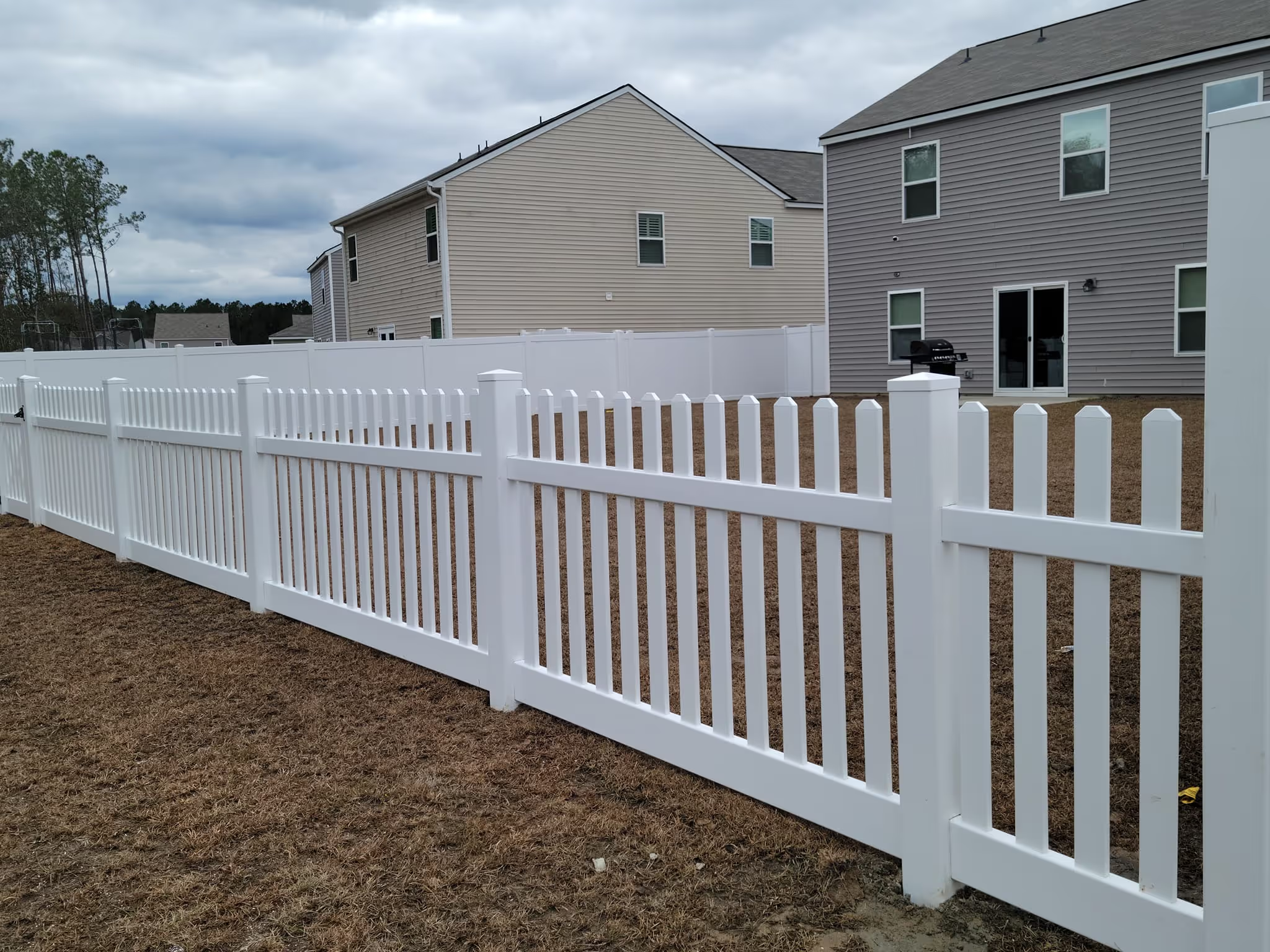
The single biggest threat to a fence in our region is frost heave. In New Jersey's Gloucester and Camden counties, frost depth typically reaches 36 inches under the state building code. Frost depth in Delaware follows its own building code and should always be confirmed locally. If a contractor sets your fence posts at 24 inches to save time and concrete, the soil moisture will freeze, expand, and physically push the posts upward. This ruins the alignment of rigid vinyl panels. We set every vinyl fence post below the local frost line and pack it in concrete. That's the only reliable fix. 

The soil profile across our service area varies dramatically. The sandy loam in Burlington County requires wider post holes to ensure the concrete footing grips adequately. Conversely, clay-heavy soils retain water, so drainage around the post base must be carefully managed to prevent the concrete from degrading. In Southeastern Pennsylvania's Chester and Delaware counties, the soil transitions to heavier clay loam, which demands the same frost-depth rigor as South Jersey.

The Real Advantages of Vinyl Fencing

Tri-State Fence & Deck Inc. License #13VH13604500.

White Vinyl: The Tri-State Standard

White vinyl is the most popular fence material we install across our service area, and for good reason. It performs exceptionally well in our climate and carries significant advantages in the local real estate market.

Does White Vinyl Turn Yellow?

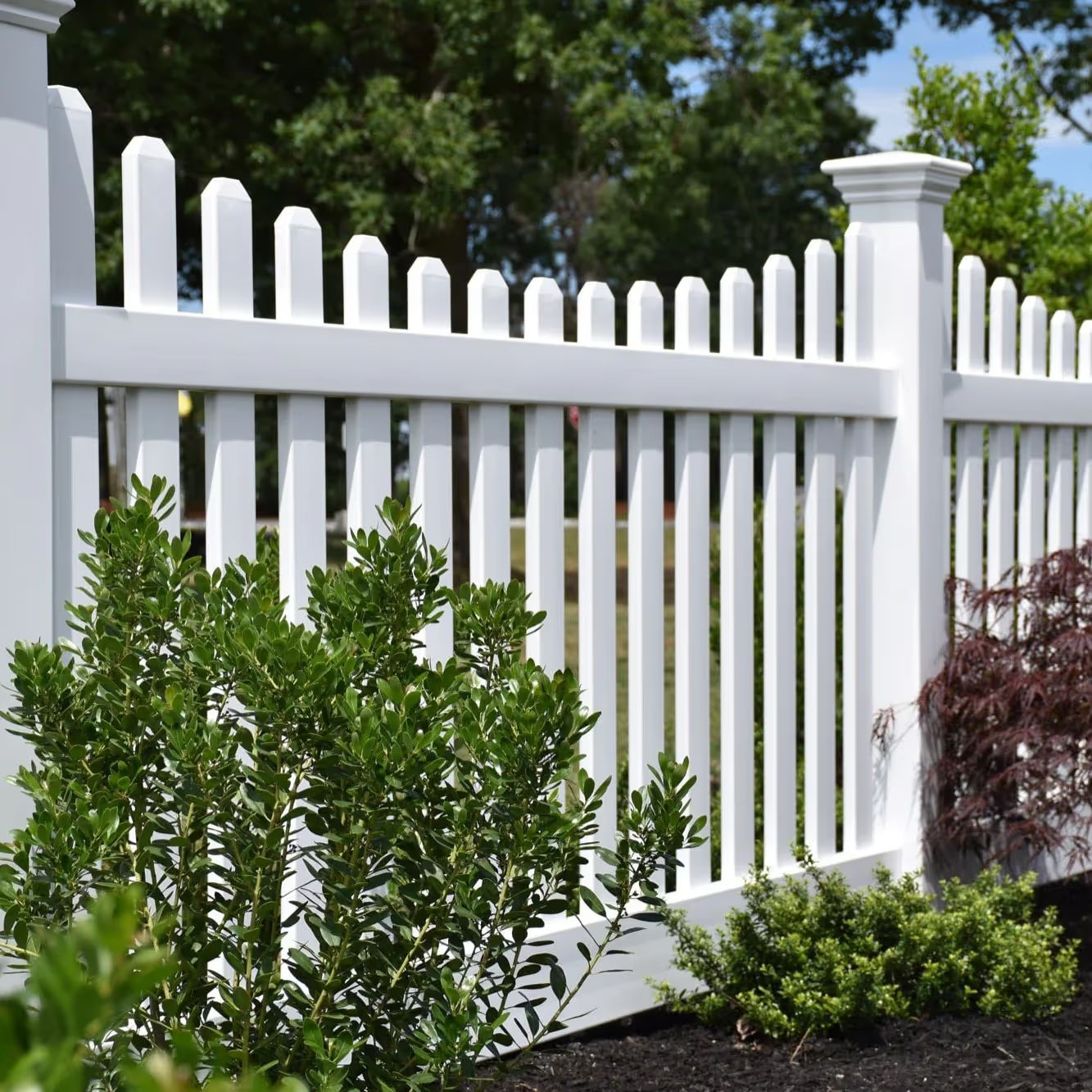
No, not if you choose the right product. Premium white vinyl uses virgin PVC (not recycled-content compounds) and contains a higher concentration of UV stabilizers. When you see a white vinyl fence that has discolored, it is almost always a lower-grade product installed years ago or one that was not properly maintained. High-quality white vinyl, properly installed and given a seasonal wash, will maintain its color for the life of the fence. For more on material grades and quality, explore our Vinyl Fencing Overview.

Why HOAs Require White Vinyl

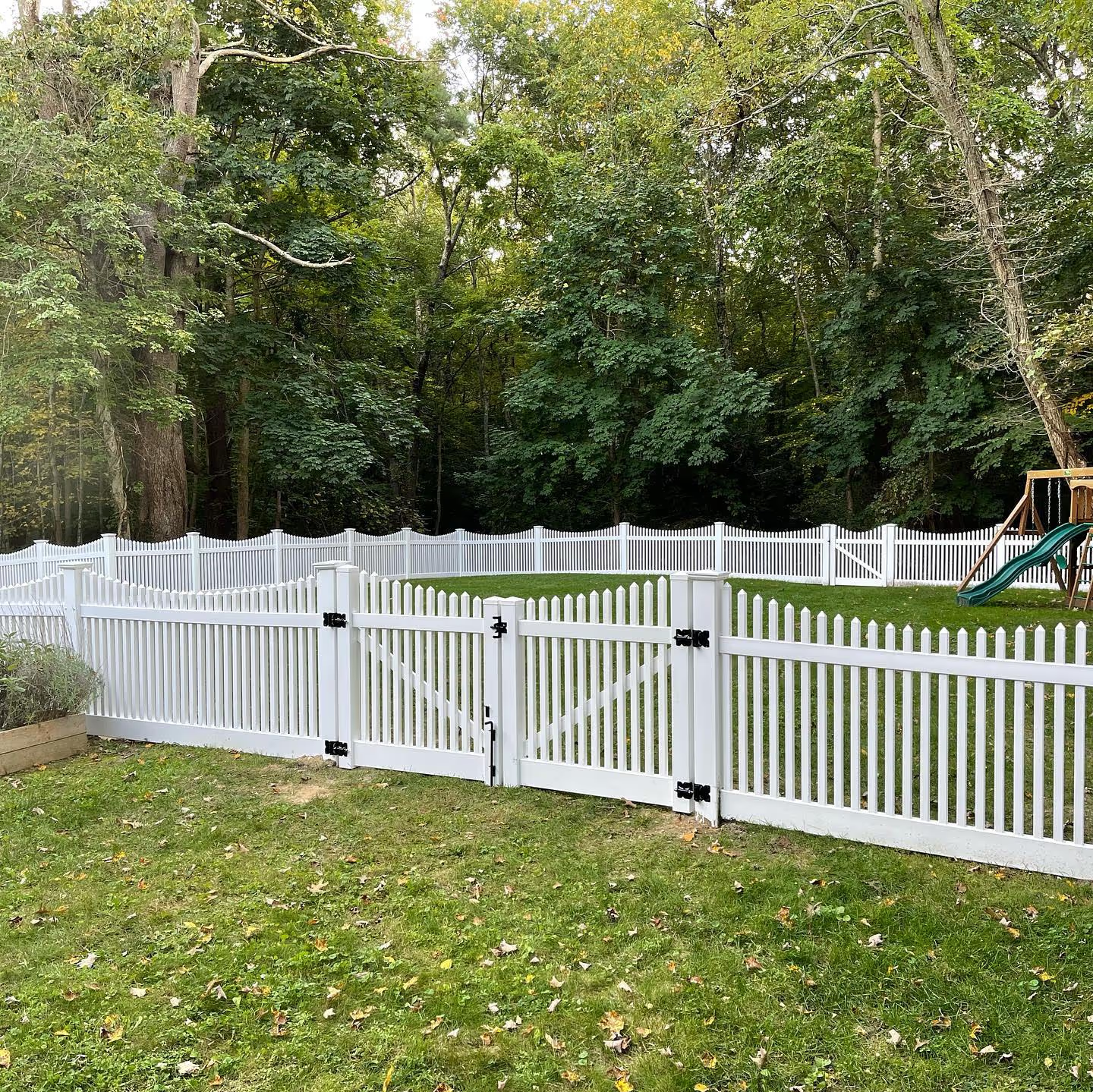
If you live in a planned community in Voorhees, Washington Township, Mount Laurel, or Media, your HOA likely specifies white vinyl by name in its architectural guidelines. White vinyl guarantees aesthetic consistency across the neighborhood and signals to appraisers and future buyers that the community is well-maintained. We provide the exact specification sheets and material samples that your architectural review board requires for approval.

Resale Value and Appraisal Impact

In South Jersey's competitive residential real estate market, a well-maintained white vinyl privacy fence is considered an asset by appraisers and buyers alike. In our experience across Gloucester and Camden County projects, white vinyl privacy fencing is consistently received well by buyers and appraisers as a sign of a well-maintained property. Conversely, a wood fence in poor condition or a chain link fence in a residential backyard can actually detract from a home's appeal. If you are planning to stay in your home for 10 years or more, a white vinyl fence is a genuine value-add at resale.

The Genuine Limitations and Failure Modes

Tri-State Fence & Deck Inc. License #13VH13604500.

Quick Comparison: Vinyl vs. Wood vs. Aluminum

Feature Vinyl Fencing Wood Fencing Aluminum Fencing
Best For Total privacy, zero maintenance, HOA communities Traditional aesthetics, lower upfront cost Open sightlines, pool enclosures, modern aesthetics
Maintenance Wash only Stain/seal every 3–5 years Wash only
Privacy Level Complete privacy available Complete privacy available Open sightlines only
Lifespan 20–30+ years 10–15 years 30+ years
Repair Style Full panel replacement Individual board replacement Section replacement
HOA Approval Highly favored Often restricted Highly favored

Navigating Local Regulations and HOA Approvals

In New Jersey, residential fence permit requirements are governed by local ordinance. Most municipalities require permits for fences, though the specific rules, including height limits, setbacks, and corner lot restrictions, vary by town. For example, many townships restrict front yard fences to 3 or 4 feet in height while allowing 6-foot privacy fences in the rear and side yards. We handle the spec sheets and approval docs. See our Fence Permit Requirements guide for town-by-town details.

In Pennsylvania, Chester and Delaware counties follow similar height and setback rules, though the specific ordinances vary by municipality. Upper Darby and Drexel Hill have their own permitting processes, and we are familiar with the requirements in each. In Delaware, New Castle County follows the Delaware Uniform Construction Code, which has its own frost depth and fence specifications that differ from those in New Jersey. 

Tri-State Fence & Deck Inc. License #13VH13604500.

Common Questions About Vinyl Fencing

Do I need a permit for a vinyl fence in Voorhees or Washington Township?
What are the HOA fence rules in Mount Laurel and Media?
How much wind can a vinyl fence withstand in open areas?
Can vinyl fencing be repaired if it cracks from impact?
How do I clean green mildew off my vinyl fence?
Tri-State Fence & Deck Inc. License #13VH13604500.

The Bottom Line

Post depth and concrete spec matter as much as the PVC grade. Get both right, and you won't touch this fence for 25 years. Wood requires constant maintenance; vinyl requires a seasonal wash. Over two decades, the total cost of ownership strongly favors vinyl, even accounting for the higher upfront investment.

For over 20 years, we've installed thousands of fences across South Jersey (Gloucester, Camden, and Burlington counties), Southeastern Pennsylvania (Delaware and Chester counties), and Northern Delaware (New Castle County). We pull the permits, call 811 before every dig, and warranty the installation, not just the material. That's the difference between a fence that lasts and one that leans after the first winter.

References:

  1. New Jersey Uniform Construction Code (UCC) — Frost depth requirements and pool barrier specifications (N.J.A.C. 5:23-3.14)
  2. Delaware Uniform Construction Code — Frost depth and residential fence specifications
  3. International Code Council (ICC) — Thermal expansion coefficients for PVC materials
  4. American Fence Association — Industry standards for vinyl fence installation and lifespan estimates
  5. New Jersey Department of Community Affairs (DCA) — Municipal fence permit requirements and local ordinance variations
REQUEST YOUR ESTIMATE

Ready to Install Vinyl Fencing?

If you're ready to explore vinyl fencing for your property, we can walk you through the options, confirm permit requirements for your specific municipality, and provide a detailed installation plan. Contact us today for a free consultation.

Schedule Your Vinyl Fence Estimate
(856) 230-7082
License #13VH13604500

Contact Us Today to Begin Your Project

Success! Your quote request was submitted.
You will hear from one of our team members shortly.