Vinyl Fence Types—Styles, Construction & What Holds Up in South Jersey

Vinyl fencing isn't one product. It's a family of distinct fence systems — each built differently, each suited to a specific job on a specific property. The style is what you see from the street. The construction method is what determines how it holds up after five winters and a few Nor'easters.

After two decades of installations across Gloucester, Camden, and Burlington counties in South Jersey, plus parts of Southeastern Pennsylvania and Northern Delaware, the differences between these systems show up clearly — in how panels age, how posts hold their position, and how well the fence looks ten years after the install. This page covers both layers: what each style is and how it's put together.

Contact Us

Success! Your quote request was submitted.
You will hear from one of our team members shortly.

Vinyl Fence Styles

Tri-State Fence & Deck Inc. License #13VH13604500.

Full Privacy (Solid Panel)

Full privacy fencing runs boards edge-to-edge with no gaps between them. It's the most requested residential style across South Jersey — the default choice when the goal is a visual barrier between properties, a contained yard for children or pets, or complete sightline blockage.

Key specs at a glance:

Detail Standard
Available heights 4ft, 5ft, 6ft, 8ft
Most common in NJ rear yards 6ft
Front yard limit Commonly 4ft in residential zones — confirm with your township, as some municipalities set this as low as 3ft
Panel assembly Tongue-and-groove or routed rail

What we've seen: exposed lots fail at the post, not the panel

Solid panels catch wind across their full face — and that load travels straight down to the post footing.

"We've pulled out 5-year-old privacy fences where the panels were completely fine, and the posts had started to heave — footings sized for a sheltered backyard, installed on a corner lot. At Tri-State, we size footings to the site, not just the style. The fence type wasn't the problem. The install was."

Vinyl fence installation in South Jersey

Shadowbox

Shadowbox fencing alternates pickets on both faces of the rail — one board on the front face, the next on the back, offset so there are no direct sightlines through the fence. From straight on, it reads as fully private. Air, however, moves through the offset gaps between boards.The practical result: less lateral stress on posts over time, especially on exposed lots.

Shadowbox fencing alternates pickets on both faces of the rail — one board on the front face, the next on the back, offset so there are no direct sightlines through the fence. From straight on, it reads as fully private. Air, however, moves through the offset gaps between boards.The practical result: less lateral stress on posts over time, especially on exposed lots.

  • Solid privacy panels present their full face to the wind
  • Shadowbox panels allow some air to pass through the offset gaps
  • Installers widely regard this as reducing wind-related stress on exposed sites — though the engineering literature on the exact magnitude is mixed
  • Over the life of the fence, that difference tends to show up in post stability and rail alignment on visibly exposed lots

Most descriptions stop at "allows airflow." More precisely: shadowbox is a privacy fence with built-in wind relief — a practical consideration as much as an aesthetic one.

What we've seen: same yard, less stress on the posts over time
The difference between shadowbox and solid privacy on an exposed lot isn't dramatic on day one — it compounds over time.

"I've seen solid privacy fences on exposed lots start showing stress at the posts within three or four years. The same yard with a shadowbox holds fine because the fence isn't fighting the wind; it's working with it. It's one of the styles we recommend most at Tri-State for open sites in Gloucester and Burlington County—Woolwich, Chesterfield, Mount Laurel— not because it's cheaper, but because it lasts."

Tri-State Fence & Deck Inc. License #13VH13604500.

Semi-Privacy

Semi-privacy fencing uses spaced vertical pickets with visible gaps between each board. It defines a boundary and reduces visibility without eliminating it — more enclosing than a picket fence, less than a full privacy panel.

Typical characteristics:

  • Heights: 4ft to 5ft
  • Board spacing varies — narrower reads closer to private, wider reads decorative
  • Confirm gap width before ordering if sightlines matter on a specific elevation.

What we've seen: front yards and HOA compromises

Semi-privacy is often the outcome when a property constraint makes full privacy impractical on the street-facing side. It's not a consolation prize — it's the right fence for that situation.

"We see a lot of it in established Camden County neighborhoods — Cherry Hill, Voorhees, Haddon Township — where the lots are smaller and the street-facing boundary matters aesthetically as much as functionally. A lot of our repeat customers in those areas spec semi-privacy for the front and full privacy for the back."

Picket Fence

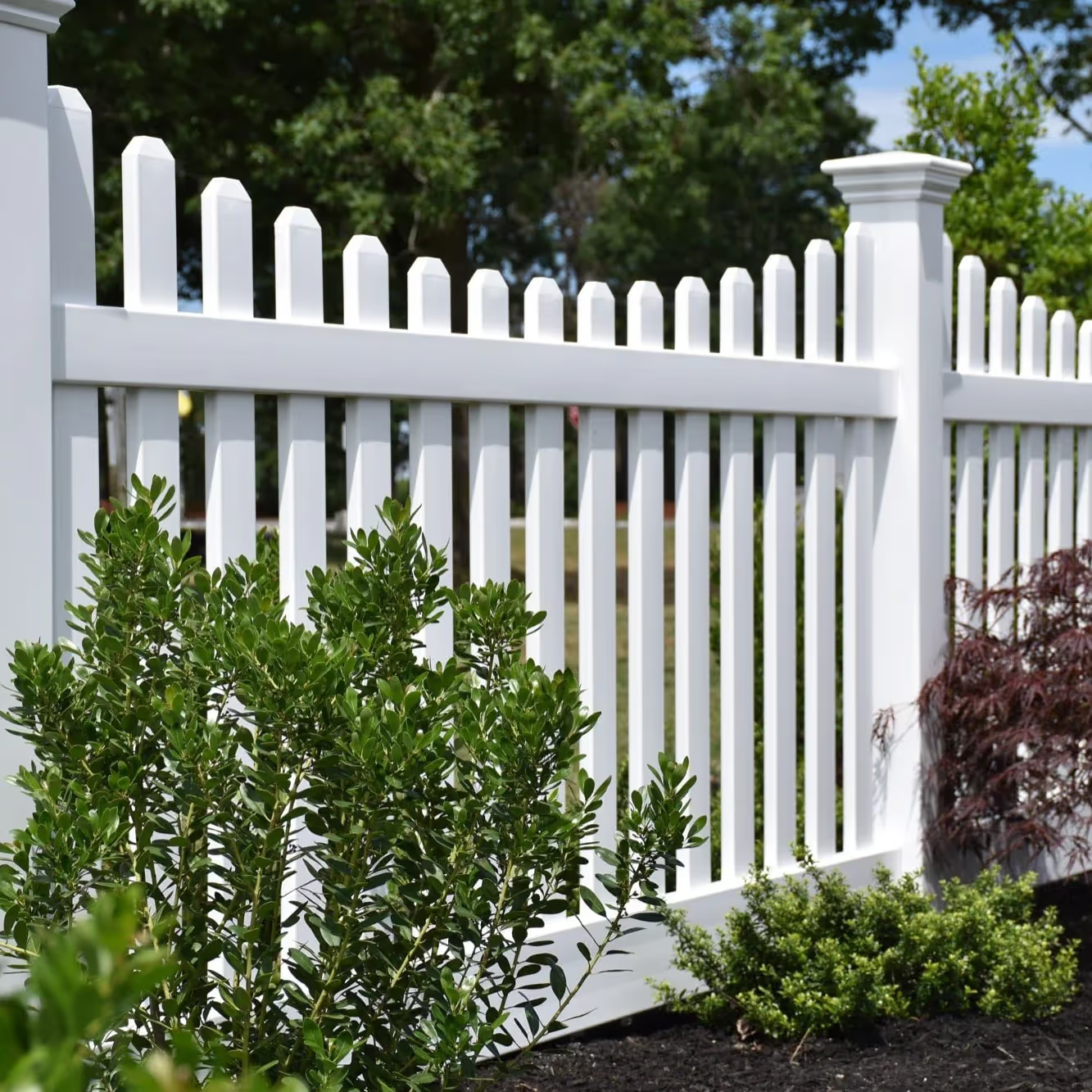
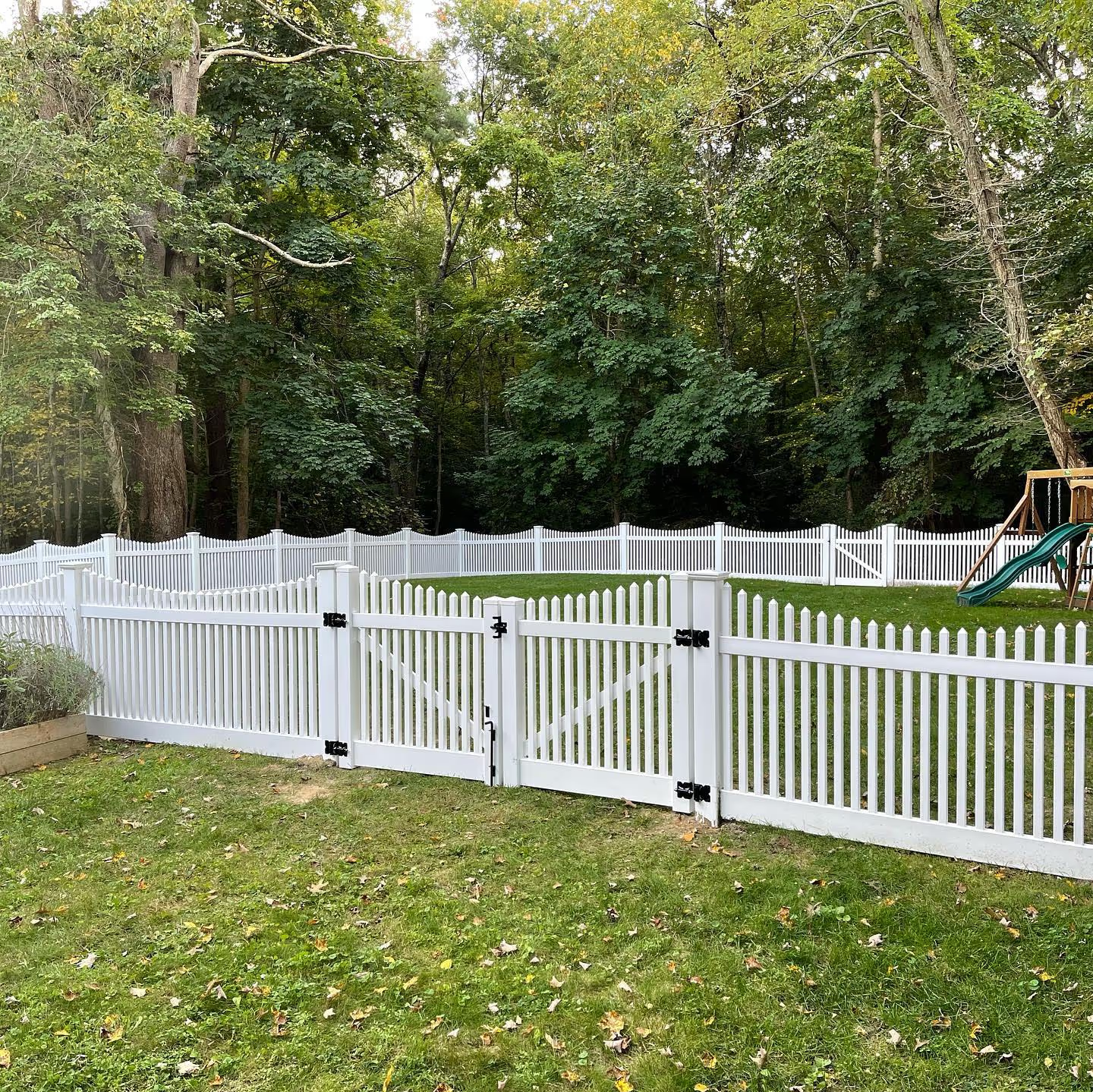
Picket fencing runs evenly spaced pickets at 3ft to 4ft in height. Its purpose is decorative — boundary definition and curb appeal.

Common top profiles:

Most descriptions stop at "allows airflow." More precisely: shadowbox is a privacy fence with built-in wind relief — a practical consideration as much as an aesthetic one.

Profile Character
Flat Neutral, clean
Dog-ear Most common, works with most architectural styles
French Gothic Slightly formal, pointed
Spear-top Formal, traditional
Arch-top Decorative, scalloped feel

The open construction means minimal wind load and smaller posts with shallower footings than taller, solid styles. It's the least structurally demanding fence type in the vinyl category.

What we've seen: right style, wrong spec for the dog
Picket is frequently specified correctly for the property and incorrectly for the animal."We've re-fenced a few yards — good customers of ours — because the first fence was the right style for the house but the wrong spec for the dog. A standard 4ft picket with 3.5-inch spacing works fine for most dogs. It doesn't work for a determined terrier or anything that can clear the height. It's one of the first things we ask about on a picket job."

Tri-State Fence & Deck Inc. License #13VH13604500.

Post and Rail 

Post-and-rail fencing runs two to four horizontal rails between posts with no infill boards — the most open vinyl fence style, used for property line demarcation on larger lots and rural perimeters where enclosure is not the goal.

Common configurations:

  • 2-rail — most open, agricultural perimeter use
  • 3-rail — more visible boundary definition
  • 4-rail — closer to a barrier, still open construction

Common on properties across the more rural stretches of Gloucester County — South Harrison, Elk, Franklin, parts of Monroe — where the boundary matters more than privacy or containment.

What we've seen: survey disputes on long runs

Property line uncertainty that's manageable on a short fence run becomes a real problem at 400 linear feet.

"We see more property line surprises on post and rail jobs than on any other style we install — probably because the fence covers so much ground. At Tri-State, we recommend confirming the survey before we break ground on anything over about 150 linear feet. It's not a delay — it's insurance."

Lattice-Top Privacy

Lattice-top fencing combines a full solid privacy panel as the base with a section of diagonal or square lattice added above the top rail. The lattice cap adds visual variation without meaningfully reducing privacy at standard heights.

Key details:

  • At 6ft, the lattice sits above most sightlines — privacy below it is not compromised.
  • Accepted in many HOA communities that want more architectural detail than a plain solid panel.
  • Same post and footing requirements as standard privacy — the lattice section changes nothing structurally.
  • Available with a square or diagonal lattice pattern, depending on the manufacturer.

What we've seen: HOA communities in newer developments

In newer Gloucester County communities with active HOA oversight, lattice-top often threads the needle between what homeowners want and what deed restrictions allow.

"The lattice-top gets specified a lot in developments like Washington Township, Woolwich, East Greenwich, Harrison Township, Mullica Hill — places where we do a lot of work and where the HOA has aesthetic guidelines but allows vinyl. It softens the visual weight of a full privacy fence. Structurally, it's the same install. It just changes what you're looking at from a chair on the deck."

Fence permit requirements in NJ
Tri-State Fence & Deck Inc. License #13VH13604500.

Style Comparison at a Glance

Style Privacy Level Wind Exposure / Load Common Height Typical Use
Full Privacy Full High 6ft Suburban backyards, pet containment
Shadowbox Full (no direct sightlines) Moderate 6ft Exposed or corner lots
Semi-Privacy Partial Low–Moderate 4–5ft Front yards, HOA-restricted properties
Picket Open Low 3–4ft Curb appeal, boundary definition
Post and Rail Open Very Low 3–4ft Large lots, rural perimeters
Lattice-Top Full (below lattice) High 6ft HOA communities, decorative preference

Most homeowners choose a vinyl fence by style — privacy, picket, or lattice. But every vinyl fence is a system: panel design, internal reinforcement, and construction method working together. What follows is the part that doesn't show up in the brochure.

Tri-State Fence & Deck Inc. License #13VH13604500.

How Vinyl Fence Panels Are Built

Construction method is where the quality differences between fence systems show up most clearly — and it's the part that's hardest to evaluate at the point of purchase.

Tongue-and-Groove Construction

Routed Rail Construction

Aluminum Rail Inserts

Construction Method at a Glance

How Style and Construction Work Together

Style and construction are two different conversations that belong together. The visible type — privacy, shadowbox, picket, lattice-top — determines what the fence does on the property. The construction method — tongue-and-groove, routed rail, aluminum-reinforced rails — determines how well it does that job over time.

The differences between a well-built fence and an underbuilt one don't show up on day one. They show up after a few winters.

For properties where site conditions affect the right choice — lot exposure, grade changes, local code, or HOA requirements — the details are worth discussing in person before anything gets specced.

Tri-State Fence & Deck Inc. License #13VH13604500.

Frequently Asked Questions

What are the different types of vinyl fencing?
What is shadowbox vinyl fencing?
What is tongue-and-groove vinyl fence construction?
Do vinyl fence panels have aluminum inside them?
What is the difference between shadowbox and solid privacy vinyl fencing?

Learn more about Vinyl Fence Installation and Wood Fence Installation in the Tri-State Area.

REQUEST YOUR ESTIMATE

Working With Tri-State Fence & Deck

Tri-State Fence & Deck is a family-owned contractor based in Sewell, NJ — the heart of Gloucester County — licensed under NJ License #13VH13604500, fully insured, and operating across Gloucester, Camden, and Burlington counties, plus parts of Southeastern Pennsylvania and Northern Delaware.

Vinyl fencing is our most-installed product. The observations throughout this page come from nearly 20 years of residential installs across South Jersey's clay soils, frost cycles, and wind-exposed lots — not from a manufacturer's spec sheet.

Every project includes a 3-year transferable workmanship warranty, direct communication with the owners from estimate through walkthrough, and post depths and footing sizes matched to the actual site — not a one-size spec applied across every job.

Schedule Your Free Estimate
(856) 230-7082
License #13VH13604500

Contact Us Today to Begin Your Project

Success! Your quote request was submitted.
You will hear from one of our team members shortly.