The right fence material comes down to four things: how you use your property, how much upkeep you want, what your local codes and HOA require, and what holds up in this climate. Get those four right and the choice becomes straightforward.
This guide covers all the materials we install throughout South Jersey, Southeastern Pennsylvania, and Northern Delaware. It includes honest comparisons, local conditions that affect performance, and links to deeper guides for each material.


Start here. Your answers will narrow the field before you read a single spec sheet.
Types of Fencing Materials We Offer
We install four materials across residential and commercial projects. Each has a distinct performance profile, maintenance requirement, and ideal application.

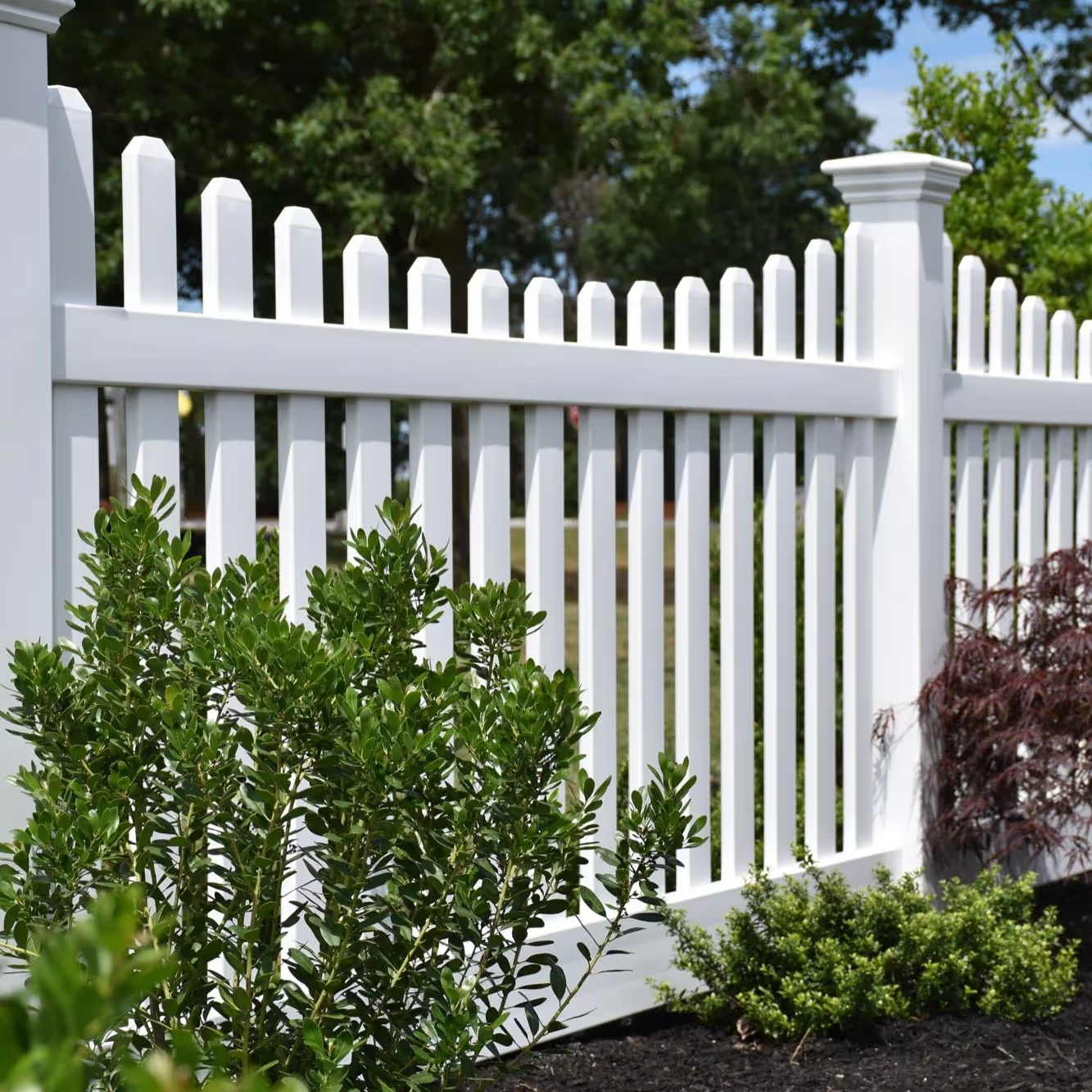
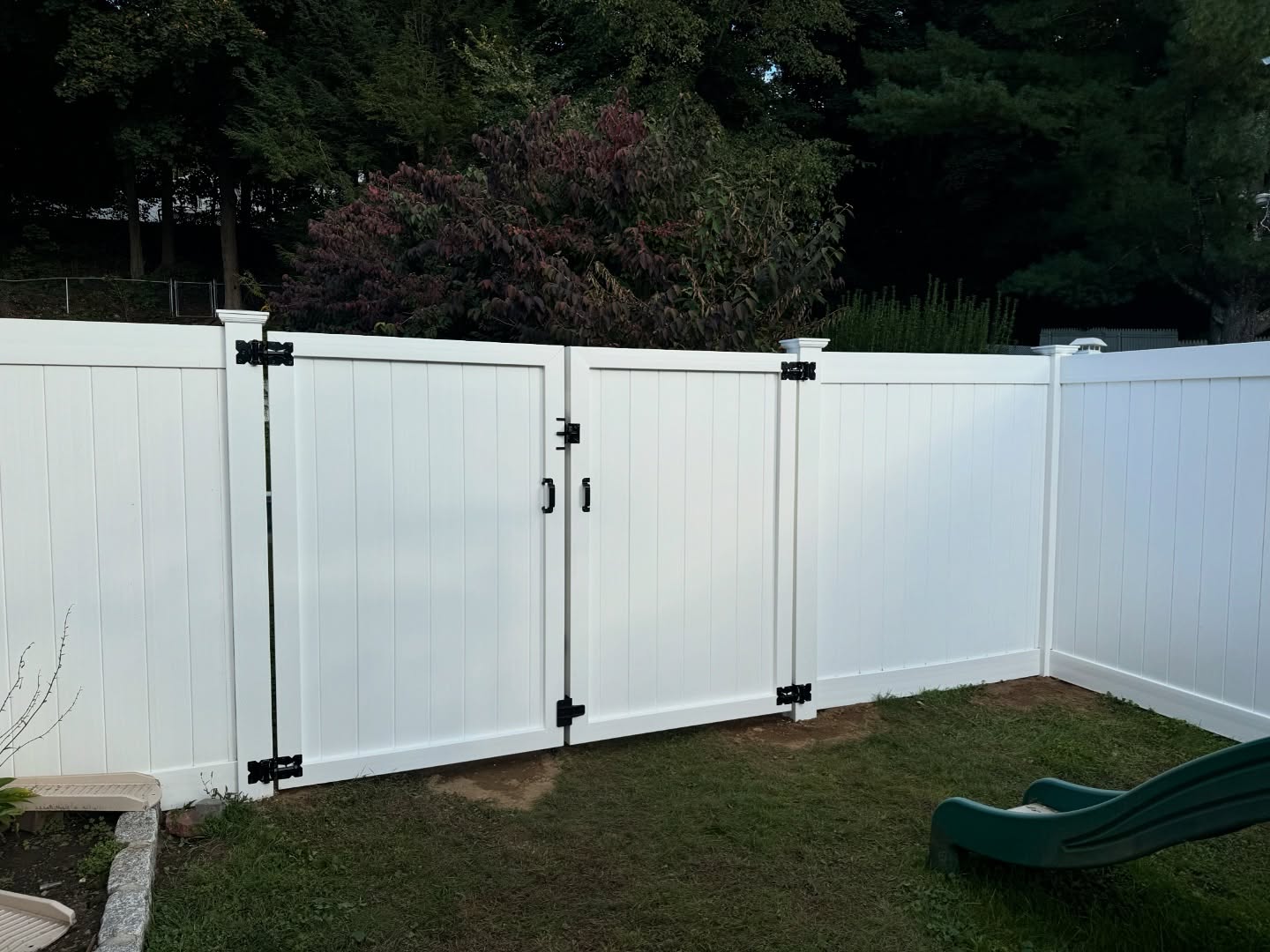
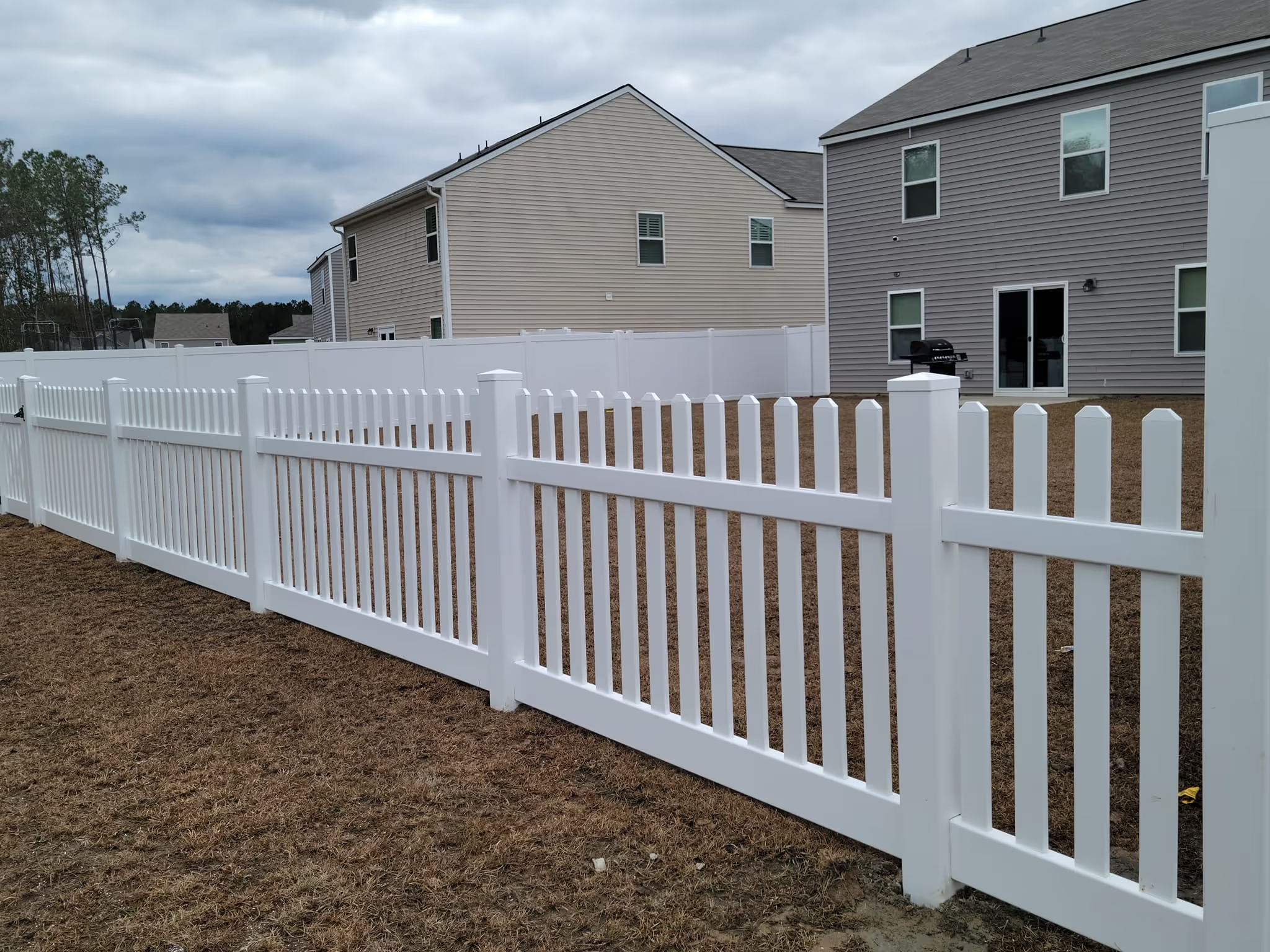
Vinyl fencing is a practical choice for most South Jersey residential properties. The panels are made from PVC with UV inhibitors built into the compound. They resist moisture, rot, and insects without painting, staining, or sealing.
Vinyl handles the region's freeze-thaw cycle and seasonal humidity well. It holds its color over time. And it cleans up with a garden hose.
White is the most common color in this market. You see it in planned communities from Woolwich Township to Voorhees. It is accepted by most HOA architectural committees in Gloucester, Camden, and Burlington Counties.
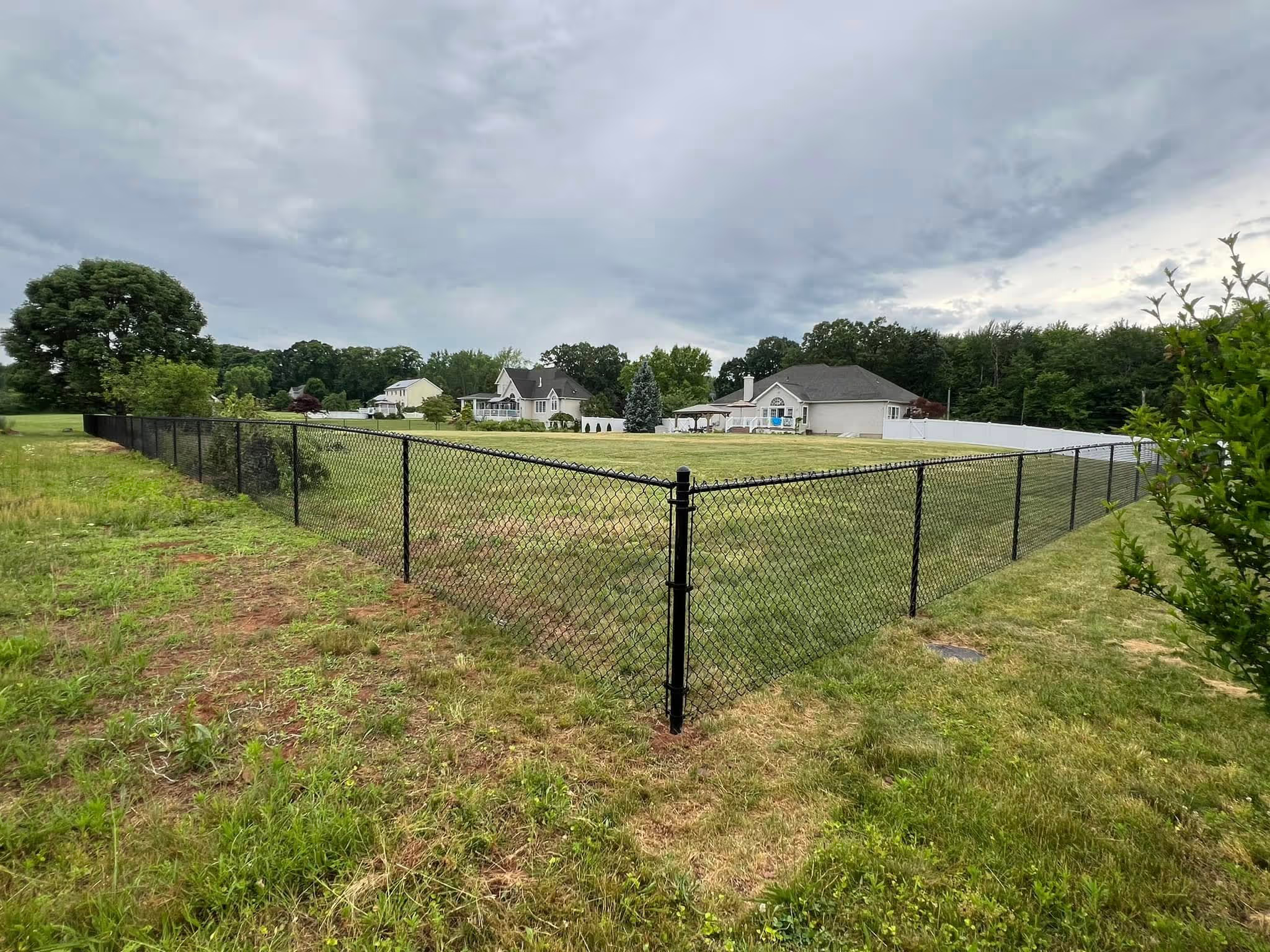
Chain link is the standard for commercial and industrial perimeter fencing. It provides reliable boundary definition and containment at a lower cost per linear foot than any framed panel material.
For residential use, chain link works well in rear-yard and utility applications: dog runs, large Gloucester County lots where aesthetics are not the priority, and storage yards. Many HOA communities in South Jersey restrict chain link on front and visible side yards, so its residential application tends to be site-specific.
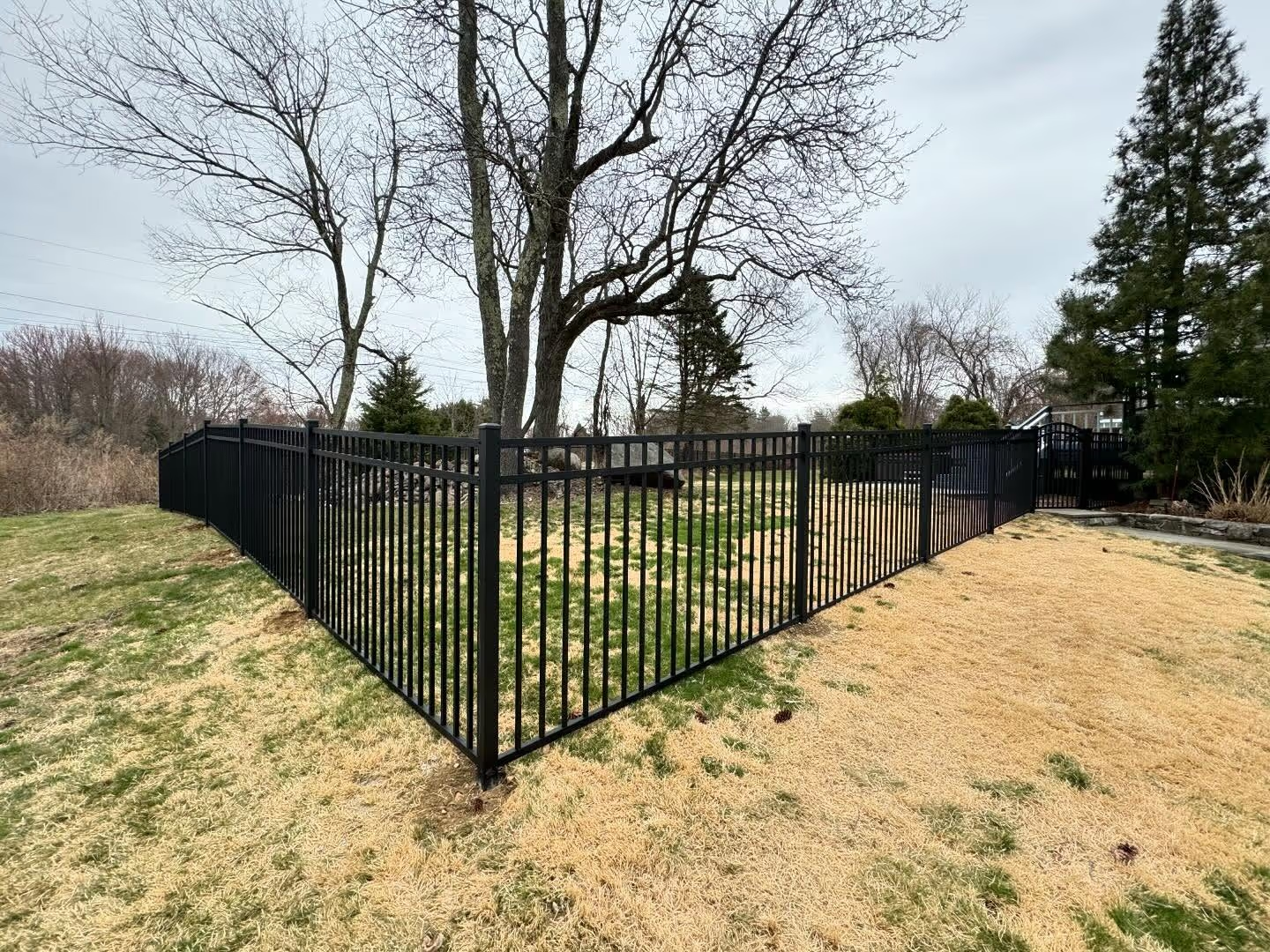
Aluminum gives you the look of traditional ornamental ironwork. The powder coat finish bonds directly to the metal and does not chip, peel, or require repainting under normal conditions.
It does not rust. That matters in South Jersey's humidity. It matters more at properties near the coast, where salt air is a real factor. For coastal installations in Atlantic County or Cape May County, specify an AAMA-rated powder-coat finish and stainless steel hardware. Standard residential specifications are not built for that environment.
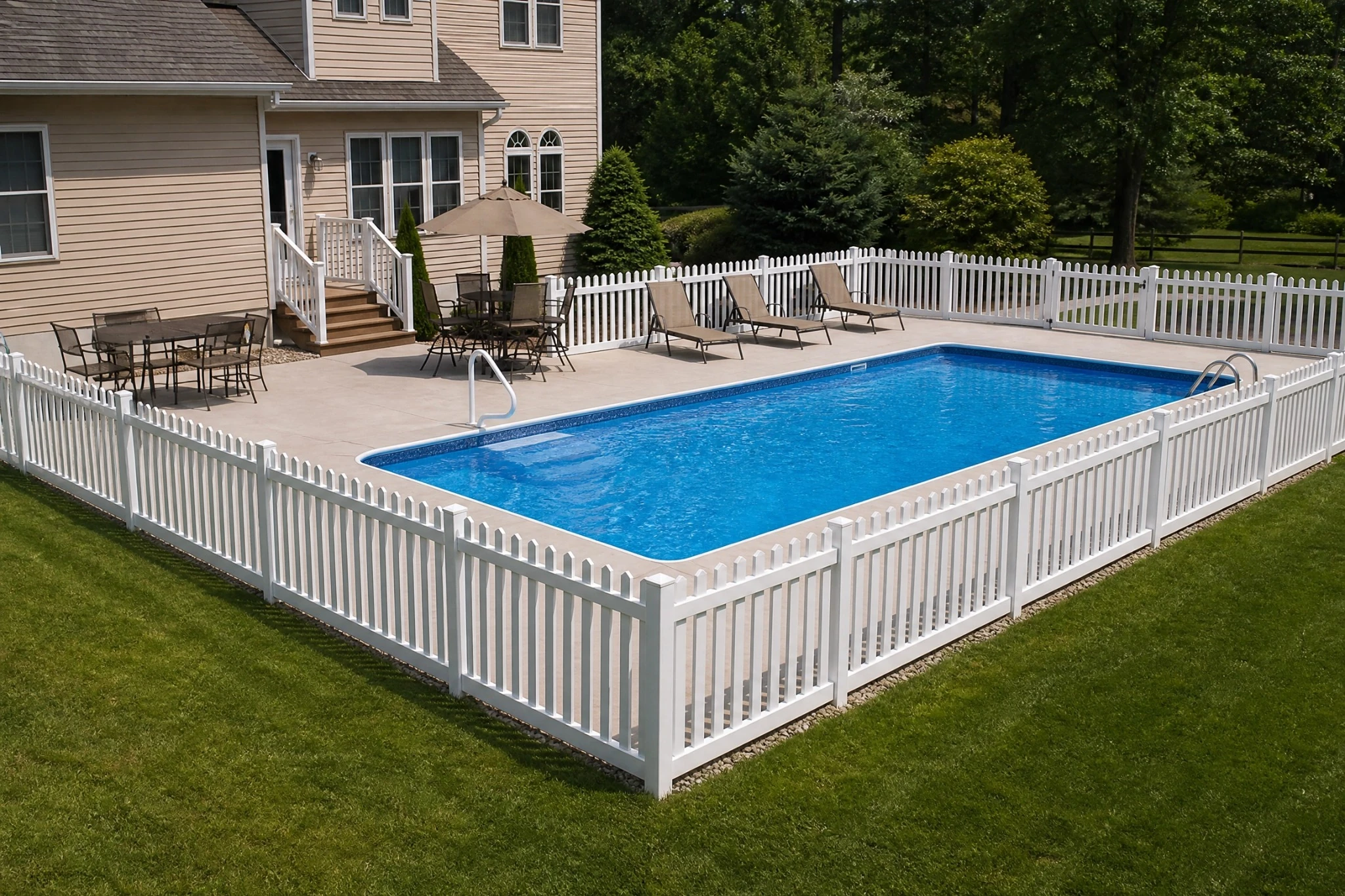
Aluminum is the most commonly specified material for pool perimeter fencing in New Jersey. Standard panel configurations typically satisfy the structural requirements of the state's pool barrier code. Full compliance also depends on verified fence height, gate hardware (self-closing, self-latching mechanisms), maximum opening clearances, and other site-specific factors. We confirm all of these during the installation process. Do not rely on the panel alone to check every box.
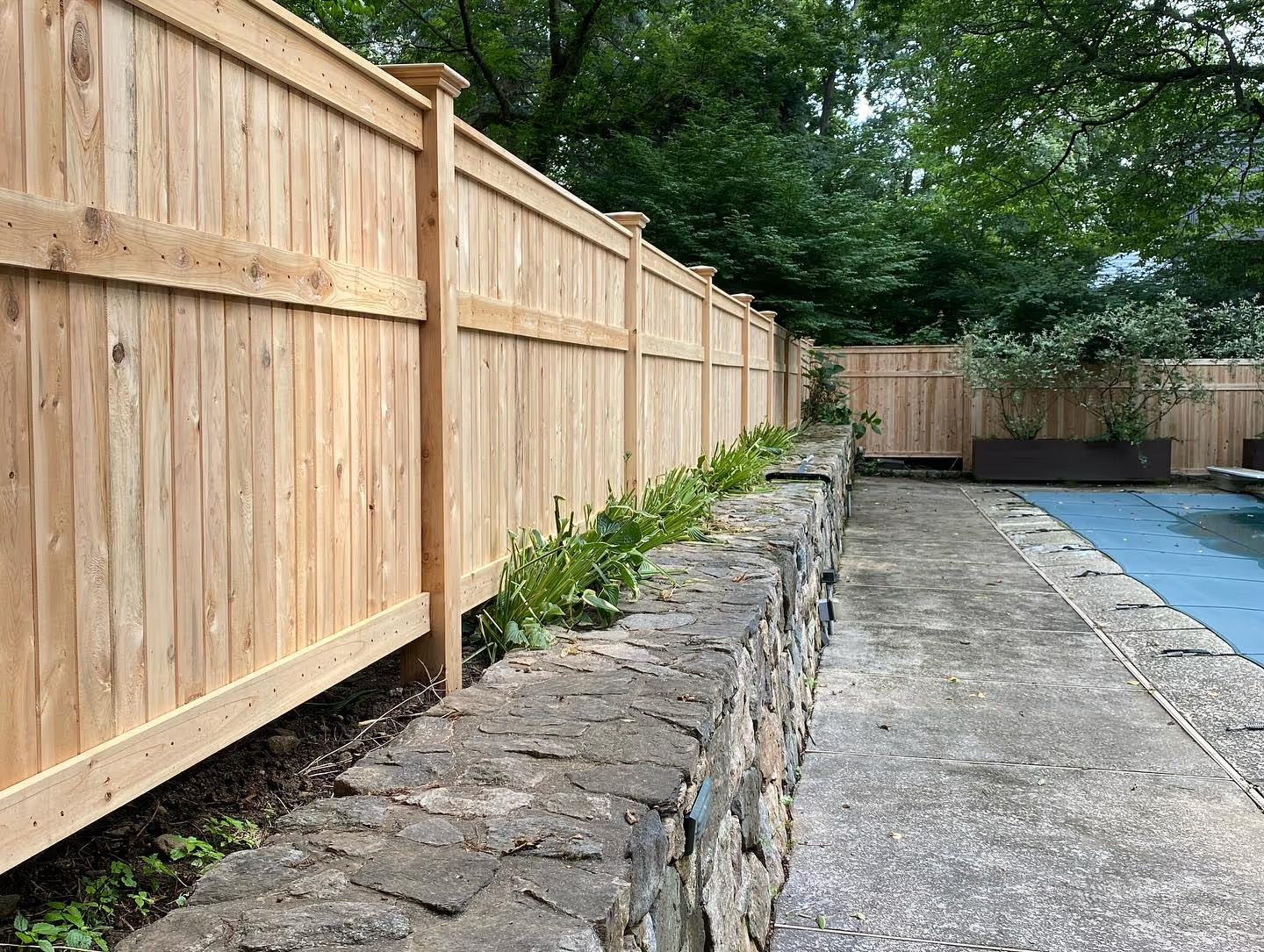
Cedar and pressure-treated pine both work as fence materials in this region. The performance difference matters. Cedar heartwood contains natural oils that resist rot and insect damage without chemical treatment. Sapwood, found in lower-grade cedar boards, does not share this property. If you are specifying cedar for durability, the grade of the material determines whether that durability shows up.
Pressure-treated pine is a cost-effective alternative with reliable rot resistance at ground contact points, where untreated wood fails first.
South Jersey's climate is harder on wood than drier regions. Annual humidity averages around 67%. Wet springs and warm summers create conditions where untreated or under-maintained wood degrades noticeably faster than the same material would in the Mid-Atlantic interior or New England. The maintenance schedule below is not optional. It is what stands between a 15-year fence and a 7-year fence.
We install wood where it is genuinely the right fit. We will walk you through the full maintenance commitment before recommending it.
Start here. YourMaterial selection shifts depending on the type of installation. The goals, code requirements, and durability standards are not the same.
.avif)

This is the section most fence guides skip. It is also the section that matters most if you are installing in this region.
These numbers reflect what we see in the field in South Jersey. Lifespan figures assume correct installation. A post set too shallow shortens the life of any fence, regardless of what the panel is made of.
*Aluminum at 50+ years applies to standard residential environments. Coastal installations in salt-air zones require upgraded specifications to achieve comparable longevity.
Material determines what is possible. Here is how design goals map to the materials we install.
Every site is different. Lot shape, soil type, HOA rules, and permit requirements all affect what makes sense. Our team will walk you through the options, confirm what your township requires, and give you a straightforward recommendation based on what we see at your property.
We have been doing this across South Jersey, Southeastern PA, and Northern Delaware for nearly 20 years. We are licensed, insured, and we back our installations with a 3-year transferable workmanship warranty.
We will review your property, confirm setback and permit requirements, and recommend the right material for your project.
(856) 230-7082 | [email protected]
Related Guides