
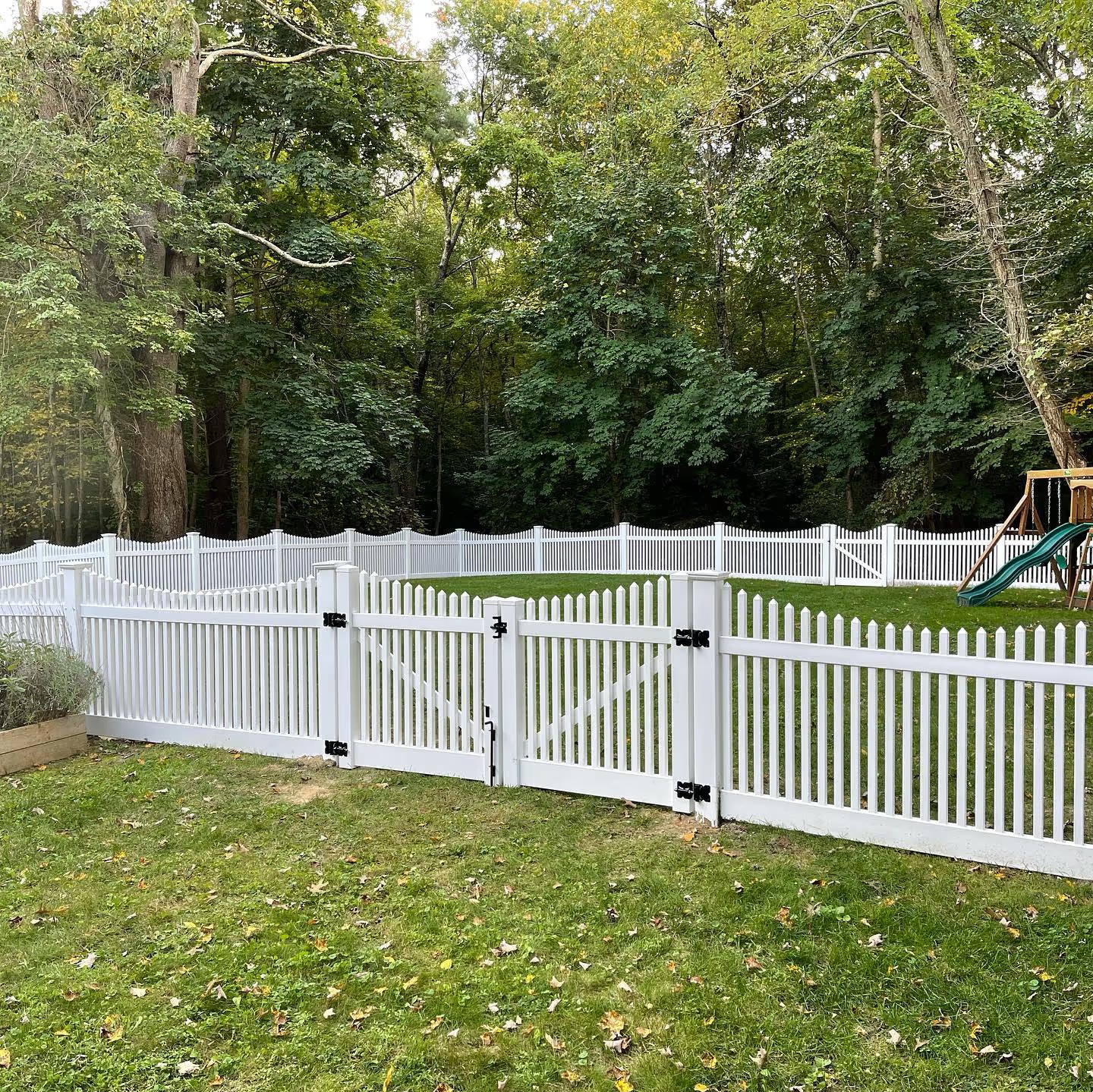
Surviving Tri-State Weather: Maintenance Realities
In most Tri-State townships, fence height, material, and placement require permits, and HOAs add another layer of approval.
Vinyl or wood? In the Tri-State area, the right answer hinges on your soil type, HOA rules, and how many weekends you're willing to spend with a stain brush. National guides treat fence installation as one-size-fits-all, ignoring the soil, frost depth, and HOA variables that actually determine whether your fence lasts two decades or leans by spring.


The Tri-State area has distinct soil profiles, and the one under your property may be the single biggest factor in fence lifespan.
(To know your soil type, check your property survey or contact your county extension office.)
New Jersey requires fence posts to be set at least 36 inches below grade to prevent frost heave. Limited exceptions exist in some southern coastal areas but require engineering documentation. Pennsylvania and Delaware have their own specific depth requirements.
Why it matters:
We confirm the frost line depth for your specific township during permitting—before a single post is set.

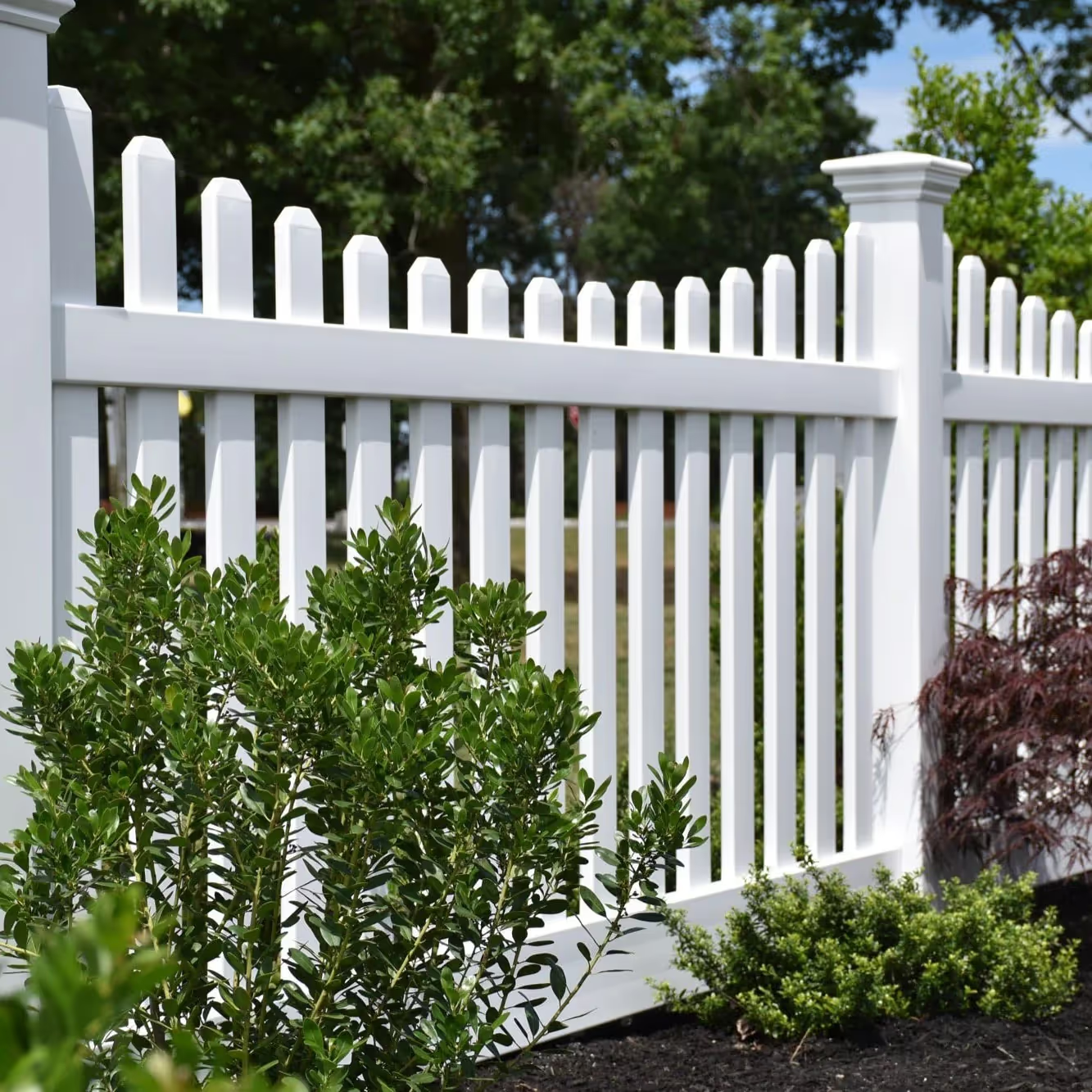
Vinyl fencing is made from polyvinyl chloride (PVC). Lower-grade vinyl products may lack adequate UV inhibitors, leading to earlier discoloration and brittleness. High-quality vinyl fencing typically incorporates titanium dioxide for UV resistance. Buyers should request material specifications and manufacturer warranties to verify UV treatment grade. The difference between cheap and quality vinyl is dramatic—and it's visible within the first few years.
Wood fencing offers two primary options: pressure-treated pine and cedar.
Pressure-treated pine is the budget-conscious choice. Modern pressure-treated lumber uses copper-based preservatives that can leach into surrounding soil, particularly in sandy, high-permeability soils. Clay soils tend to retain these compounds more, limiting migration. Pressure-treated pine remains highly susceptible to dimensional instability and tends to warp, twist, cup, and split as it dries.
Cedar commands a higher premium (1.50–2.00/LF more than PT pine) but offers superior performance in this region. Cedar contains natural oils and organic compounds, including thujaplicins and tannins, that provide inherent resistance to fungal decay and insects. This resistance is concentrated in the heartwood and does not eliminate the risk of rot at post-ground-contact points.
Purchase price is the smallest part of what a fence actually costs. Maintenance, repairs, and eventual replacement are where the numbers diverge.
The estimated break-even point between vinyl and wood is approximately years 7 to 8. After this point, vinyl becomes significantly more economical. Individual results will vary based on material grade, labor costs, and maintenance practices. Request a free estimate to see the actual 20-year comparison for your specific project.
In most Tri-State townships, fence height, material, and placement require permits, and HOAs add another layer of approval.
When you eventually sell your home, the fence will be evaluated as part of the property. A maintained vinyl fence photographs cleanly, signals low maintenance to buyers, and transfers the workmanship warranty to the new owner. A weathered wood fence can trigger buyer hesitation or negotiation concessions.
Tri-State's 3-year workmanship warranty is transferable to the new owner if you sell. This is a genuine differentiator that adds documented value to your property.

How to Choose: Decision Framework
We install four materials across residential and commercial projects. Each has a distinct performance profile, maintenance requirement, and ideal application.


Tri-State Fence Installation Process
Tri-State has installed fencing across New Jersey, Pennsylvania, and Delaware for over 20 years—which means we've pulled the permits, navigated the HOAs, and dug through every soil type in this region.
Our crews follow a transparent three-step process:

1. Plan & Measure
We pull your county's frost-depth record and review your HOA deed restrictions before providing a quote.

2. Schedule & Build
We ensure every post is set at or below the local frost depth requirement for your township, anchored with ASTM-compliant concrete.
3. Walkthrough & Warranty
Your installation is backed by our 3-year transferable workmanship warranty.
Learn more about Vinyl Fence Installation and Wood Fence Installation in the Tri-State Area.
Our estimates include a site walkthrough and material recommendation based on your soil conditions, HOA requirements, and township codes—not just a price. We'll confirm your frost line depth, review your deed restrictions, and help you understand the true 20-year cost of ownership.