Both vinyl and aluminum are durable, low-maintenance fencing materials that perform well in this region. Neither is universally better. The difference lies in what job you're asking the fence to do, and where on your property it will sit.


Choose vinyl if: you need a fully enclosed private backyard, you're in an HOA community, or you have kids and dogs that need solid containment.
Choose aluminum if: you're enclosing a pool, fencing a front yard for curb appeal, working with a sloped lot, or defining a large rural property boundary.

Choose both if your property has a pool and a private yard, or if your needs differ between the street-facing and rear elevations. Mixed-material projects on the same property are common (aluminum where code or visibility requires it, vinyl everywhere else).
If none of those fit cleanly, the sections below work through the decision in more detail.
A homeowner in Washington Township who wants a solid privacy enclosure around their backyard and a homeowner in Cherry Hill who wants a decorative perimeter around their pool are looking at different materials. Most of the time, the right answer becomes clear once the use case is defined.
The table below maps the key differences at a glance.

Freeze-thaw cycles, summer humidity, clay-heavy soil, and coastal salt exposure all affect how a fence behaves over time. Here's what we've observed installing both materials across South Jersey, Southeastern Pennsylvania, and Northern Delaware.
Field observation:
Gloucester County's clay-heavy soils retain moisture, which affects how concrete cures and how posts behave through freeze-thaw cycles. Working out of Sewell, we set posts to frost depth and factor drainage into every Gloucester County install as a matter of course.
Aluminum fence systems are powder-coated extruded aluminum. Coating durability is rated against voluntary industry specifications: AAMA 2604 ("High Performance") and AAMA 2605 ("Superior Performing"). The 2605 spec offers greater long-term durability. Not all fence products are independently verified to meet these standards; ask your contractor what coating spec the product carries.

Which Property Type Points to Which Material
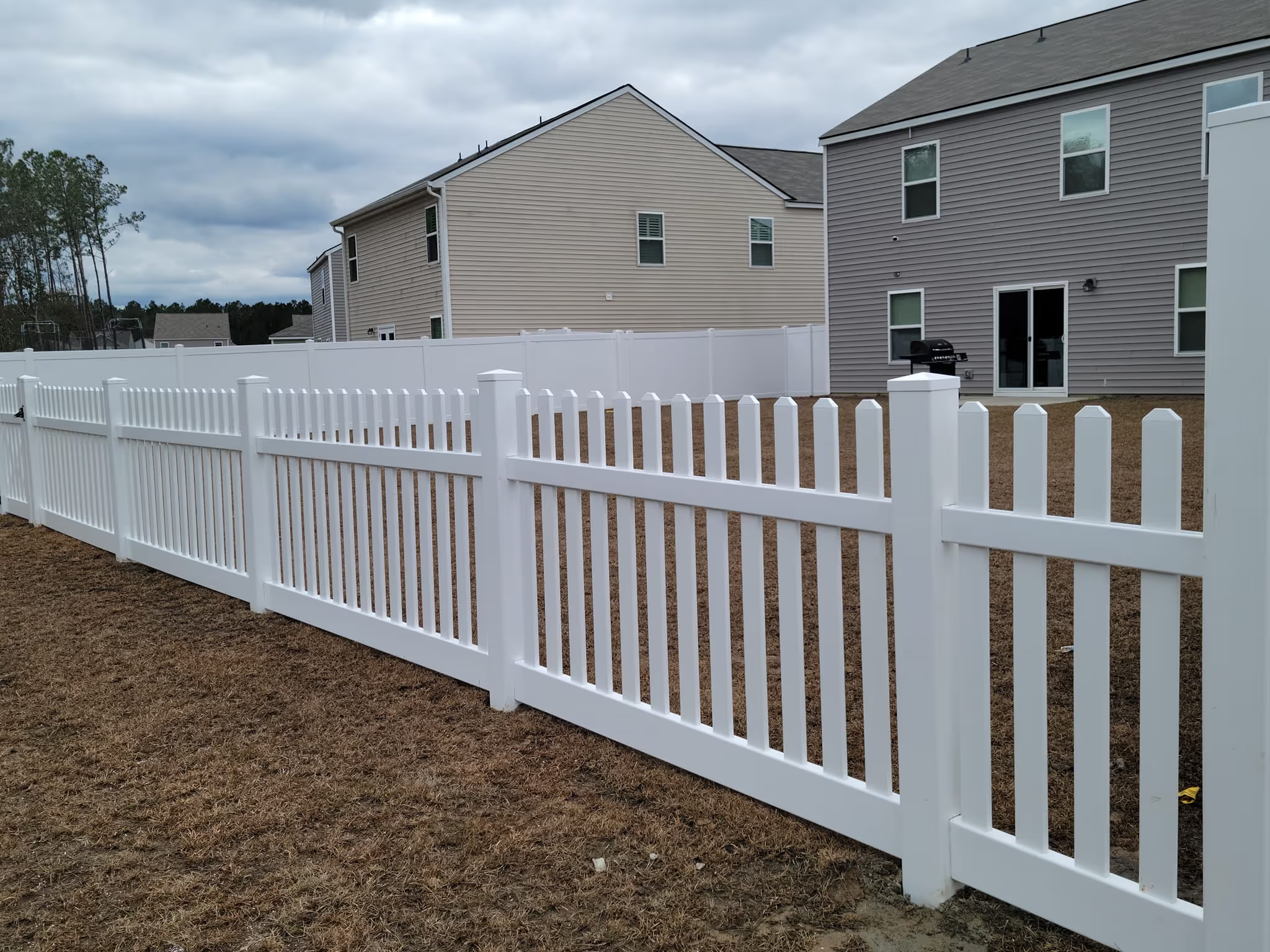

Some properties have genuinely different needs on different elevations. The answer isn't choosing one material; it's using each where it belongs.
Pool plus private yard
The pool enclosure drives toward aluminum (code compliance, visibility); the yard boundary drives toward vinyl (privacy). These systems don't need to be structurally connected. They meet at a corner post. Gate integration between the two requires some planning upfront, but it's standard work.
Front yard and back yard
Aluminum on the street-facing elevation (curb appeal, lower profile, visibility) and vinyl on the rear boundary (privacy). Corner lots often call for this approach: different functions on different sides of the same property.
Side yards on corner lots
A Gloucester County corner lot might want a privacy fence along the rear and interior side boundary, but a lower, open-picket fence along the street-facing elevation. That's a design question as much as a material question.
The most important cost factor isn't which material you choose. It's what the site requires.
Vinyl's maintenance-free profile has real value for over 20 years. No painting, no staining, no resealing.
Aluminum requires periodic inspection of the powder coat and touch-up of any damaged areas. Less than wood, more than vinyl, but not significant for most installations.
On a per-linear-foot basis, full-panel vinyl privacy fencing costs more than standard aluminum picket fencing due to its panel size and weight. Ornamental aluminum (spear-top, three-rail, architectural grades) runs significantly higher than entry-level vinyl. The two materials are often competitive in the mid-range.
What shifts the total project cost the most is site conditions. A sloped lot requiring custom fabrication for a vinyl install adds costs that wouldn't exist with an aluminum rack system. A property with difficult soil (high rock content, drainage issues, compacted fill, or the sandy substrate common in parts of Burlington and Cumberland Counties) adds cost regardless of material. Gate hardware, post spacing requirements, and township permit fees are line items that don't vary by fence material.
We don't post pricing online because project costs vary too much to quote without seeing the property.
Schedule an estimate, and we'll walk through the specifics.


When you eventually sell your home, the fence will be evaluated as part of the property. A maintained vinyl fence photographs cleanly, signals low maintenance to buyers, and transfers the workmanship warranty to the new owner. A weathered wood fence can trigger buyer hesitation or negotiation concessions.
Tri-State's 3-year workmanship warranty is transferable to the new owner if you sell. This is a genuine differentiator that adds documented value to your property.
Privacy in the backyard goes to vinyl. The pool enclosure is made of aluminum.
Decorative front yard goes to aluminum.
Backyard privacy plus pool on the same property usually goes to both.
Where the answer isn't immediate (e.g., sloped lots, mixed-use, HOA communities with specific requirements, or large rural properties), the decision is property-specific.
Decided on vinyl? The vinyl fence installation page covers what the process looks like, how we handle permits and utility marking, and what to expect from the estimate through completion.
Aluminum, the right call? The aluminum fence installation page does the same.
Pool enclosure in the mix? Read about pool fencing services in New Jersey before committing to a material. The code requirements are the deciding factor.
Still working through it? Schedule an estimate, and we'll start with a site visit.
