
Small dogs (under 25 lbs)
Usually sufficient for containment
4 feet
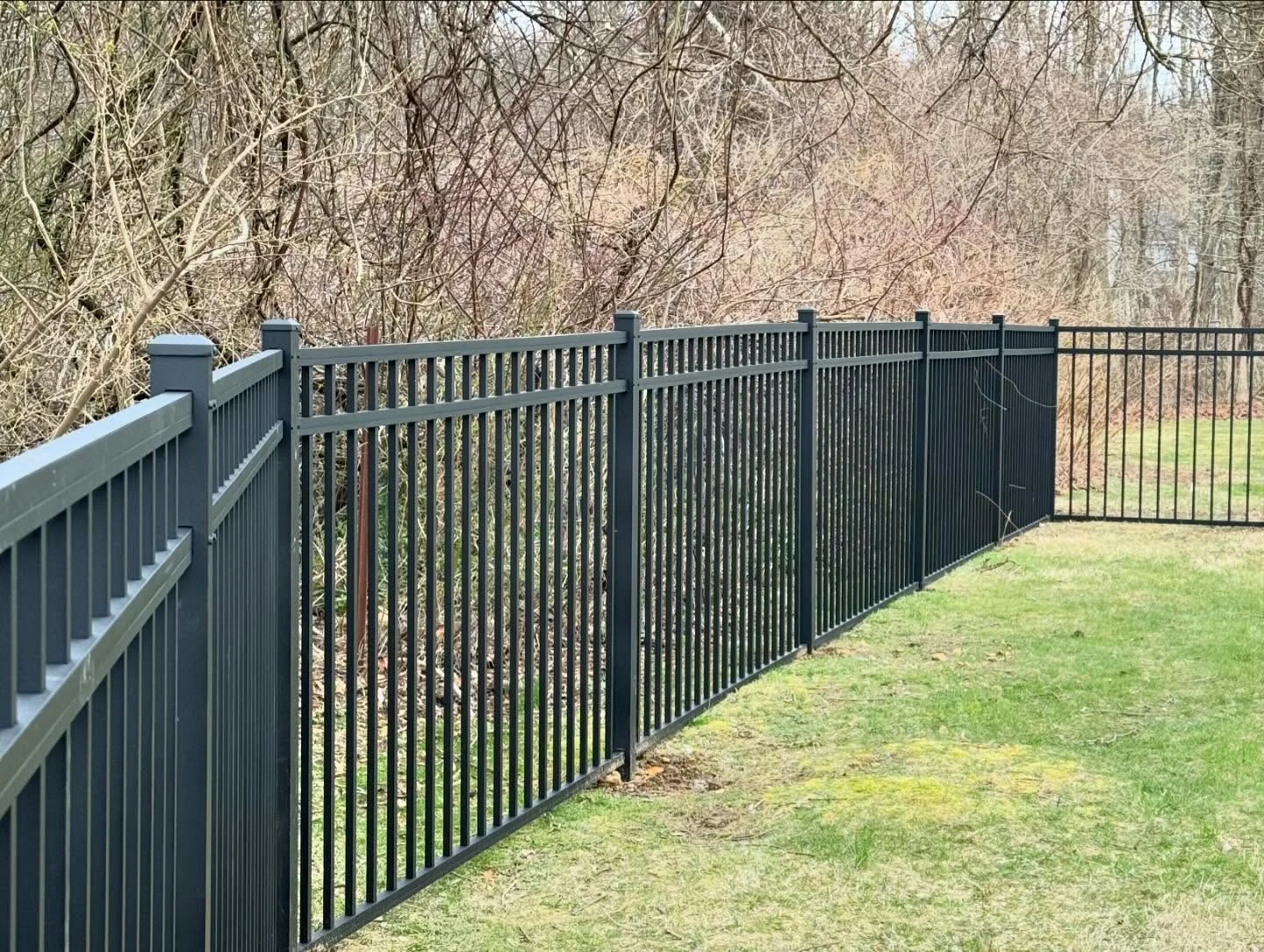
Your dog got out. Or your neighbor's did. Or the rescue you just brought home is a known jumper and you'd rather not find out the hard way. If you're a homeowner in Sewell, Washington Township, Mount Laurel, or anywhere else across Gloucester, Camden, or Burlington counties, the best fence for dogs is not a single answer. It depends on your dog, your yard, and what the local zoning office will allow.
We've installed thousands of fences across South Jersey, and a large share were built with a dog in mind. Here's how to think through the decision before scheduling a residential fence installation.
Before comparing materials, look at how your dog tries to escape. A pet safe fence is one designed around that behavior.
Diggers need a secure bottom edge. That means a bottom rail set at grade or an L-footer of hardware cloth trenched about 12 inches down along the fence line. Post depth matters here as well. A shallow post is easier for a determined dog to loosen over time than most homeowners realize.
Jumpers need height and a surface that offers no foothold. A 4-foot fence is often just a challenge. A 6-foot solid panel functions much more like a wall. Chain-link and horizontal wood rails can be climbed; vinyl and aluminum with vertical pickets generally cannot.
Chewers are the reason we often steer homeowners away from wood if the dog is under 3 years old. A dog-proof fence for a chewer is usually vinyl or aluminum, both of which resist chewing far better than pressure-treated pine.
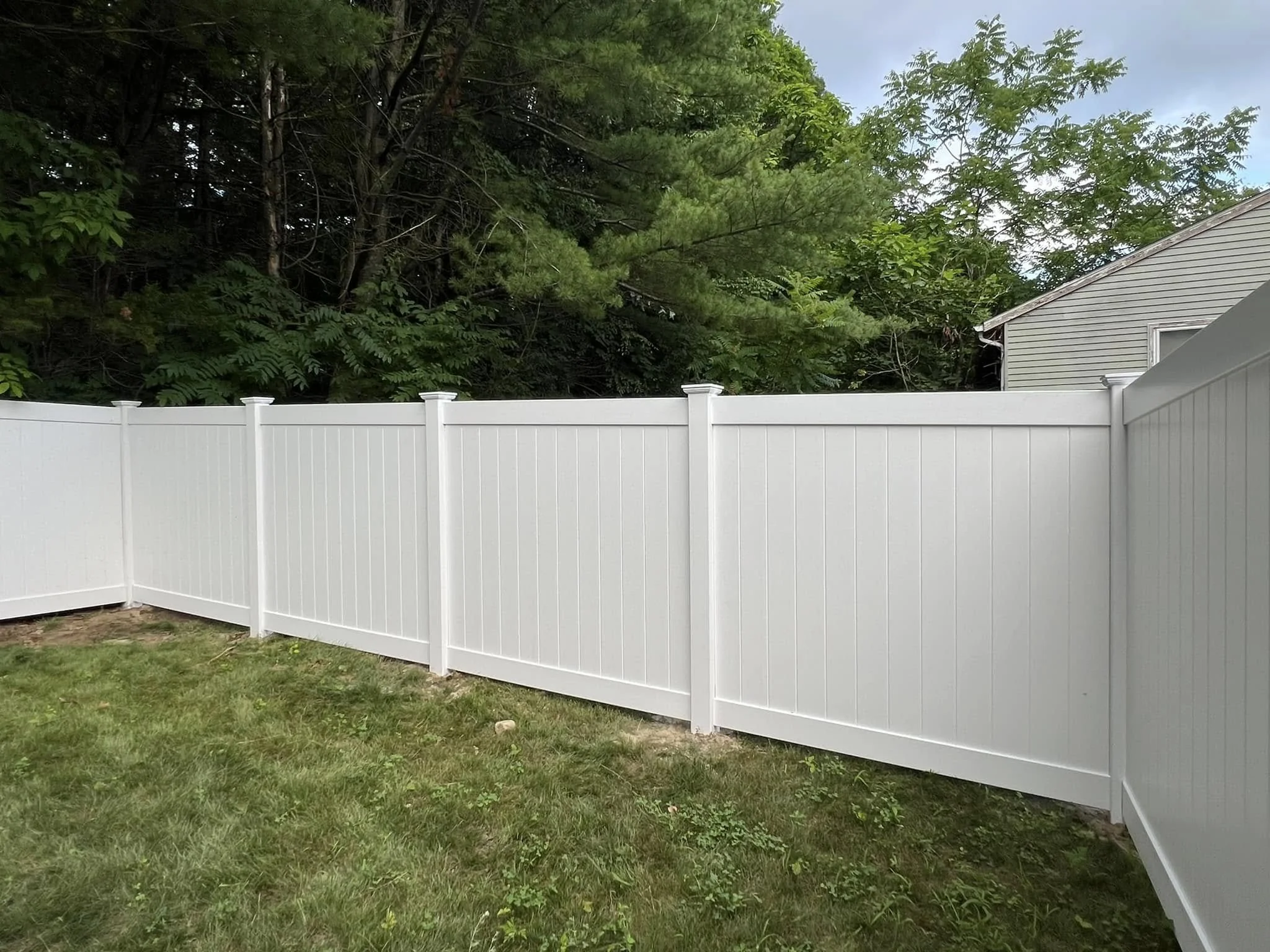
Reactive dogs benefit from visual blocking. A solid privacy panel can reduce barking and fence-running by removing the constant line of sight to passing people, dogs, and delivery traffic. If your dog reacts to everything happening outside the yard, a solid fence is usually more effective than an open design.
A fence for large dogs often needs to address all four of these issues at once, so plan for the most challenging behavior your dog displays.
We install four primary fence materials across Gloucester, Camden, and Burlington counties. Here's how they compare for dog owners dealing with South Jersey's humidity, freeze-thaw cycles, and clay-heavy soil.
Vinyl is what we install most, and it's the material we recommend first for most dog owners. A 6-foot solid vinyl privacy fence is chew-resistant, provides visual blocking for reactive dogs, and does not rot in South Jersey's wet spring conditions.
Look for a wall thickness of at least 0.100 inches and confirm that the manufacturer includes UV inhibitors. Thin-wall vinyl tends to fade and become brittle faster in direct sunlight.
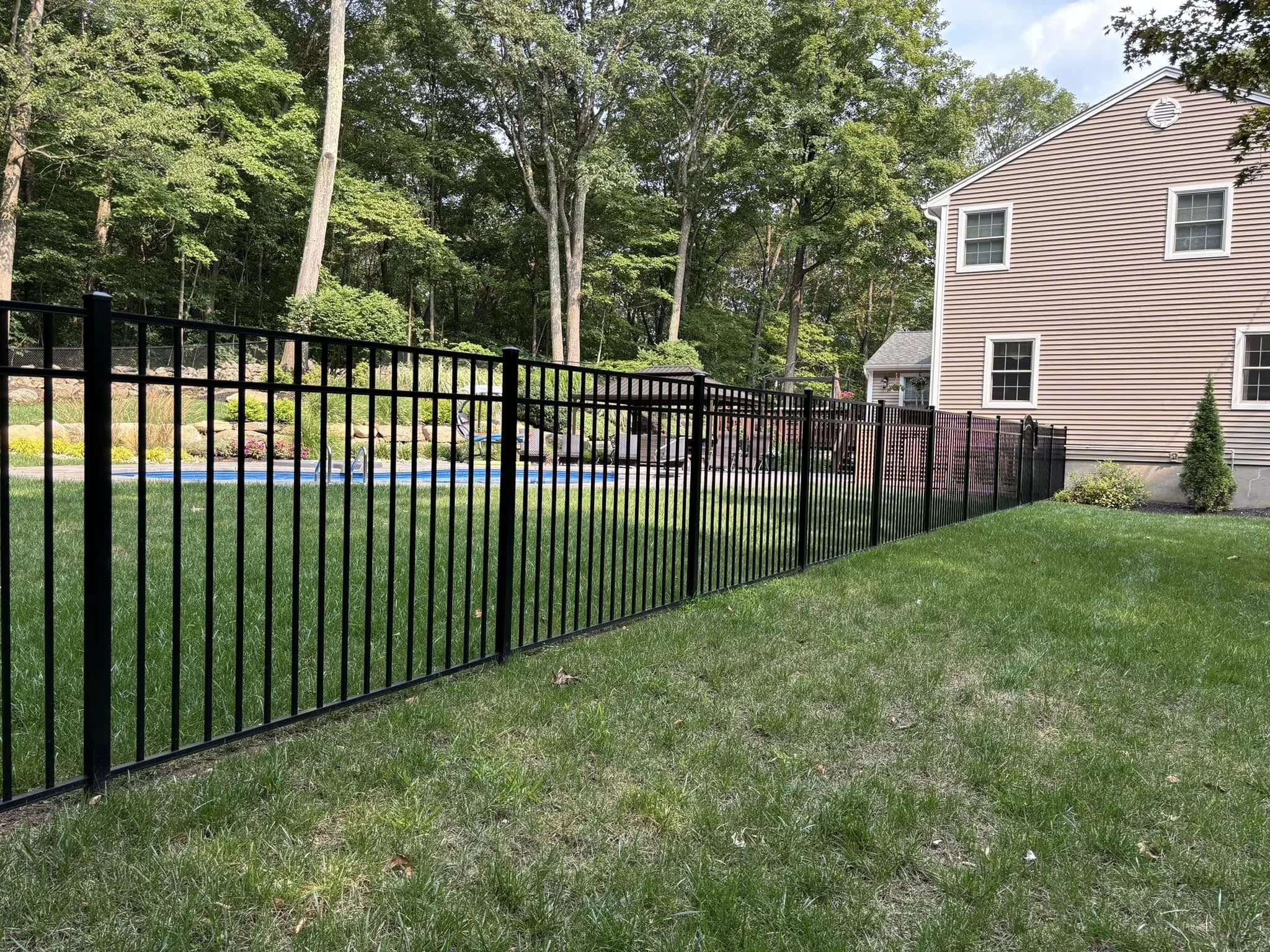
An aluminum fence with puppy pickets is often our second recommendation. Puppy pickets add extra vertical pickets to the lower portion of the fence so small dogs and puppies cannot slip through the standard 4-inch opening.
Aluminum is powder-coated to AAMA 2604 standards, which helps it hold up well around pools and in areas exposed to salt air.
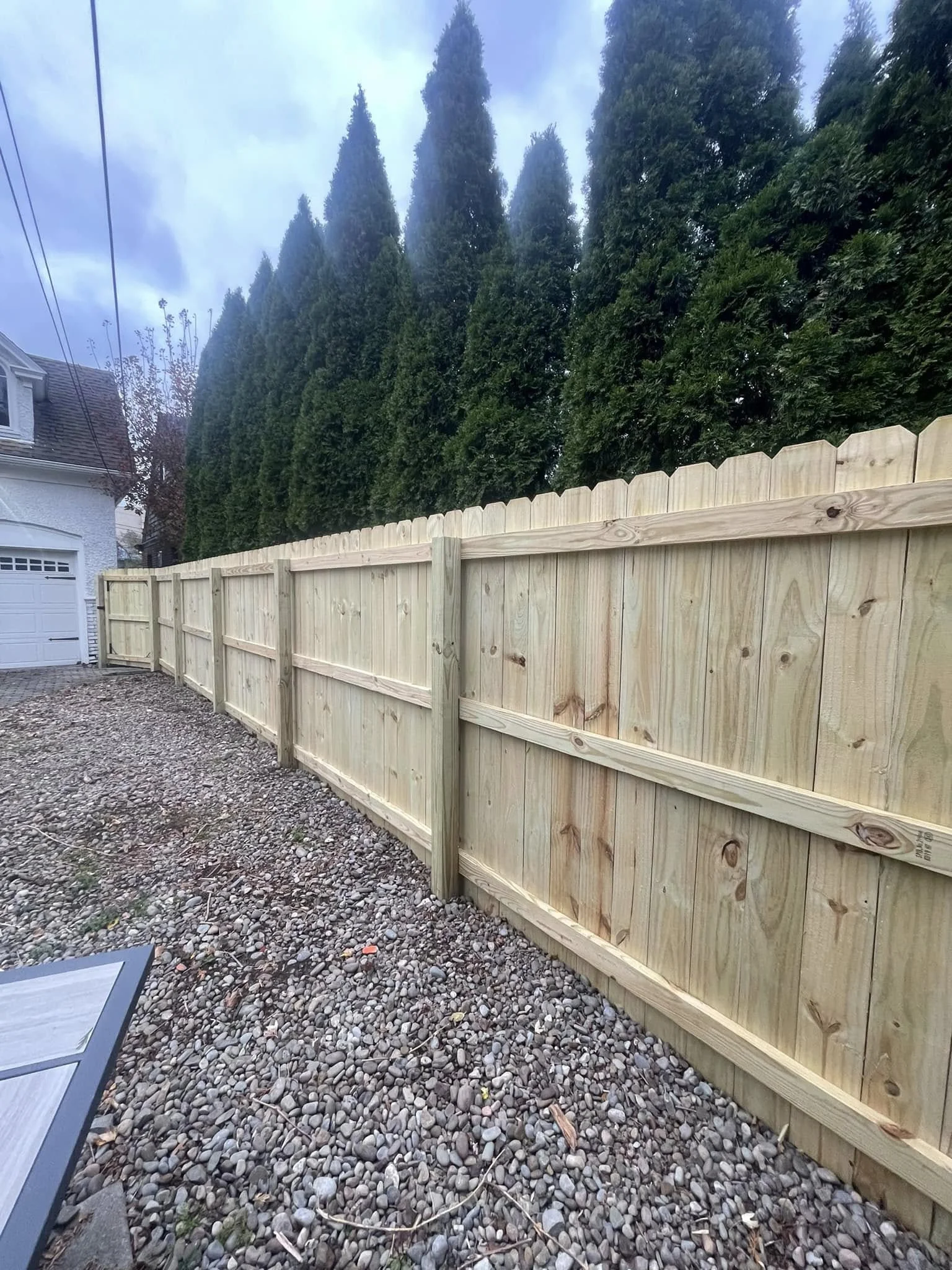
We install wood fencing when homeowners request it, but dog owners should know that wood requires periodic re-staining and remains vulnerable to chewing. If your dog is a chewer, we usually recommend vinyl instead.
We install commercial chain-link for warehouses, industrial sites, and dumpster enclosures. For residential dog containment, most homeowners opt for vinyl or aluminum after comparing pricing and appearance. Chain-link provides footholds for climbers and does not block sightlines.
Not sure which material fits your yard and your dog? Get a free on-site estimate and we'll walk through the options with you.
Fence height for dogs is where many homeowners guess wrong. Here's what we commonly build.
Most rear-yard fences in Gloucester County are capped at 6 feet in residential zones under the Gloucester County fence height standards followed across many municipalities. Front-yard fences are typically limited to 3 to 4 feet, and corner lots often have additional sight-triangle restrictions.
For small dogs and puppies, picket gaps should generally be under 4 inches. Standard aluminum fencing often has wider spacing, which is why we specify puppy pickets on the lower section.
South Jersey's frost line is 30 inches according to NJ Uniform Construction Code Table R. Every post we install goes below that depth.
For a 6-ft vinyl privacy fence using 8-foot posts, that means at least 2.5 feet of post below grade, set in concrete. In Gloucester County's clay-loam soils, we use bell-bottom footings that flare at the base to resist frost heave.
For dogs that dig, we either set the bottom rail at grade or trench an L-footer of hardware cloth 12 inches down and 12 inches out along the fence line. Once the grass grows back, the reinforcement is hidden.
Invisible fences usually come up during an estimate. We consistently steer most South Jersey homeowners toward a physical fence instead for four main reasons:
Most New Jersey municipalities require a zoning permit for a new fence, even when a building permit is not needed. PermitsGuide's New Jersey fence page provides a useful overview of everything you need to know.
Washington Township, for example, limits residential chain-link fencing to 4 feet and prohibits privacy screens on chain-link. Similar details vary from town to town, which is why local experience matters.
If your yard has a pool, the fence must meet pool-barrier requirements even if the primary goal is dog containment. That includes a minimum height of 48 inches, a self-closing and self-latching gate, and no climbable features. Our pool fence installations are built to that specification by default.
Communities such as Four Seasons at Weatherby, The Preserve, Beckett, Lexington Mews, and The Ridings at Woolwich generally require architectural approval before installation begins. This means you will need to check in with your HOA to learn which fences they approve.
New Jersey law requires three full business days of notice before excavation. We handle the 811 request so utilities are marked before the crew arrives.
On every install, we handle the zoning permit, HOA submission, and 811 coordination so homeowners don't have to manage the paperwork themselves.
We're a family-owned fence company based in Sewell, serving homeowners throughout Gloucester, Camden, and Burlington counties. Eddie or a crew lead walks the property, talks through your dog's behavior and escape points, and provides a written quote before we leave.
Call (856) 230-7082 or request a free estimate online. If you'd like to see how our work holds up over time, read reviews from South Jersey homeowners first.
For most dogs, 5 to 6 feet is the right range. Small dogs are usually contained by a 4-foot fence, medium dogs by a 5-foot fence, and large dogs or known jumpers by a 6-foot solid panel. Rear-yard fences in most Gloucester County municipalities are capped at 6 feet.
Yes. A zoning permit is required in almost every New Jersey municipality. A building permit is usually only required when the fence also serves as a pool barrier. We handle the zoning application as part of every install.
A vinyl or aluminum fence with the bottom rail set at grade, combined with an L-footer of hardware cloth trenched 12 inches down along the fence line. Proper post depth below the 30-inch frost line is also important on South Jersey's clay-loam soils.
We don't recommend them for most dogs. They do not keep other animals or people out, and shock-collar training can create behavioral problems for reactive dogs.
An aluminum fence with puppy pickets is usually our top recommendation for small dogs. The added lower pickets reduce the opening size so puppies and small breeds cannot slip through. Vinyl privacy is a strong second choice if you also want visual blocking.