Tri-State Fence & Deck installs durable wood fences in New Jersey, Pennsylvania, and Delaware, designed to withstand freeze-thaw cycles and harsh winters. Based in Sewell, NJ, we specialize in cedar and pressure-treated wood fences tailored to local soil, moisture, and zoning conditions. Our licensed contractors ensure precise installations that won't heave, lean, or warp, backed by 20 years of experience across South Jersey, Southeastern PA, and Northern Delaware.
Tri-State Fence & Deck Inc. (484) 446-5793 Sewell, NJ 08080

Typical Start Time
2–3 Weeks
Estimates Scheduled Within
1–3 Business Days
Current Booking
Limited Availability for Upcoming Projects

Natural Rot Resistance: We use #1-grade Western Red Cedar, which naturally repels insects and moisture. #1 grade ensures fewer knots and a 15- to 20-year lifespan with routine maintenance.
Wind-Resistant Construction: Our board-on-board configurations use staggered pickets to allow airflow. Staggered pickets reduce wind load on posts, preventing blowovers during severe winter gusts across the tri-state region.
Soil-Specific Stability: We dig every post hole to a minimum of 42 inches, well below the 36-inch frost line. This depth keeps posts stable through Gloucester County's 30- to 50-year annual freeze-thaw cycles.
Cost-Effective Longevity: Our pressure-treated pine options meet UC4A standards for ground contact. This treatment provides 20 to 30 years of decay resistance at a lower initial cost than cedar.

Cedar holds up to South Jersey's high summer humidity better than untreated pine, with style variations to suit everything from a historic home in Haddonfield to a new build in Washington Township.


Most fence failures we replace come down to shortcuts in installation—not the material itself. Understanding these failure points is exactly why our process is engineered the way it is.
Our installation process is designed to prevent every one of these failure points—so your fence stays straight, secure, and structurally sound for years.


South Jersey's clay-heavy soils retain significant moisture, causing shallow fence posts to heave and tilt during freeze-thaw cycles. For nearly 20 years, Tri-State Fence & Deck has engineered our installation process specifically to combat this ground movement. Led by owner and craftsman Ed Torres, our family-run team knows how the tri-state region's frost depth and wind exposure affect a fence's long-term stability. We sink every residential fence post well below the frost line, ensuring your fence stays perfectly plumb long after the first winter.
We do not use big-box store lumber that warps after one humid summer. Our installations rely on dimensionally stable materials and heavy-duty fasteners built for the tri-state region's humidity and temperature swings. Because humidity accelerates corrosion, we secure all wood components with ASTM A153 hot-dipped galvanized ring-shank nails that will not back out or rust.
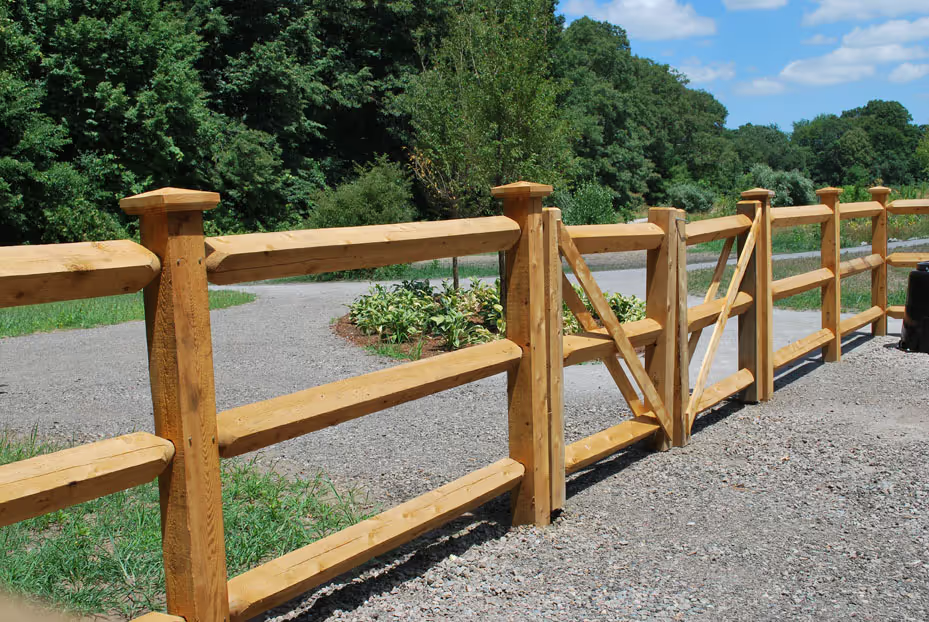
Ready to secure your property with an installation engineered to beat the 36-inch frost line?
Schedule Your Site Consultation TodayIn the tri-state market, spending more upfront on #1 grade cedar avoids the severe warping that cheaper pine develops during humid summers and freeze-thaw winters.
Check out some of our recent wood fence projects, or click here to see all past wood fence projects.


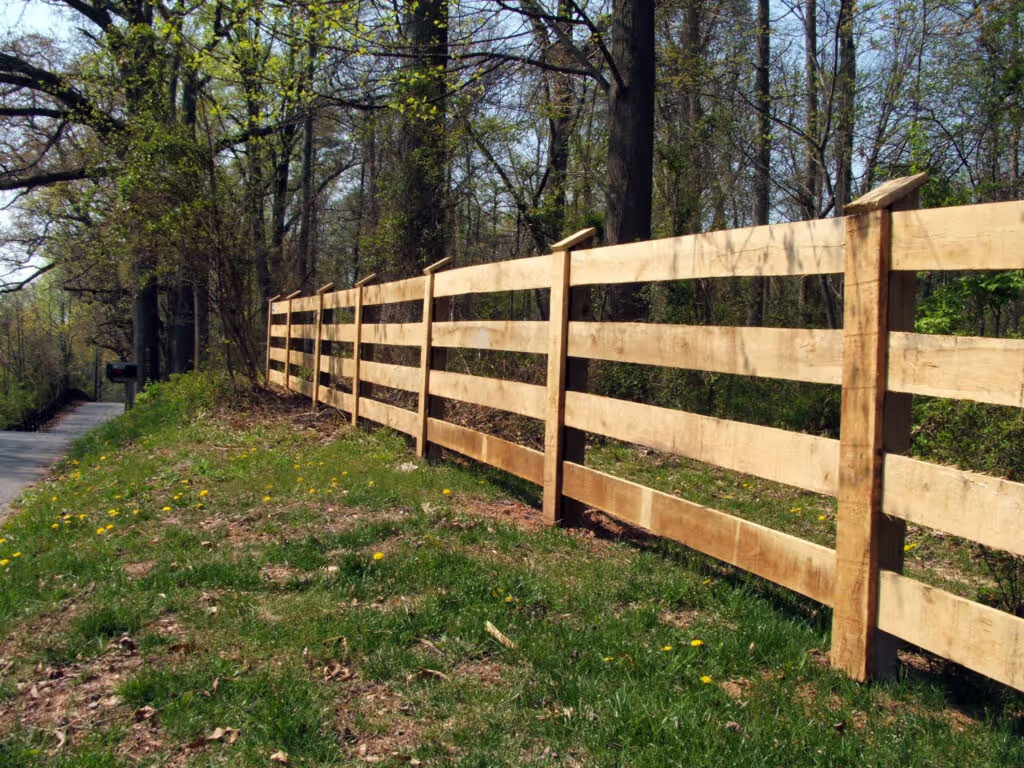
Our 3-year transferable workmanship warranty covers any installation defect—including post movement, picket separation, and gate misalignment. It excludes only damage from severe impact, flooding, or failure to perform recommended annual maintenance. This is backed by our 20 years of local expertise and our status as a fully licensed (13VH13604500), insured, and bonded contractor.
Our Process—Simple, Transparent & Local
We’ve refined our process to make every project predictable, transparent, and code-compliant.

1. Plan & Measure
Site visit, utility marking, and township review. You’ll receive a written proposal with an itemized scope and estimated timeline.

2. Schedule & Build
Once your 50% deposit is received, materials are ordered, and permitting begins. Most projects start within 2–3 weeks.
3. Walkthrough & Warranty
We inspect together before final payment and issue your workmanship warranty certificate.
EXPLORE OTHER OPTIONS
Not sure if wood is the right material for your property?

Are you looking for a partner to help you take your outdoor aspirations from dream to reality? Contact us today, and we will be in touch soon to help you get started with the initial details.
