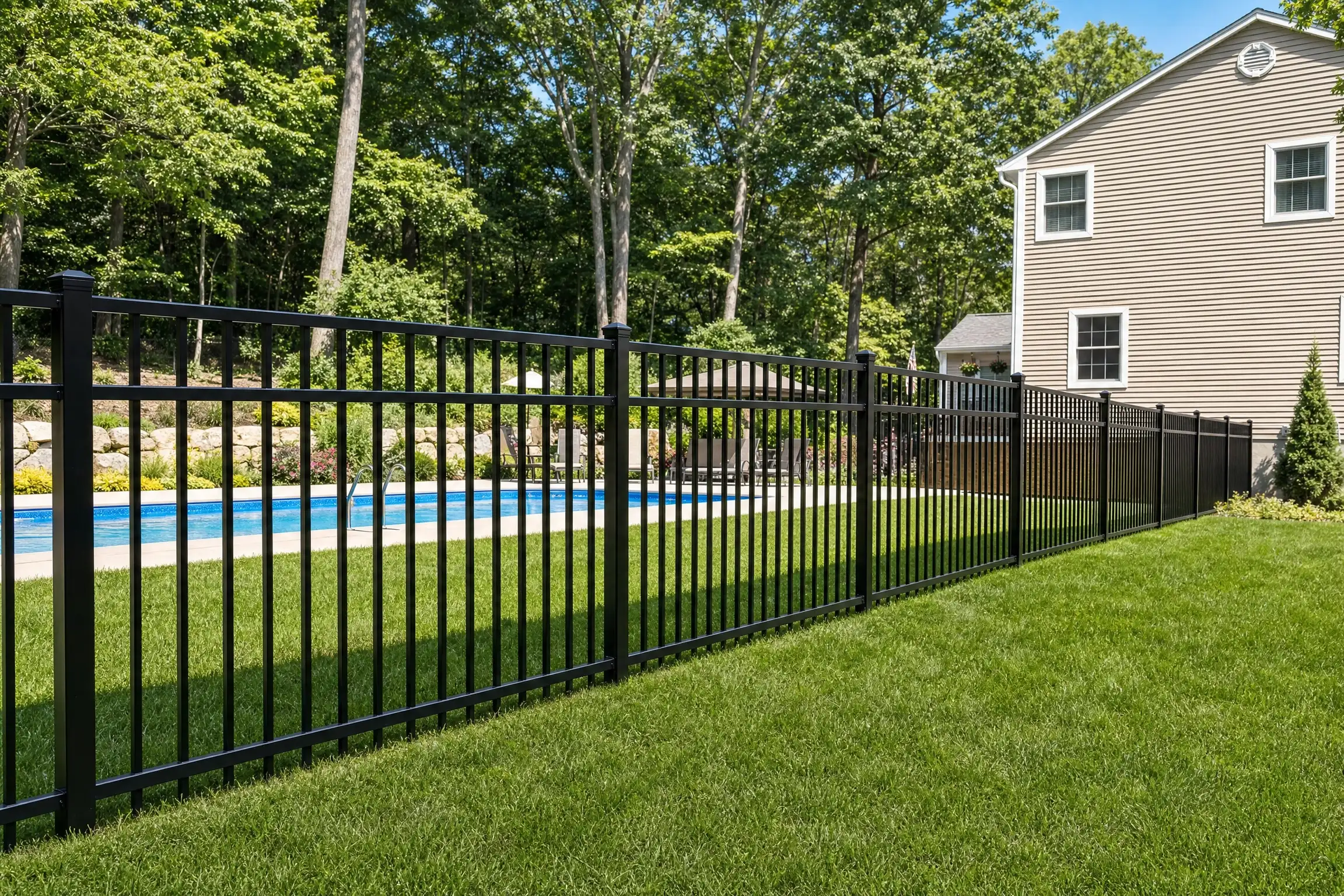
Aluminum fencing covers more aluminum fence styles than most homeowners expect. Flat top, spear top, puppy picket, double picket, and pool enclosure panels each have different proportions, strength specs, and use cases. Understanding the types of aluminum fencing before you buy means you won't end up with the wrong panel for your yard, your HOA, or your pool code.
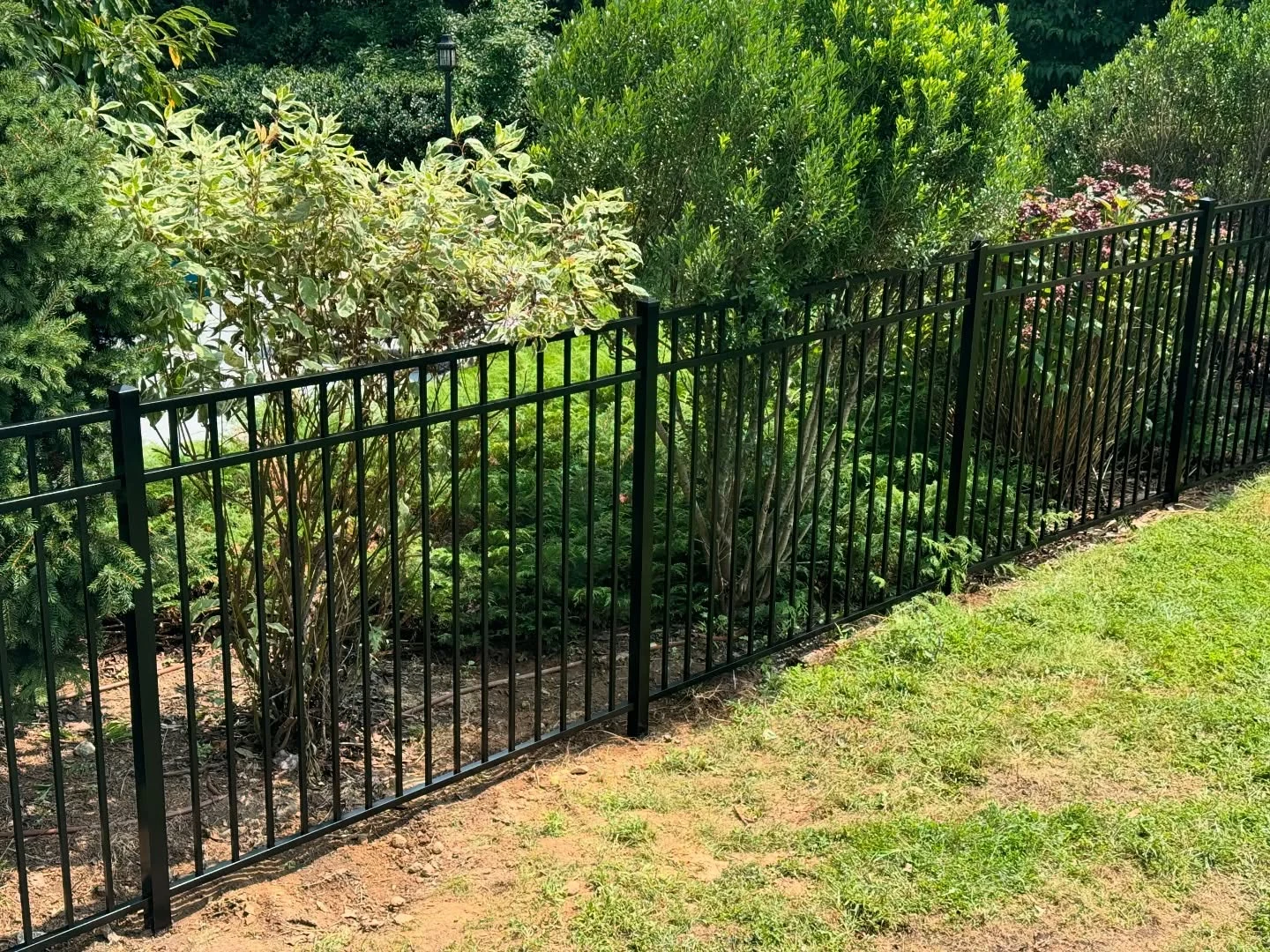
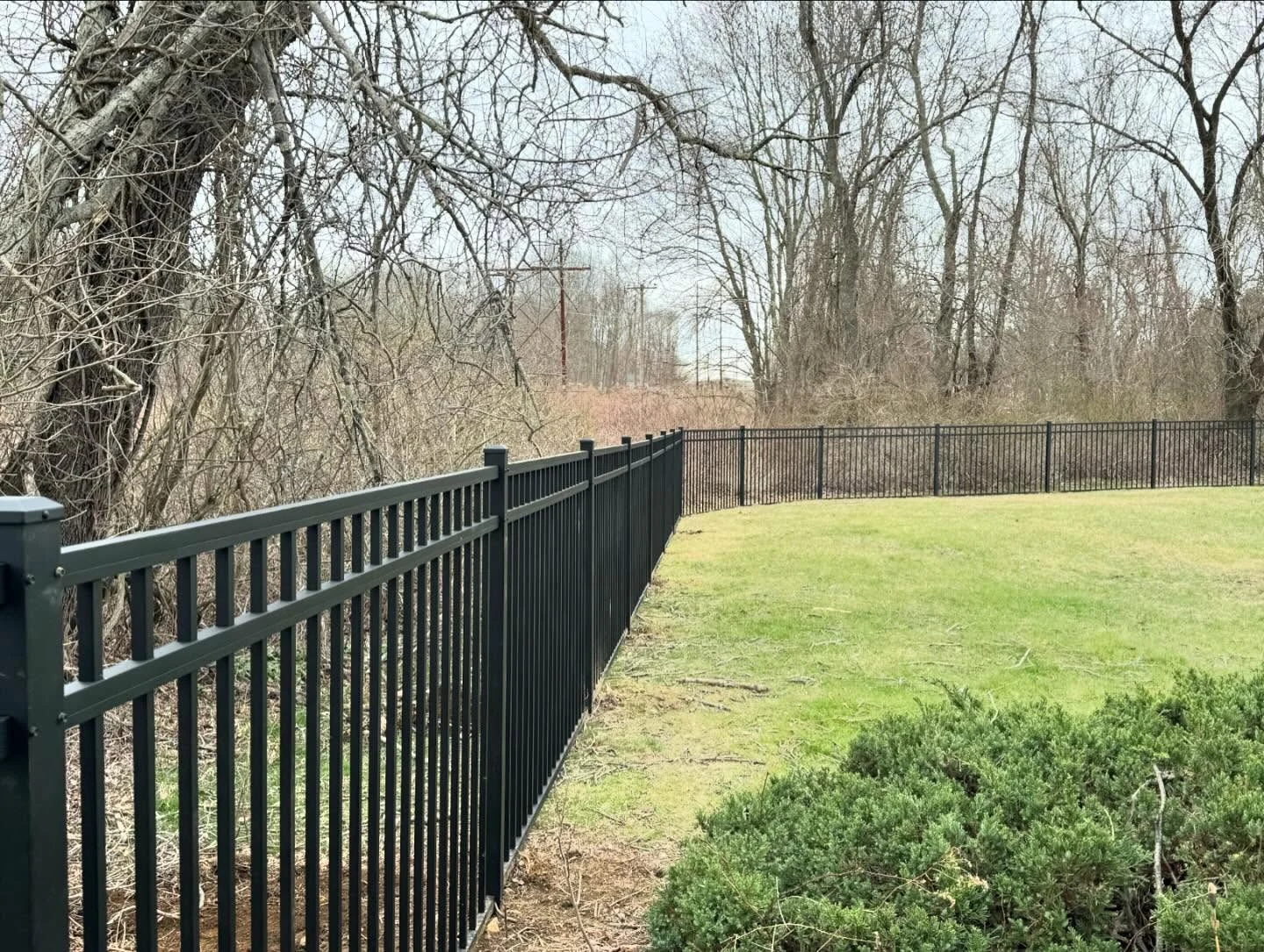
Every quality aluminum fence is powder-coated before it leaves the factory. The powder is applied electrostatically, then cured in an oven, bonding at the molecular level. As a homeowner, this process means that your aluminum stays protected much longer than if it was just painted standard and is one of the reasons these fences look great after so many years.
If you want the details from your fence contractor, the minimum exterior spec you should ask about is AAMA 2604, which requires color retention below a 5-unit shift after five years of outdoor exposure and gloss retention above 30% after five years. Higher-end lines are rated to AAMA 2605 for 10-year performance. Powder coat outlasts liquid paint by two to four times under comparable conditions.
Residential grade: Pickets 5/8" square × 0.050" wall thickness. Standard for single-family homes and most HOA communities.
Commercial grade: Pickets 3/4" square with heavier rails. Used for multi-family properties, resort pools, and HOA common areas.
Industrial grade: Pickets 1" square × 0.062" wall. Institutional perimeter security — uncommon for residential use.
36", 42", 48", 54", 60", and 72". Front yard ornamental aluminum fence typically runs 36"–42". General residential perimeter runs 48". Pool enclosures require 48" minimum per NJ code, with 54"–57" common for code compliance in municipalities that apply stricter standards.
New Jersey requires pool barrier fencing to be at least 48 inches tall (measured from the side facing away from the pool), with picket gaps no wider than 1¾ inches, and self-latching gates with latches positioned at least 54 inches above the ground. Many municipalities require 54" or taller. Most aluminum pool fence panels are ordered at 54" or 57" to meet those requirements without custom fabrication. Your fence contractor should order the right ones right away if they have experience in this area.
Standard powder coat colors from virtually all manufacturers include black (the most common for ornamental aluminum fence), white (popular for pool enclosures), and bronze (warm tone that pairs with brick and stone). Extended palettes — Hartford green, walnut brown, satin variants — are available from some manufacturers at a premium.
Is Aluminum Fencing Right for Your Property?
Aluminum fencing is not the right material for every property. Understanding where it excels and where it falls short helps you make the right call before installation begins.
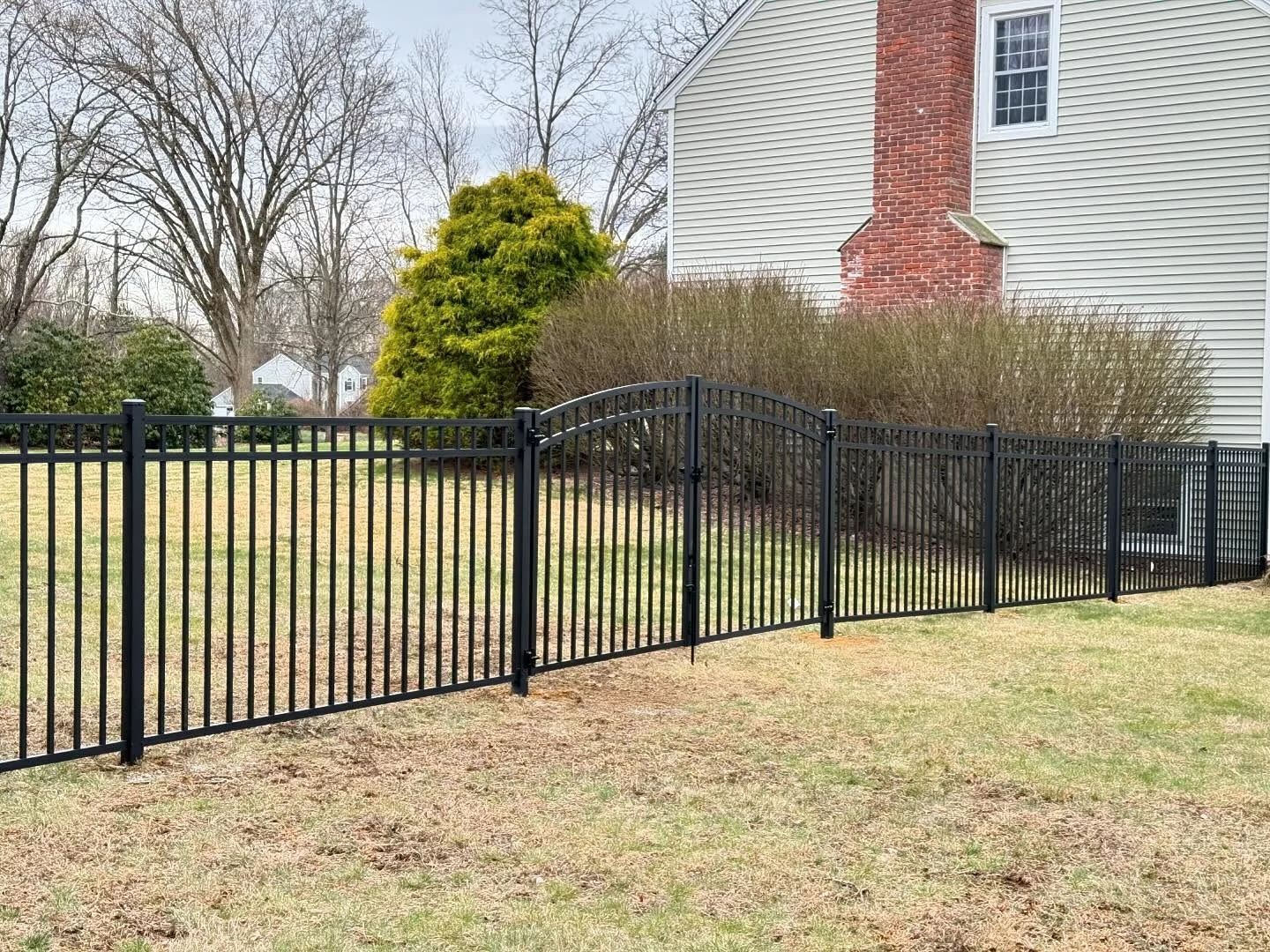
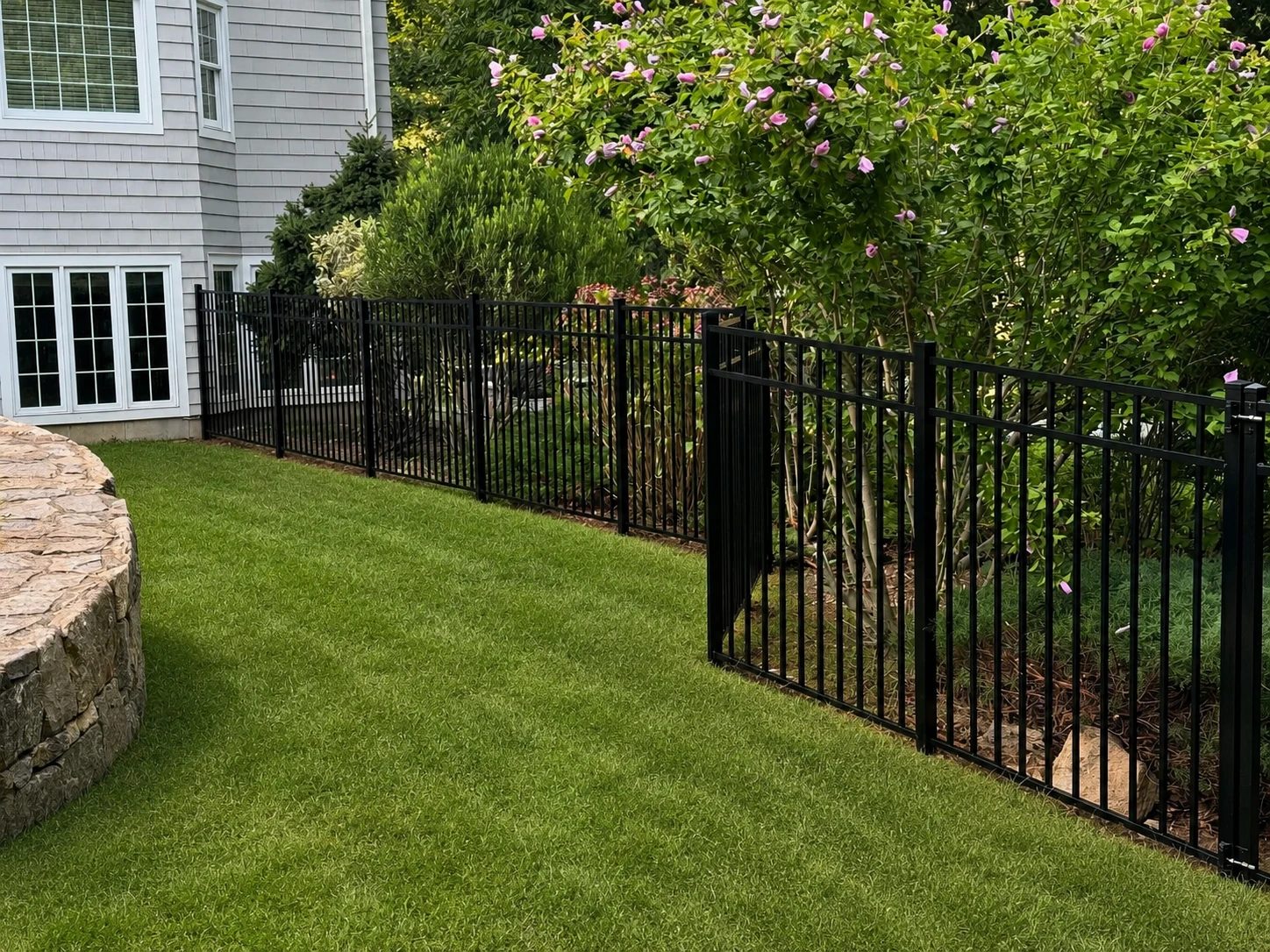
Aluminum is a fantastic material for South Jersey. South Jersey's climate puts two specific demands on fence materials: humid summers with salt air near the Delaware Bay, and freeze-thaw cycling from November through March.
Wrought iron handles the same cold temperatures, but it rusts in humid air without annual painting. That's a maintenance cycle many homeowners skip — and once rusted iron sections begin to fail, repair costs add up quickly. Aluminum carries no rust risk. A chip in the powder coat exposes bare aluminum, not bare steel, so the damage stays cosmetic rather than structural.
A sharp impact on a vinyl panel at 20°F can crack a picket in a way the same impact at 60°F would not. Aluminum does not have this temperature sensitivity.
The Mid-Atlantic frost line runs roughly 30–36 inches below grade in South Jersey. Aluminum fence posts set at shallow depth will heave out of the ground in hard winters — not because the aluminum fails, but because the concrete footings move. Posts set below frost line in properly sized concrete footings stay in position through seasonal temperature swings.
For properties near the Delaware Bay coast, powder coat finishes rated to AAMA 2604 or better provide adequate resistance to mild salt air exposure. Aluminum is not susceptible to the corrosion that damages iron or untreated steel in coastal environments.
Most aluminum fence installations look fine for the first two years regardless of how they were done. The problems show up in year three or four, when posts start leaning, gates start sagging, and pool code inspections find issues that were built in from the start. Here's what to check before you hire.
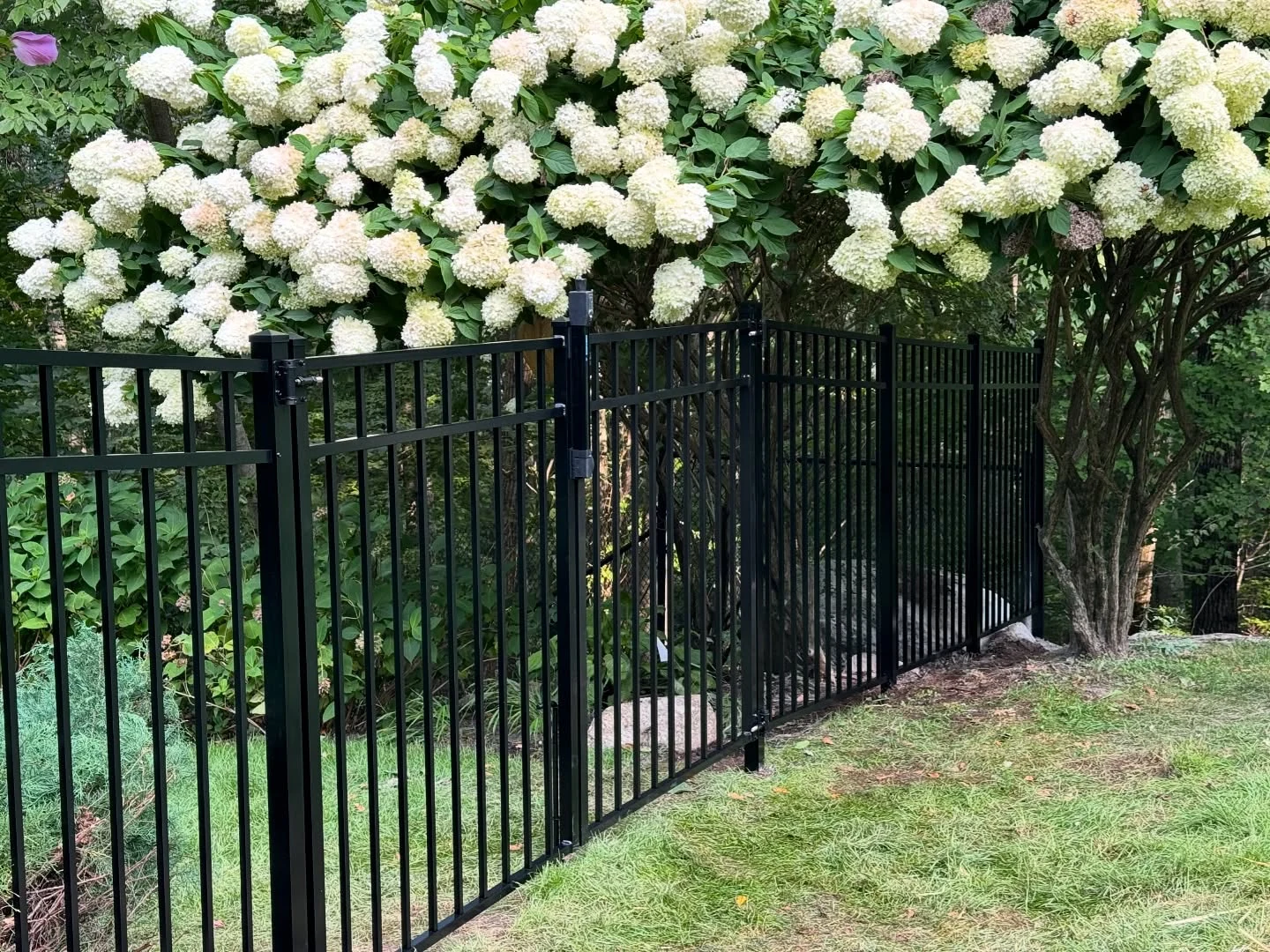
For South Jersey, that means at least 30–36 inches below grade — roughly one-third of total post length for a standard residential aluminum fence. Installers who set posts at 18–24 inches save time on the job and create problems for you in the second or third winter.
Residential grade aluminum fence is appropriate for most single-family homes. But pool enclosures, HOA entry features, and commercial properties call for commercial-grade panels with heavier pickets and rails. An installer who can't tell you the grade spec of the panel they're installing is working from a catalog, not from specification knowledge.
Aluminum fence installation near pools requires more than just choosing the right height. The installer should be able to recite the picket gap maximum (1¾ inches), the gate latch minimum height (54 inches), and the gate swing direction without looking it up. If they pause, that's a concern worth noting.
Aluminum in direct contact with certain grades of steel hardware can experience galvanic corrosion at the contact point. Quality installers use aluminum or stainless steel fasteners throughout, or apply barrier gaskets where dissimilar metals must contact.
Gate posts take more load than panel posts. A gate post set in the same-sized hole as a standard line post will fail early — the gate will sag or stop latching. Gate posts need larger-diameter holes, more concrete, and often rebar reinforcement.
Ask the installer to confirm the powder coat rating on the specific panels they'll use. AAMA 2604 is the minimum for exterior residential durability. If they can't provide that detail, ask for the panel brand name and look it up yourself.


Shallow-set posts are the most common aluminum fence failure in South Jersey. The frost doesn't damage the aluminum — it pushes the concrete footings out of the ground over several freeze-thaw cycles. By year three, the posts lean, the panel rails pull loose, and the fence looks like it was installed on a slope. Fixing it means pulling posts, breaking out the old footings, and resetting from scratch. Plan $200–$400 per affected post section for repairs.
Not every aluminum fence meets NJ pool barrier code. Residential grade panels with standard picket spacing (3¾" on center) will not pass a pool barrier inspection — the picket gap is too wide. Pool-code panels require maximum 1¾" gap between pickets and must reach at least 48" in height. Installing the wrong panel means failing inspection and replacing the fence before the pool opens.
A flat top aluminum fence gate that swings correctly on day one and sags by year two almost always traces back to a gate post set in an undersized hole without rebar. The gate's weight and the leverage of opening and closing force the post to shift. Once it starts, it accelerates. Proper gate post installation requires a larger-diameter hole (minimum 12"), rebar in the footing, and adequate curing time before gate hardware is installed.
Standard zinc-plated screws and brackets corrode at the point of contact with aluminum panels — a process called galvanic corrosion. The corrosion is slow but visible within a few years as rust-colored streaking around fastener points on an otherwise rust-free aluminum fence. Prevent it by using stainless steel or aluminum fasteners throughout, or by ensuring proper barrier gaskets are used at every hardware contact point.
Pool barrier codes include more than fence height. NJ requires self-closing, self-latching gates. The aluminum pool fence must meet the 1¾" picket gap rule. The latch must be at least 54 inches above the ground. Many homeowners discover these requirements only when the building inspector arrives. Getting them wrong means failed inspection, mandatory upgrades, and delays before the pool can legally operate.
Aluminum fence materials typically range from $10 to $40 per linear foot, depending on grade and style. Residential grade panels are at the lower end. Commercial grade and specialty configurations like puppy picket aluminum fence panels run higher. Installed costs vary by market — get quotes from at least two licensed installers and ask each to specify the panel grade.
A properly installed aluminum fence lasts 40 to 50+ years with minimal maintenance. Aluminum doesn't rust, rot, or require repainting. The powder coat finish holds color for 5–10 years depending on the specification (AAMA 2604 or 2605). The primary lifespan variables are powder coat quality and post installation depth, not the aluminum itself.
No. Aluminum is inherently rust-proof. It forms a natural oxide layer that prevents corrosion without any coating. A chip in the powder coat exposes bare aluminum — not steel — so damaged spots stay cosmetic and don't progress to structural rust the way wrought iron does. Touch-up spray from the manufacturer fills chips and restores color without primer.
A commercial-grade ornamental aluminum fence at 54"–57" height with picket spacing no wider than 1¾" meets NJ pool barrier requirements. NJ requires a minimum 48" height measured from the exterior side, a maximum 1¾" picket gap, and self-latching gates with latches at least 54" above the ground. Many townships require 54"–60". Flat top or spear top panels both work — what matters is height, gap spec, and gate hardware, not the ornamental style.
For open-style boundaries and longevity, aluminum wins. For privacy, vinyl wins. Aluminum outlasts vinyl by 15–25 years. Vinyl's closed-panel privacy fence options have no aluminum equivalent — if you need to block sightlines, vinyl is the right material. If you want an ornamental boundary fence with a 40–50 year lifespan and no repainting, aluminum is the stronger choice. See [types of vinyl fencing](/fence-materials-option/vinyl-fencing/types) if you're still comparing.
The main aluminum fence styles are flat top, spear top, puppy picket, double picket, and pool-code enclosure panels. Flat top panels have all pickets level with the top rail — the most common choice for HOA communities. Spear top panels extend pickets above the top rail in a pointed finial — the traditional ornamental aluminum fence look. Puppy picket panels add a second rail at the midpoint, doubling picket density in the lower half to contain small pets. Double picket panels use half-spacing throughout. Pool enclosure panels meet the specific gap and height requirements that NJ pool barrier codes require.
You've done the research. The next step is seeing aluminum fence styles installed in actual South Jersey yards — not in a catalog. Tri-State Fence & Deck has been installing aluminum fencing across Gloucester, Camden, and Burlington counties for over 20 years, including flat top, spear top, and pool enclosure panels.