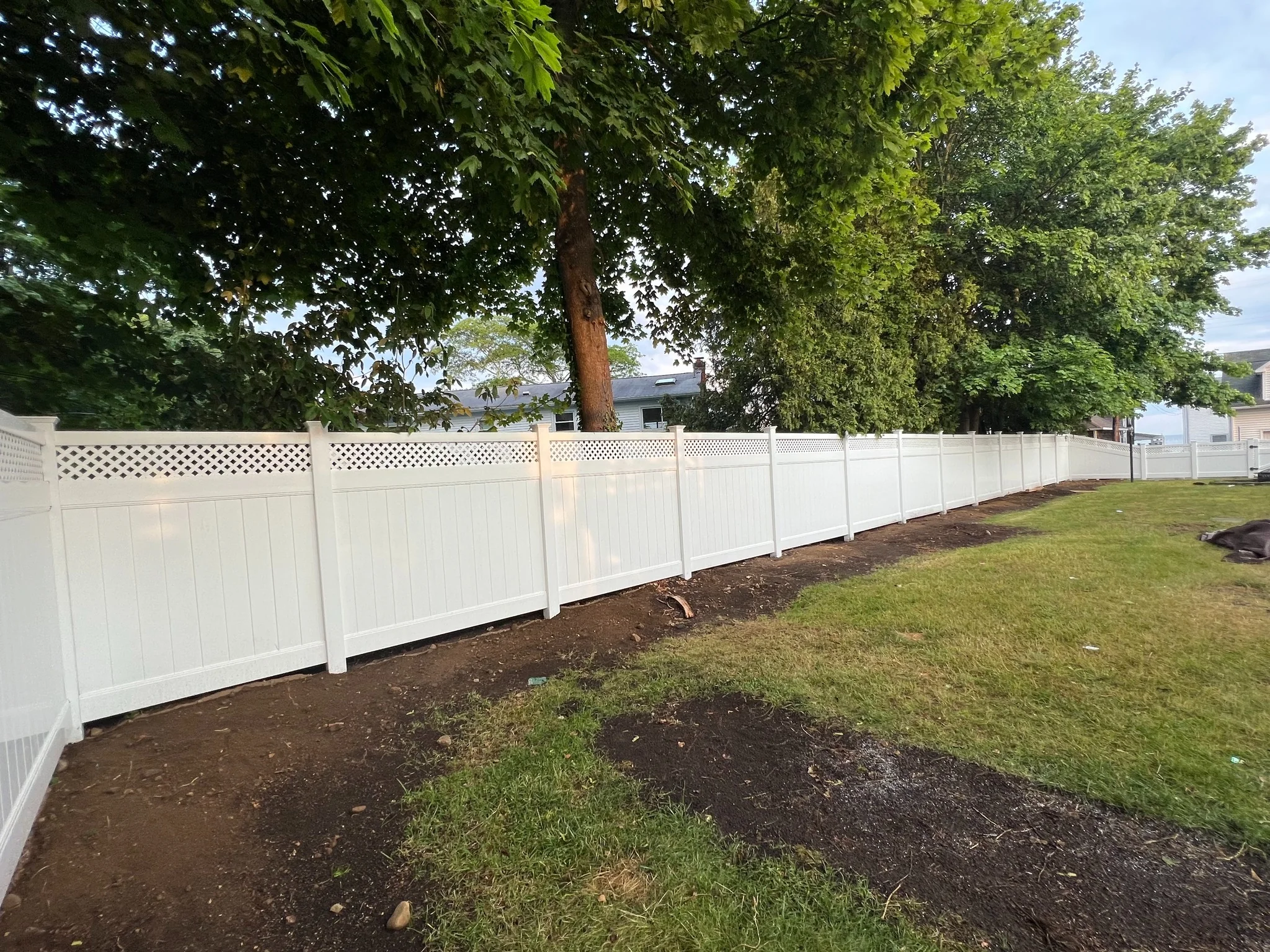
You're standing in your Gloucester County backyard trying to figure out what to put along the property line. Vinyl, aluminum, or wood — every neighbor has a different opinion and every contractor's website says theirs is best.
The honest answer for South Jersey homeowners on vinyl vs. aluminum vs. wood fencing is that there is no single “best” material. There is the best choice for your yard, your HOA, your budget, and how much maintenance you're willing to do.
We install fences across Gloucester, Camden, and Burlington counties, and most of what goes in the ground is vinyl. Aluminum and wood are still the right answer in specific situations, such as pool enclosures, sloped lots, or homeowners who genuinely want the look of cedar.
This guide walks through the vinyl fence vs wood fence decision, adds aluminum to the comparison, and shows where each material performs best in South Jersey.
Before choosing a material, understand what your fence will face. South Jersey gets 40 to 45 inches of precipitation a year, long humid summers, and enough freeze-thaw cycles to move any post that isn't set deep enough.
The New Jersey Uniform Construction Code (N.J.A.C. 5:23) requires a minimum 30-inch frost line depth for southern New Jersey, according to the NJ Department of Community Affairs. We set every post to a minimum of 42 inches because posts installed at the bare minimum depth can still heave in moisture-holding soils.
Gloucester County soils are largely sandy loam with clay pockets in older developed areas. Sandy soil drains quickly but provides less lateral grip. Clay holds water and expands when frozen. In both cases, post depth and footing shape matter as much as the fence material itself.
Humidity is the biggest challenge for wood. Wood absorbs moisture, expands, contracts, and eventually begins to deteriorate at the base. Vinyl and aluminum do not have that problem, which is why they dominate so many South Jersey installations.

For most South Jersey homeowners, vinyl is the easiest long-term decision. The vinyl fence vs wood fence question often comes down to what you want to be doing years from now. If the answer is “not staining a fence,” vinyl usually wins.
Vinyl does not rot, splinter, or require painting, and it handles South Jersey humidity extremely well. A quality vinyl fence in Woolwich or Washington Township can provide decades of service with little more than an occasional rinse.
Wall thickness is the key specification. Budget vinyl is typically around 0.100 inches thick, while higher-quality products run 0.150 inches or better, according to our vinyl material guide. Thicker vinyl is less likely to become brittle during cold snaps or crack when struck by debris.
The other important factor is UV protection. Titanium dioxide (TiO₂) helps prevent yellowing and fading in direct sunlight.
Vinyl is also the standard choice in many HOA communities across South Jersey, including Four Seasons at Weatherby, The Preserve, and The Ridings at Woolwich. White vinyl privacy fencing is popular because it is uniform, low-maintenance, and typically easier to get through architectural review.
For style and thickness options, see our vinyl fence installation page.

Aluminum represents a smaller share of our installations, but it is often the right choice for pool enclosures and sloped lots.
Pool code is the biggest reason homeowners choose aluminum. New Jersey pool barrier requirements call for a minimum height of 48 inches, self-closing and self-latching gates, and a non-climbable design. Aluminum's vertical pickets and narrow spacing meet those requirements cleanly.
Sloped yards are the other advantage. Aluminum panels can be “racked” to follow the yard's grade, while vinyl panels are installed in stepped sections. On properties near Big Timber Creek or the Mantua Creek drainage, that can create a noticeably cleaner appearance.
The cost comparison between aluminum and vinyl fences is often closer than with most materials. Maintenance is also similar, with both materials generally falling into the install-and-forget category.
Look for a powder-coated aluminum fence with an AAMA 2604 or better finish. Lower-grade coatings are more prone to chipping and fading.
Aluminum is also useful on corner lots where municipalities limit fence height within the visibility triangle. The open-picket design maintains sightlines while still defining the property line.
See our aluminum fence installation page for style options.
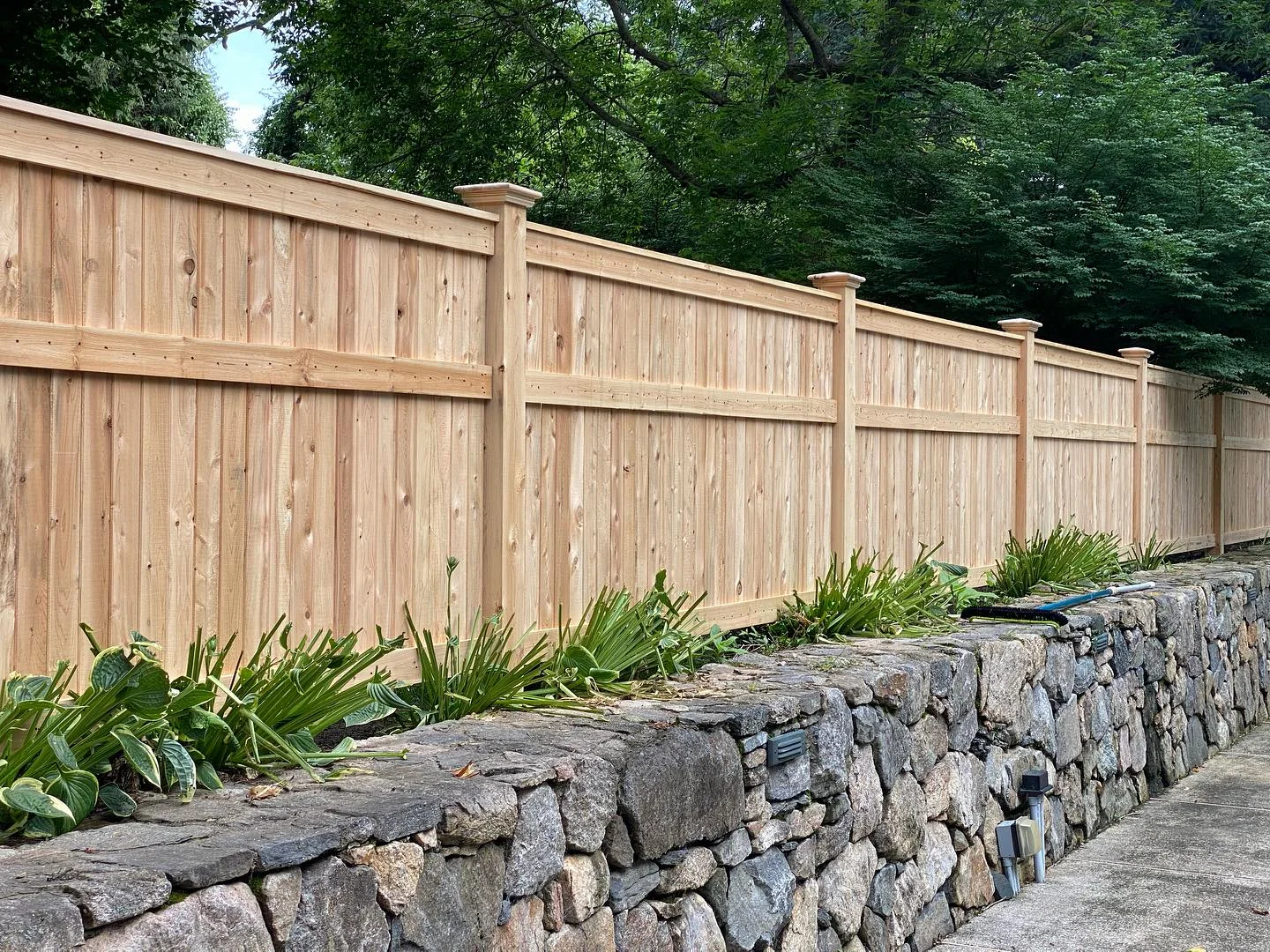
Wood offers the strongest traditional appearance, but it also demands the most maintenance. If you love the look of cedar and are willing to stain it every few years, wood can be an excellent choice. If you know you won't maintain it, vinyl is usually the better fit.
Cedar is the preferred wood. We use #1 grade Western Red Cedar because of its natural resistance to insects and moisture. Pressure-treated pine is the lower-cost alternative, but it does not age as gracefully in South Jersey humidity.
If you choose pressure-treated lumber, make sure any material in contact with the ground is UC4A rated, as noted in our wood fence specs. Above-ground-only ratings are not designed for direct soil contact.
Fasteners also matter. Pressure-treated lumber can corrode standard steel hardware. We use ASTM A153 hot-dipped galvanized ring-shank nails on wood fences, with stainless steel as an upgrade option when the budget allows.
Wood fence posts receive the same 42-inch minimum depth and bell-bottom footing treatment we use on other installations. A shallow wood fence in Gloucester County clay will not stay straight for long.
With regular sealing, a cedar fence in South Jersey can last 15 to 25 years. Pressure-treated pine typically lasts 10 to 15 years, while quality vinyl often lasts 30 years.
Typical South Jersey installed pricing varies by yard conditions, gate count, and terrain. The table below focuses on maintenance, lifespan, and where each material performs best.
For South Jersey's climate, vinyl is usually the strongest overall choice for privacy and low maintenance. The main exception is a homeowner who truly wants the look of cedar and is prepared to maintain it over time.
If you want a written quote and someone to walk the property with you, get a free on-site estimate. We'll look at your soil, slope, HOA requirements, and long-term plans before recommending a material.
Tri-State Fence & Deck
(856) 230-7082
591 Mantua Blvd Suite 201
Sewell, NJ 08080
