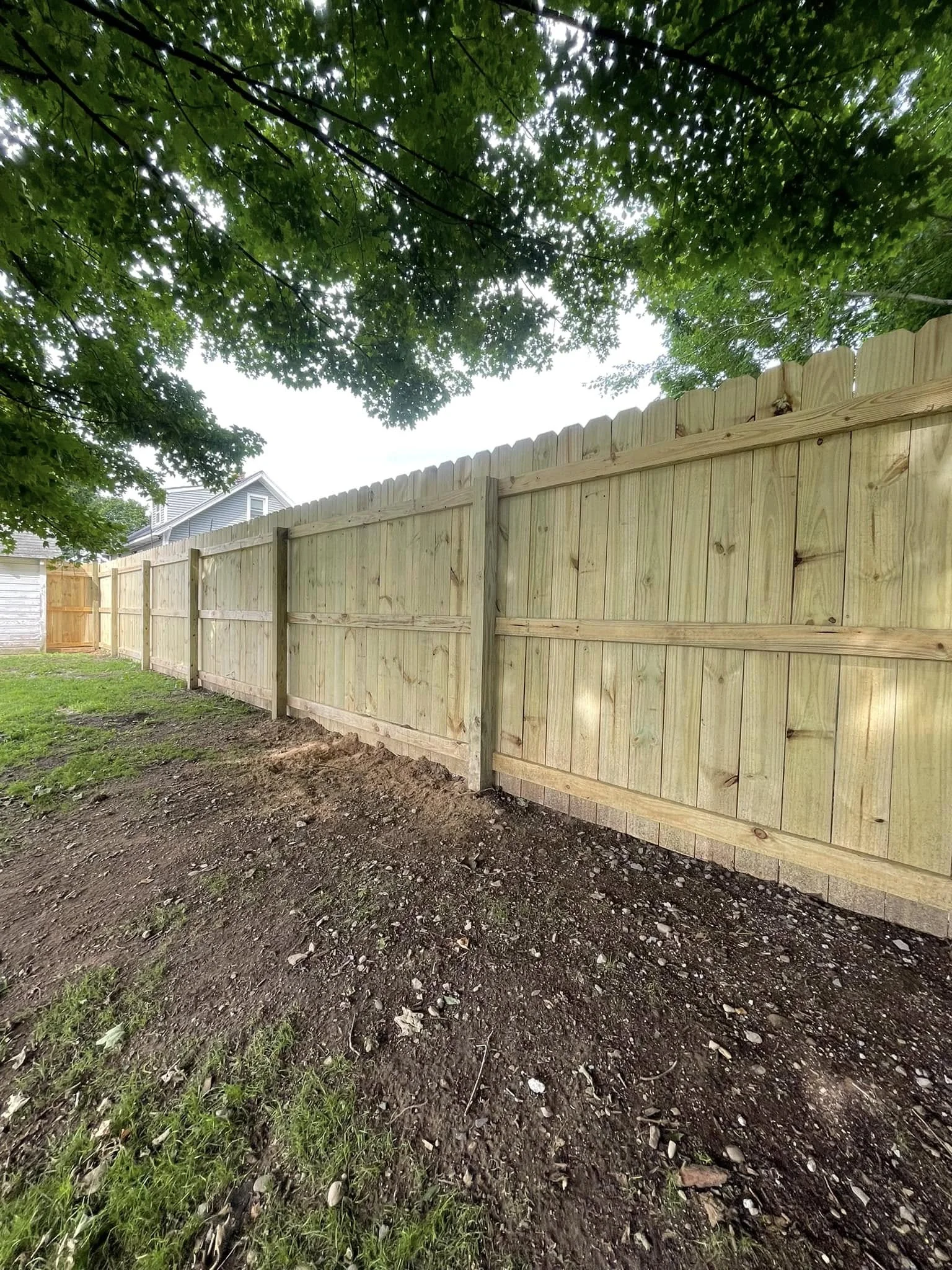
A privacy fence in Wilmington sits on two different worlds. Brandywine lots hit Piedmont rock a few feet down. Christina River and Riverfront lots sit on Coastal Plain soil with a higher water table. Same city, two very different backyard privacy fence jobs. This guide walks through what makes a privacy fence in Wilmington, DE actually stay straight, what the permit rules look like, and how to choose between vinyl, wood, and aluminum. Every step matters more here, because a solid privacy panel catches wind the way an aluminum picket never will.
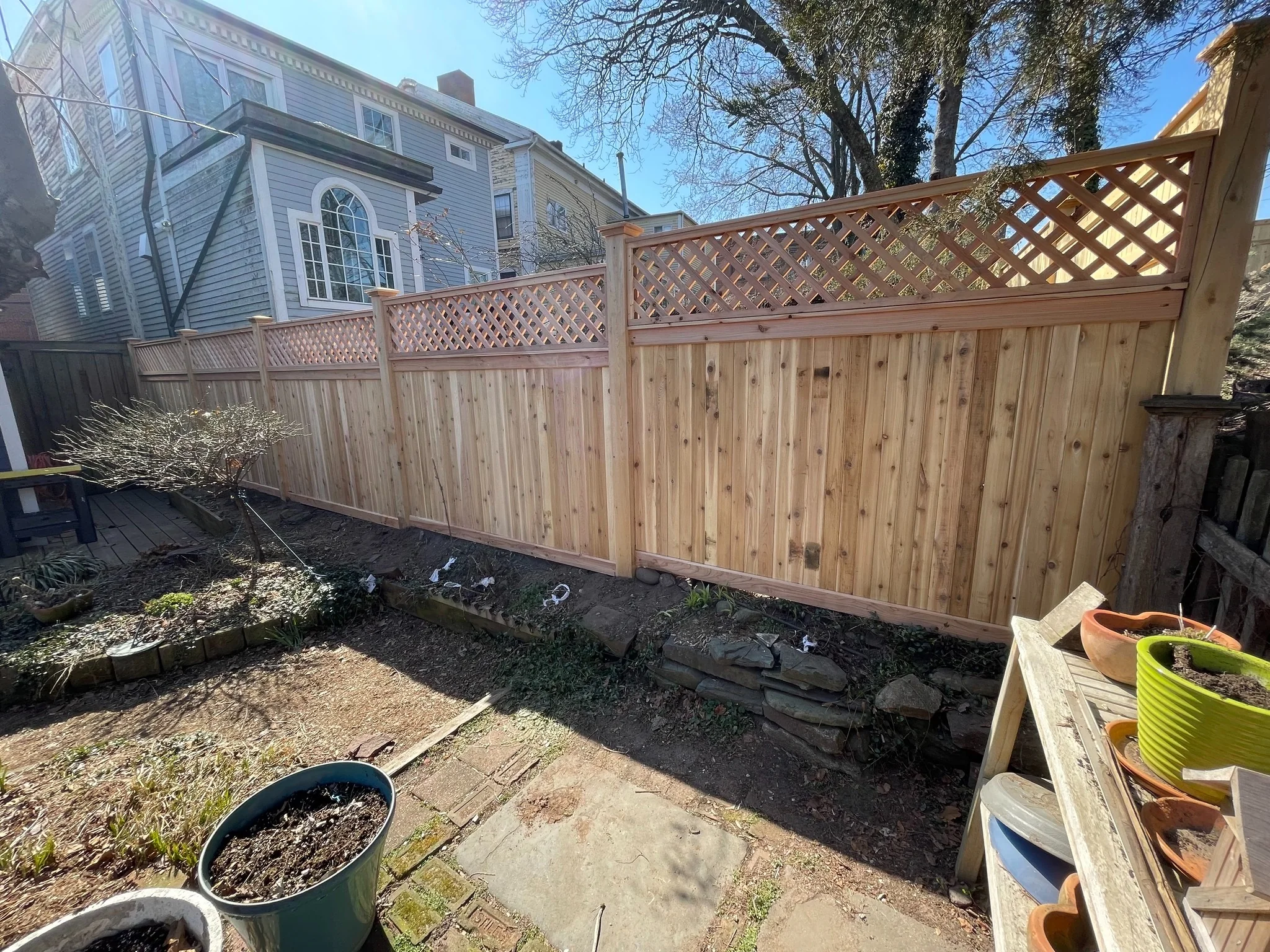
A privacy fence is a solid wall: 6 feet tall, no gaps, catching every gust off the Delaware River. That wind load is the reason a 6-foot privacy fence fails when the posts are set shallow. Ornamental aluminum lets wind pass through the pickets. A privacy panel doesn't, so the post has to carry that load through 30 winters.
New Castle County's building code sets the frost depth at 32 inches, per the county's own footing checklist. That's the minimum for post-setting. Set a post at 24 inches and freeze-thaw will lift it about half an inch each winter. After three or four seasons, the fence line waves. Set the post below 32 inches in concrete, and the ground below the freeze zone holds it still.
Then there's the soil. Brandywine and the neighborhoods sitting on the Fall Zone hit Piedmont bedrock or dense saprolite at shallow depth, which calls for a hydraulic auger, sometimes a rock bit. Down near Riverfront and along the Christina River, the ground is Coastal Plain, and the water table sits high enough that post holes fill with groundwater before the concrete goes in. Wet holes mean concrete that never cures right, so the fix is a different mix, sometimes a gravel base, and knowing to check before you dig.
A privacy fence in Wilmington isn't a national install. What holds up in Ohio doesn't automatically hold up here.
Delaware's State Building Code generally exempts residential fences under 6 feet from state-level permits, but that doesn't mean skipping the city. Wilmington runs zoning through the Department of Land Use and Planning at 800 N. French Street, on the third floor of the Louis L. Redding City/County Building, and rules vary by zoning district: R-1, R-2, and R-2-A each carry their own limits.
The general residential guideline for Wilmington is 6 feet in the rear and side yards and 3 to 4 feet in the front yard. We confirm the exact figure against your zoning district and the current city ordinance before the estimate goes out, since district-level figures aren't the kind of thing we'll quote from memory. Corner lots and lots facing two streets carry additional sight-line rules. Privacy fence height in New Castle County isn't one number for every lot, which is why we check the survey and the zoning district first.
If you're near Quaker Hill or Old Swedes Church, plan on an extra layer of review. Those historic areas can carry architectural approval requirements on top of zoning, and we coordinate that paperwork so you're not chasing it. Since we handle the zoning application, the historic-district paperwork, and the utility locate before we ever pick up a shovel, request your free on-site estimate and we'll walk your specific lot through all of it.
One more requirement before any digging: call 811 for a Delmarva 811 utility locate, Delaware's state-designated one-call center under Delaware Code Title 26, Chapter 8. State law sets a notice window of 2 to 10 working days before digging can start, and we schedule the locate on your behalf so it's done well before install day.
Three real options, and one that people mistake for privacy.
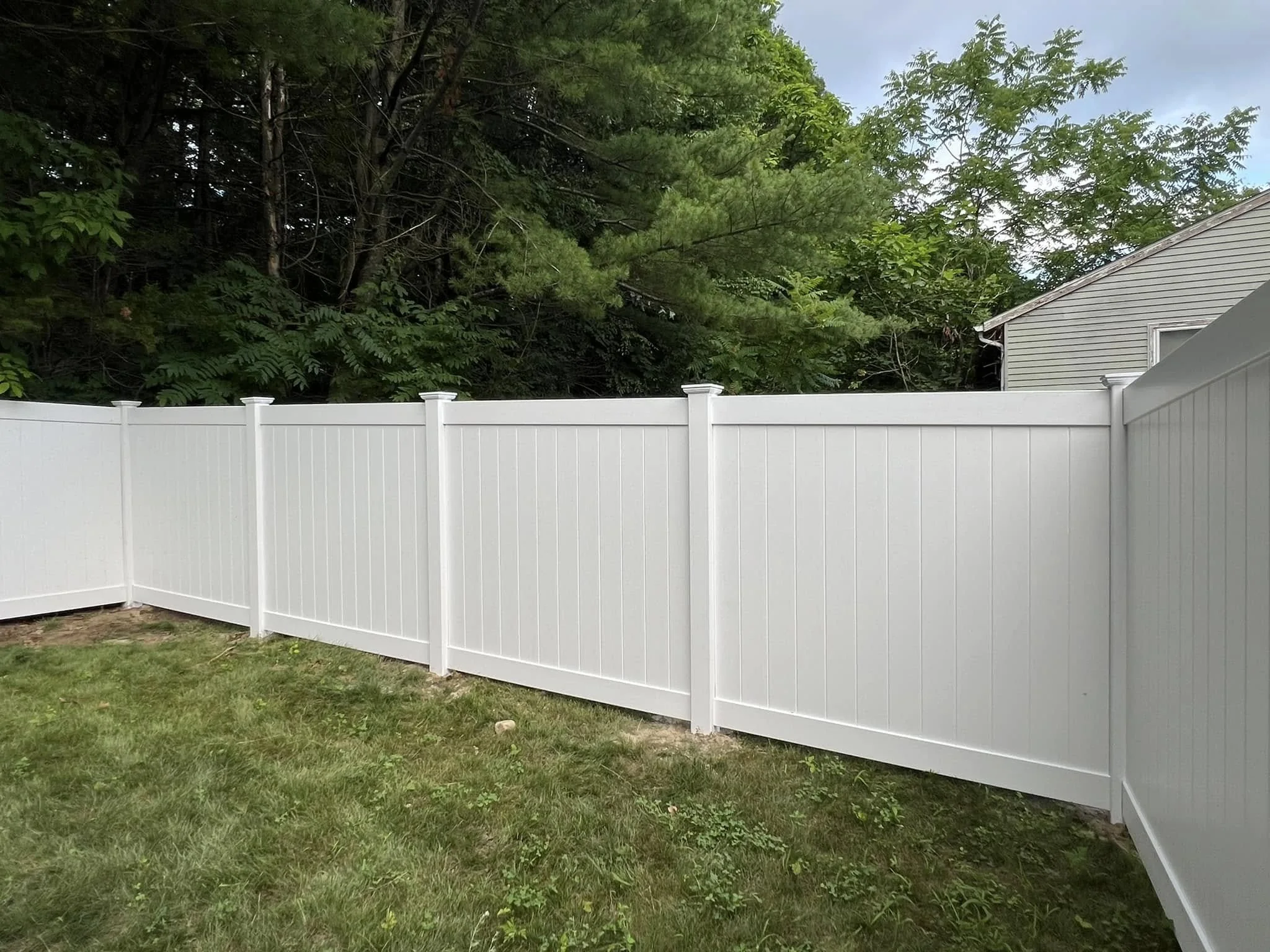
This is what most of our Wilmington customers pick. A vinyl privacy fence in white, usually tongue-and-groove for full screening or lattice-top if the HOA prefers something softer, needs no painting or staining, and holds up to UV exposure through Delaware summers. When someone searches for a vinyl privacy fence in Wilmington, DE, this is usually the fence they're picturing. See our vinyl fence installation options for styles and colors.
Cedar or pressure-treated pine, in two privacy styles worth naming: board-on-board (staggered pickets, no gaps, both sides look finished) and shadowbox (alternating pickets, breathable, good for wind). On lots near the Christina River, we steer customers toward decay-resistant selections for a wood privacy fence in Wilmington, because the higher water table shortens the life of anything not rated for ground contact and moisture. Explore our wood fence installation options for species and grades.
Ornamental aluminum has spacing between pickets, which is what makes it wind-friendly and pool-code-friendly, but that same spacing means it doesn't provide privacy. When a homeowner asks for privacy and points at an aluminum sample, we steer them toward vinyl or wood instead.
Tongue-and-groove vinyl is our most-installed style, with board-on-board and shadowbox covering the wood side and lattice-top adding privacy with a decorative cap where that fits the look better.
Every privacy fence installation starts with Eriberto Sr. or Jr. walking your property, not a subcontractor or a salesperson. We measure, check the soil, review the survey, and hand you a written quote on the spot.
From there, we handle the paperwork: the zoning permit through the Department of Land Use and Planning, the HOA submission if your community requires one, and the Delmarva 811 ticket before we dig. The permitting process should not land on you. That's the job of your privacy fence contractor, not the homeowner.
On install day, posts go in below 32 inches in concrete, panels get set, gates get hung, and we walk the line with you before we leave. As a full-service privacy fence installer, we back the workmanship with a 3-year warranty covering post movement, picket separation, and gate misalignment. Material warranties, including limited lifetime coverage on vinyl, pass through from the manufacturer.,.
Tri-State has spent 20 years serving South Jersey and Delaware and completed thousands of fences as a family-owned business. Call (856) 230-7082 or request a free estimate to get your on-site quote started.
