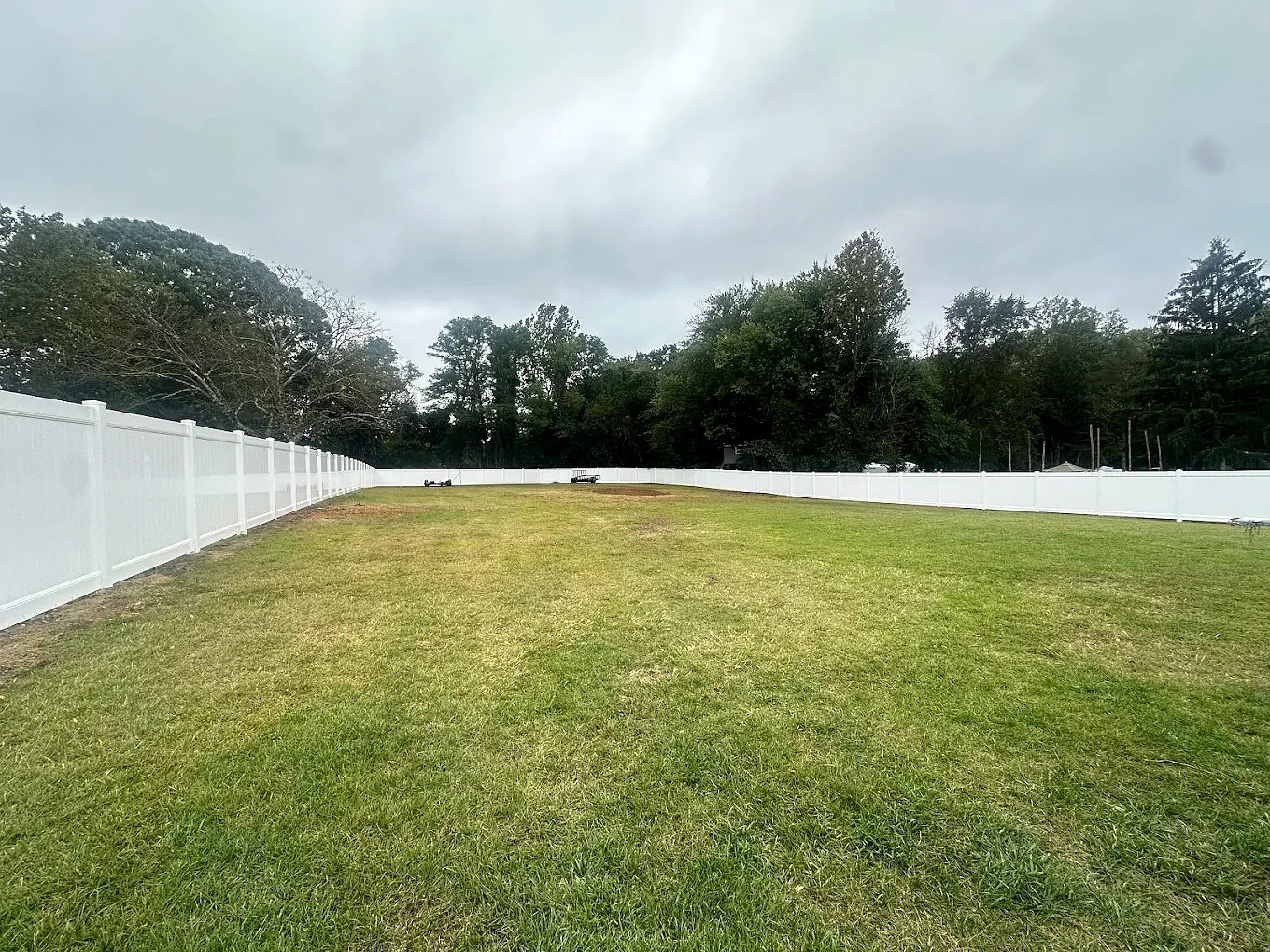
Fence installation costs in Harrison Township, NJ, usually fall somewhere between a few thousand dollars and the low five figures. The challenge is that there is no single number that fits every property. The material you choose and the total length of your yard drive most of the cost.
A short aluminum run around a pool will price very differently than 200 feet of vinyl privacy fence around a home. This guide breaks down real per-foot ranges for Mullica Hill and the rest of Gloucester County, and explains why two quotes for the same yard can come in far apart.
Most homeowners want a starting number before anything else.
In the Mullica Hill area, a typical residential fence runs roughly $30 to $75 per linear foot installed, depending on material and site conditions. That range includes labor, posts set in concrete, and standard hardware.
So what does that look like on an actual project? Length is the biggest multiplier.
These are regional planning ranges, not a quote.
From there, the total shifts based on details around your property. The number of gates, whether an old fence needs to be removed, and how the ground sits all play a role. A flat, open yard is faster to install than one with slopes, tree roots, or a drainage swale.
That is why the only way to get a real number is a site visit. We walk the property, measure the runs, and give you a written quote so you are not relying on a rough phone estimate.
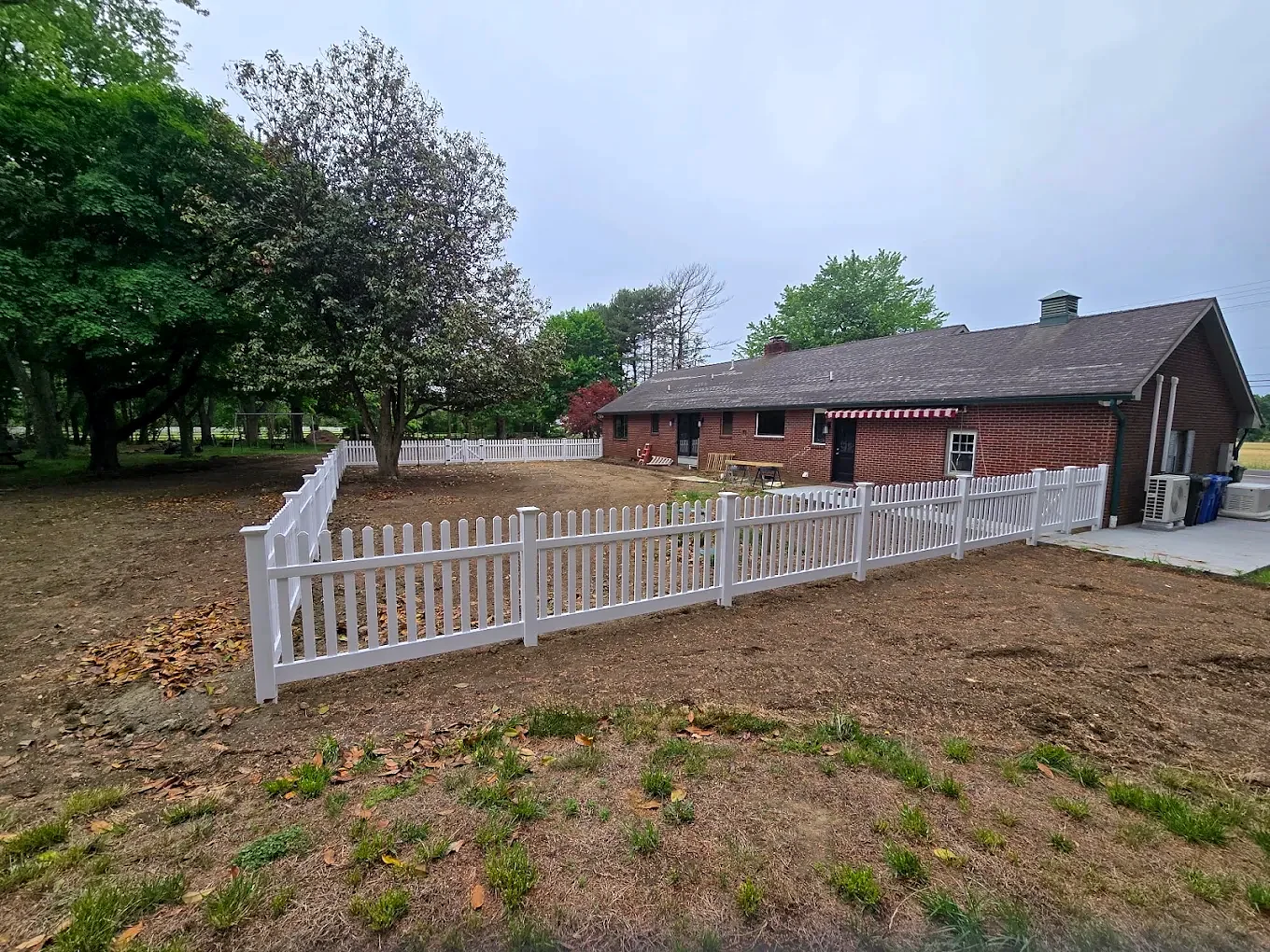
Once you understand the baseline cost, the next question is what actually moves it up or down. Material choice is the other major factor.
Here is how the four options we install compare for a South Jersey homeowner.
This is the most common choice in this area. When most homeowners picture a backyard fence, they are thinking of a white vinyl privacy fence. Expect roughly $40 to $65 per linear foot for a standard 6-foot privacy panel, with higher pricing for premium profiles.
Vinyl typically lasts 25 to 30 years and requires very little upkeep beyond an occasional rinse. Privacy styles cost more than open designs because they use full panels instead of spaced pickets.
Aluminum is the second most popular option, especially for pool enclosures and front yards where you want a clean, open look. Pricing usually falls between $45 and $75 per linear foot installed.
It is powder-coated, holds up for 30 to 50 years, and is close to maintenance-free. Here is our aluminum fence line.
Wood offers a natural look at a lower upfront cost, but it requires ongoing maintenance. Staining or sealing every two to three years is necessary to reach a 15-to-20-year lifespan. We offer wood fencing, although most residential projects have shifted toward vinyl for lower upkeep.
This is typically the most economical option, but we install it as commercial chain link only, not for residential yards.
One detail that often gets overlooked is how the posts are installed. Gloucester County sits at a 36-inch frost line, which means posts need to be set below that depth in concrete. If they are not, the ground can shift during winter and cause the fence to lean. A lower quote that skips proper footing depth usually reflects that shortcut.
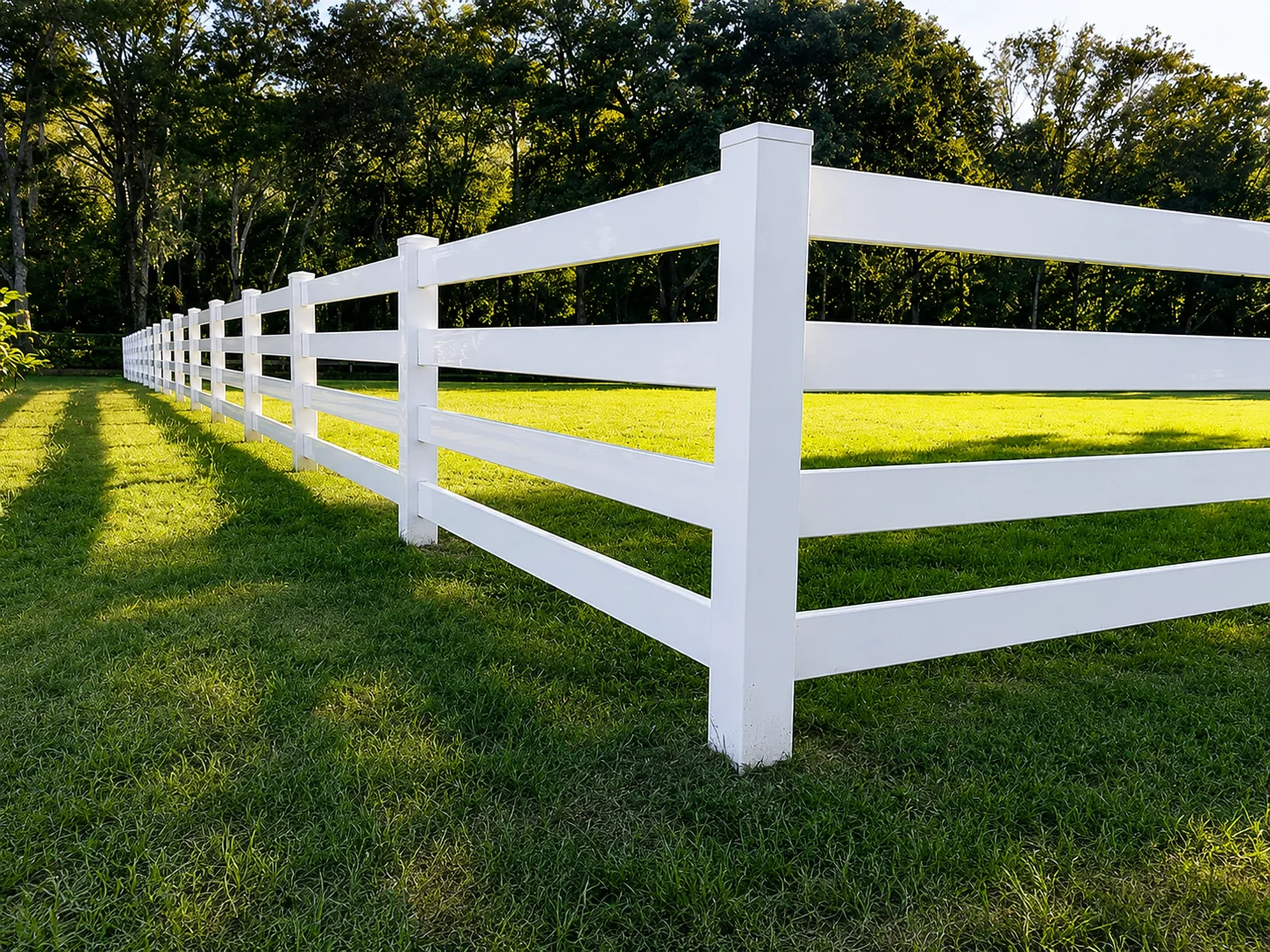
At this point, many homeowners want to know why two quotes for the same yard can be thousands apart.
The fence itself is only part of the equation. Several factors, including local requirements in Harrison Township, directly affect the final price.
A property survey is one of the biggest surprises for homeowners. Harrison Township’s Zoning Office requires a to-scale survey with your application, and the township does not keep surveys on file. If you already have one from closing, you are set. If not, hiring a land surveyor can add anywhere from a few hundred to well over a thousand dollars, depending on your lot.
Permits also come into play on certain projects. Fences 6 feet or taller, pool fences, and commercial installations require township approval, which adds both cost and timeline.
Beyond those local requirements, the standard cost drivers still apply:
If you want to move from a range to an exact number, the next step is simple. We come out, measure the property, and give you a written quote on-site. You can also review our recent South Jersey projects before scheduling your estimate.
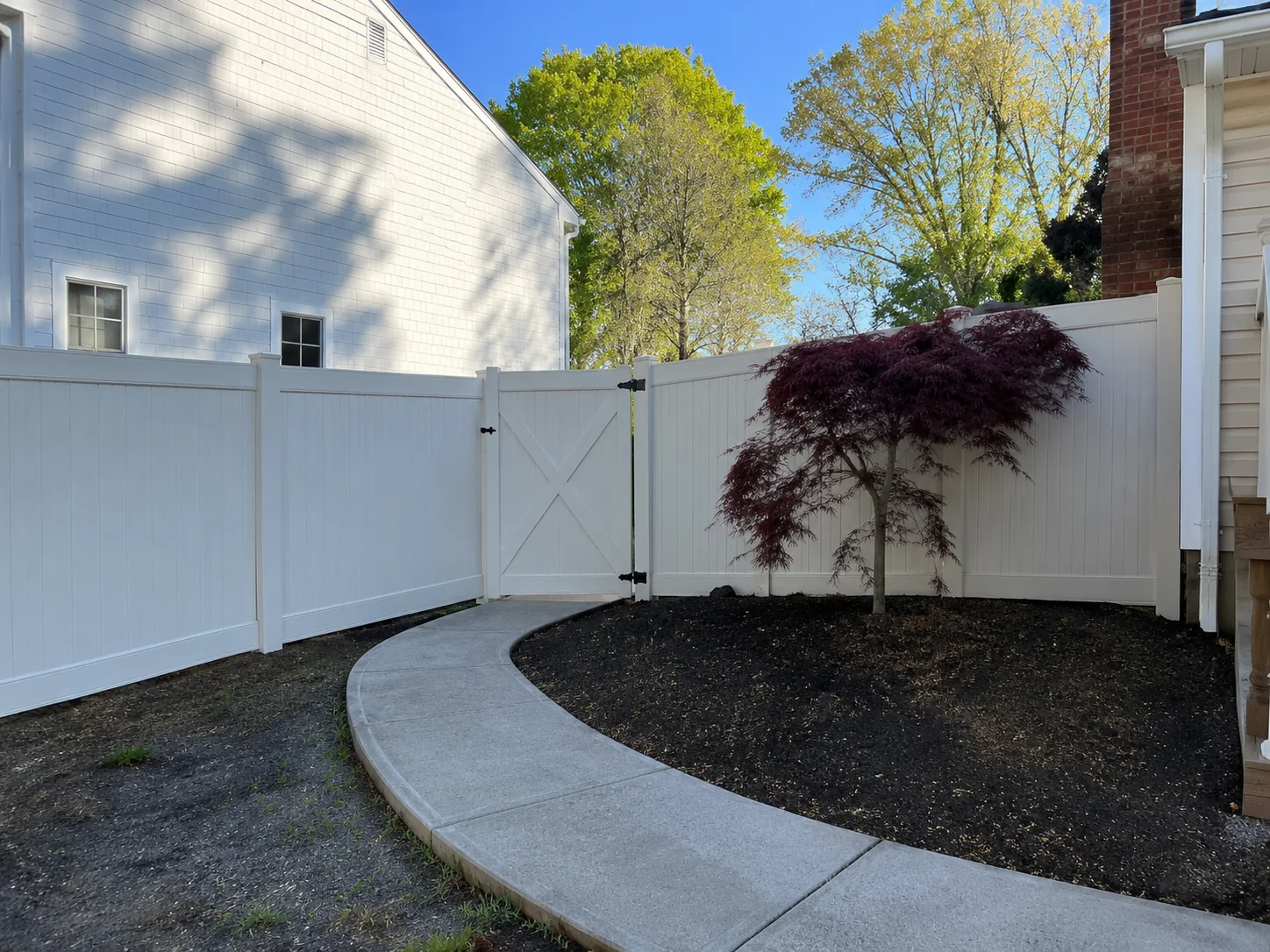
Once cost and materials are clear, the next question is usually about permits.
For most residential fences under 6 feet, the process is straightforward. However, three types of projects require township approval.
According to the Harrison Township permit grid, fences that are 6 feet or taller, surround a pool, or are commercial require both a building permit and zoning approval before installation begins. This includes a fee, a survey submission, and a short approval period.
We handle that entire process for you. That includes preparing the application, submitting the survey, coordinating with your HOA if needed, and making the New Jersey 811 utility locate call. By law, that call must be made at least three full business days before digging.
Pool fences require additional attention. Harrison Township’s pool barrier code sets specific requirements for height, picket spacing, and self-latching gates. These requirements can increase both material and labor compared to a standard fence, but they are necessary for passing inspection.
Front-yard and rear-yard height limits vary by property, so we help you confirm the exact allowances for your address before installation.
Every yard is different. The most accurate way to understand your cost is with a written on-site estimate. We measure, walk the property lines, and give you the exact number in writing. Request your free estimate and we will come to you.
