
If you are planning a new deck in Washington Township, Sewell, or anywhere in Gloucester County, the short answer to how much does a deck cost in South Jersey is anywhere from $8,000 for a small pressure-treated wood build to $50,000 or more for a large multi-level Trex composite deck.
That range exists because no two properties are exactly the same. Soil conditions, elevation changes, access to the yard, and local code requirements all influence the final cost. A small ground-level wood deck will sit at the lower end, while a large elevated composite deck with railings and stairs will fall toward the higher end.
In South Jersey, pricing tends to be higher than national averages due to labor costs, permitting requirements, and stricter building codes. For that reason, online estimates can only provide a starting point. A detailed quote based on your property is the only way to determine an accurate cost.
You can explore design options and build types on our decks page.

Material selection is one of the biggest factors in overall deck cost. Pressure-treated wood is typically the most affordable upfront option, while composite decking such as Trex comes at a higher initial price point.
In South Jersey, environmental conditions play a role in how materials perform over time. Gloucester County’s clay-heavy soil and seasonal freeze-thaw cycles can introduce movement that affects framing and surface materials. Moisture and humidity also impact how wood expands, contracts, and weathers.
Pressure-treated lumber requires ongoing sealing and maintenance to protect against moisture and surface wear. Composite decking is manufactured from a blend of recycled wood fibers and plastic, which allows it to resist rot, splintering, and insect damage. It does not require staining or sealing.
Some contractors specialize in a single material to maintain consistency in installation methods and long-term performance. You can learn more about the installation approach on our Trex deck page along with product details and warranty information directly from Trex.
The size of your deck directly impacts material and labor costs, but layout and structure are just as important.
A standard rectangular deck is the most straightforward to build. As designs become more complex, such as adding multiple levels, custom angles, or built-in features, labor time and framing requirements increase.
Height above grade is another major cost factor. Elevated decks require deeper footings, additional posts, and more structural reinforcement. A deck built off a second-story door involves significantly more engineering than one installed close to ground level.
These structural elements are necessary to meet code requirements and ensure long-term stability, especially in areas where soil movement and seasonal temperature changes are common.
Safety features are a required part of many deck builds and can account for a significant portion of the overall cost.
Under NJAC 5:23, railings are required when a deck surface is more than 30 inches above grade. Those railings must be at least 36 inches in height, and baluster spacing must prevent a 4-inch sphere from passing through. Rail systems must also meet a 200-pound load requirement.
Stairs introduce additional framing, labor, and materials, especially when they include landings or directional changes. Lighting, whether for safety or aesthetics, can also add to the final cost.
These elements are not simply upgrades. In many cases, they are required for code compliance and must be factored into the project from the start.
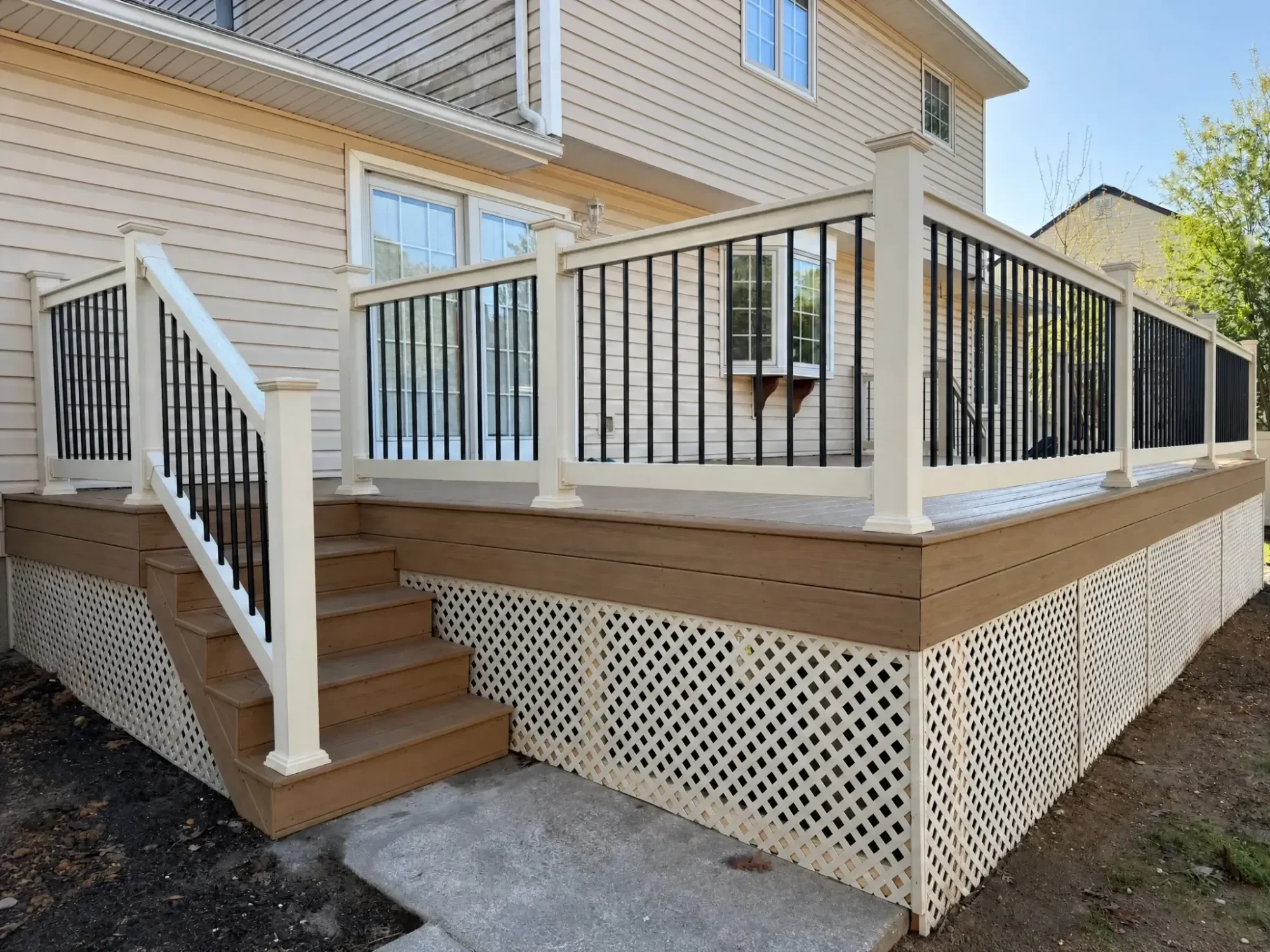
Building a deck in Washington Township requires both zoning and construction approvals. These are handled through the Washington Township Construction Department and the Planning and Zoning Department
Homeowners or contractors typically need to submit construction drawings, a property survey, and application forms before work can begin. Contractors must also carry a valid New Jersey Home Improvement Contractor registration.
Permit costs vary based on project scope. While many deck permits fall in a general range of around a few hundred dollars. We recommend contacting the township directly to verify current pricing and requirements.
Deck footings in South Jersey must extend below the frost line, which is typically 36 inches deep. This requirement helps prevent movement caused by freezing and thawing cycles.
Proper footing depth is essential for long-term stability. Inadequate footings can lead to shifting, settling, or structural issues over time.
Some very small decks may qualify for exceptions depending on size and attachment method, but most permanent structures must meet full footing requirements.
Before any excavation begins, New Jersey law requires a call to NJ One Call to mark underground utilities. This process typically requires at least three business days' notice.
Utility marking helps prevent damage to gas, electric, water, and communication lines. It is a required step for any project involving digging.
Many contractors handle this process as part of the project, but homeowners should confirm this during the planning phase.
If your property is part of a homeowners' association, additional approval may be required before construction begins.
HOA guidelines often cover deck size, materials, color, and placement. Requirements vary by community, so it is important to review your association’s rules early in the process.
Not all properties in Washington Township are part of an HOA, but if yours is, this step can affect your project timeline.
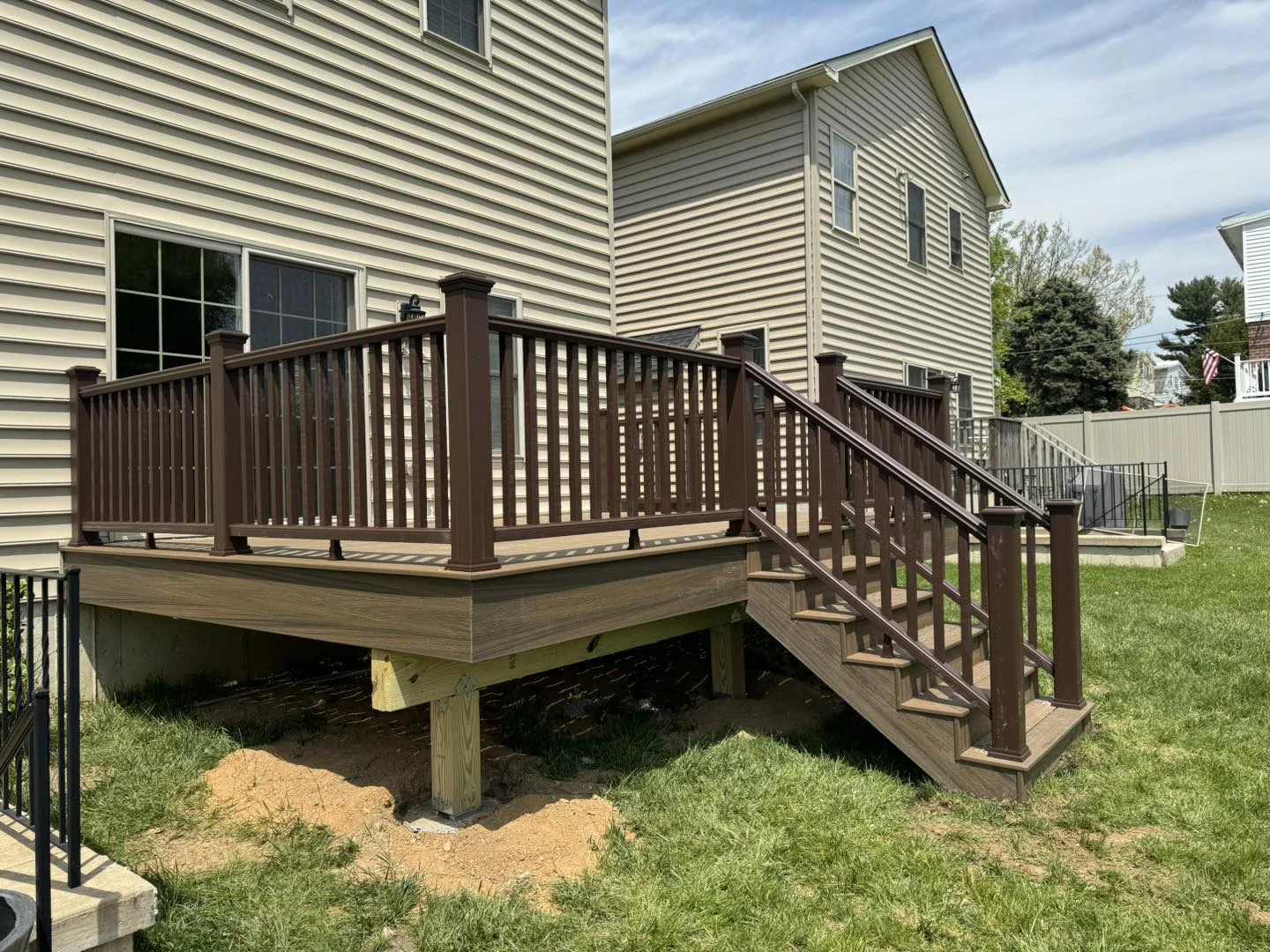
Make sure each quote reflects code-compliant footings and railing systems. Missing structural elements can lead to inaccurate pricing and potential issues during inspection.
Some contractors include permitting, HOA coordination, and NJ One Call notifications, while others leave it to the homeowner. Clarifying this upfront helps avoid delays.
If composite decking is part of the quote, confirm which product line is being used. Material tiers can vary in price, warranty coverage, and appearance.
In New Jersey, contractors must hold a valid Home Improvement Contractor registration. Verifying this ensures the company meets state requirements.
Planning a deck project starts with understanding your space, your goals, and the conditions on your property.
Tri-State is an owner-operated company with more than 20 years of experience building decks in South Jersey. All projects are completed under NJ HIC #13VH13604500 and include a 3-year workmanship warranty.
You can view past work on our projects page and read feedback from local homeowners on our reviews.
If you are considering a new deck or replacing an existing one, you can request a consultation through our free estimate page.
