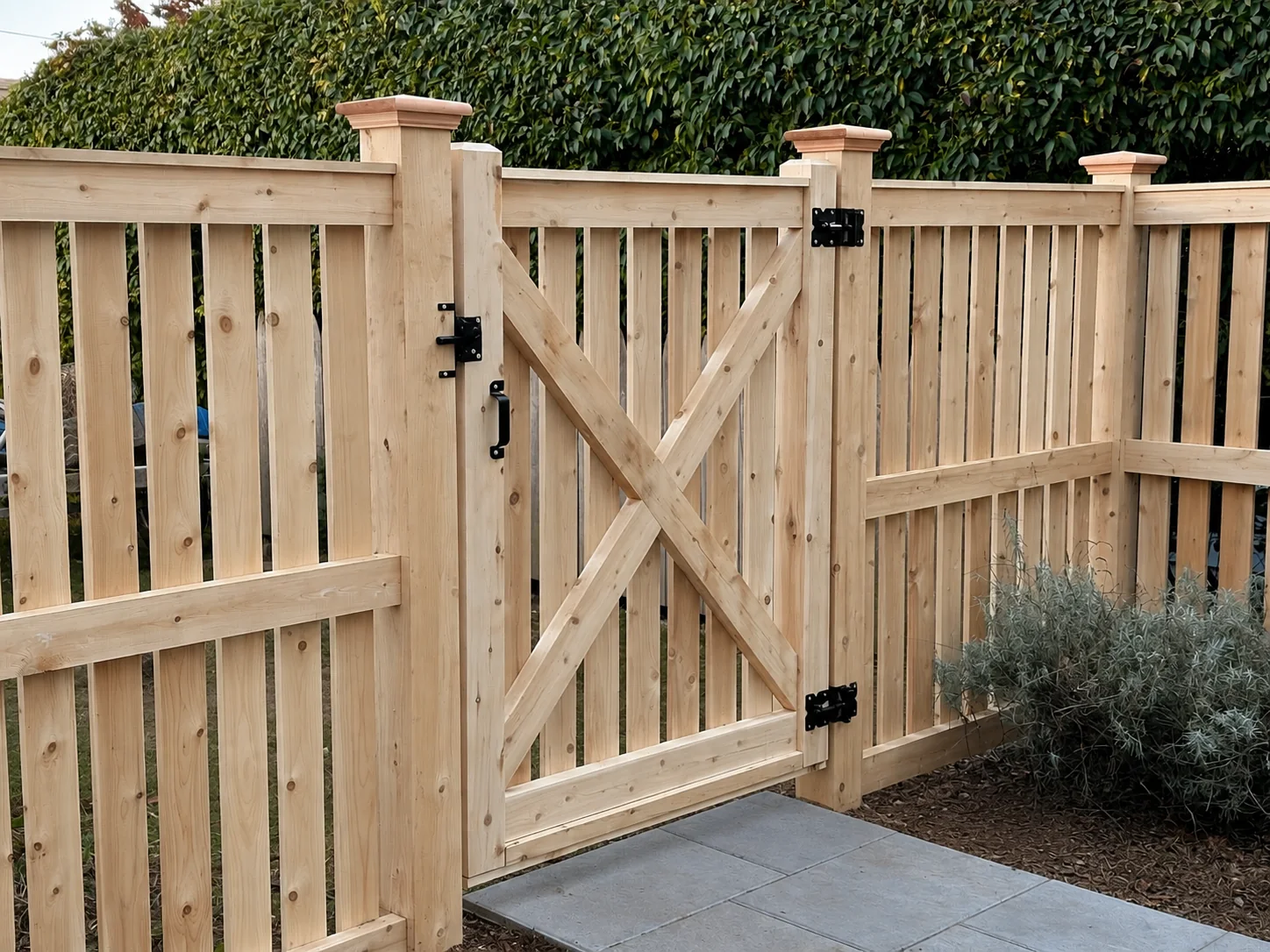
Short answer: no, in most cases. New Castle County's fence permit exemption covers nearly every residential fence, with two real exceptions: pool barriers and fences built in a mapped floodplain, both covered below. The exemption comes from Substitute No. 1 to Ordinance No. 24-059, which amended UDC §40.03.410, approved by County Council Aug. 27, 2024, and signed by the County Executive Sept. 3, 2024. The county's official fence FAQ document spells out the exemption in plain terms.
Zoning rules on height, materials, and visibility still apply to every fence, permit or not, covered next.
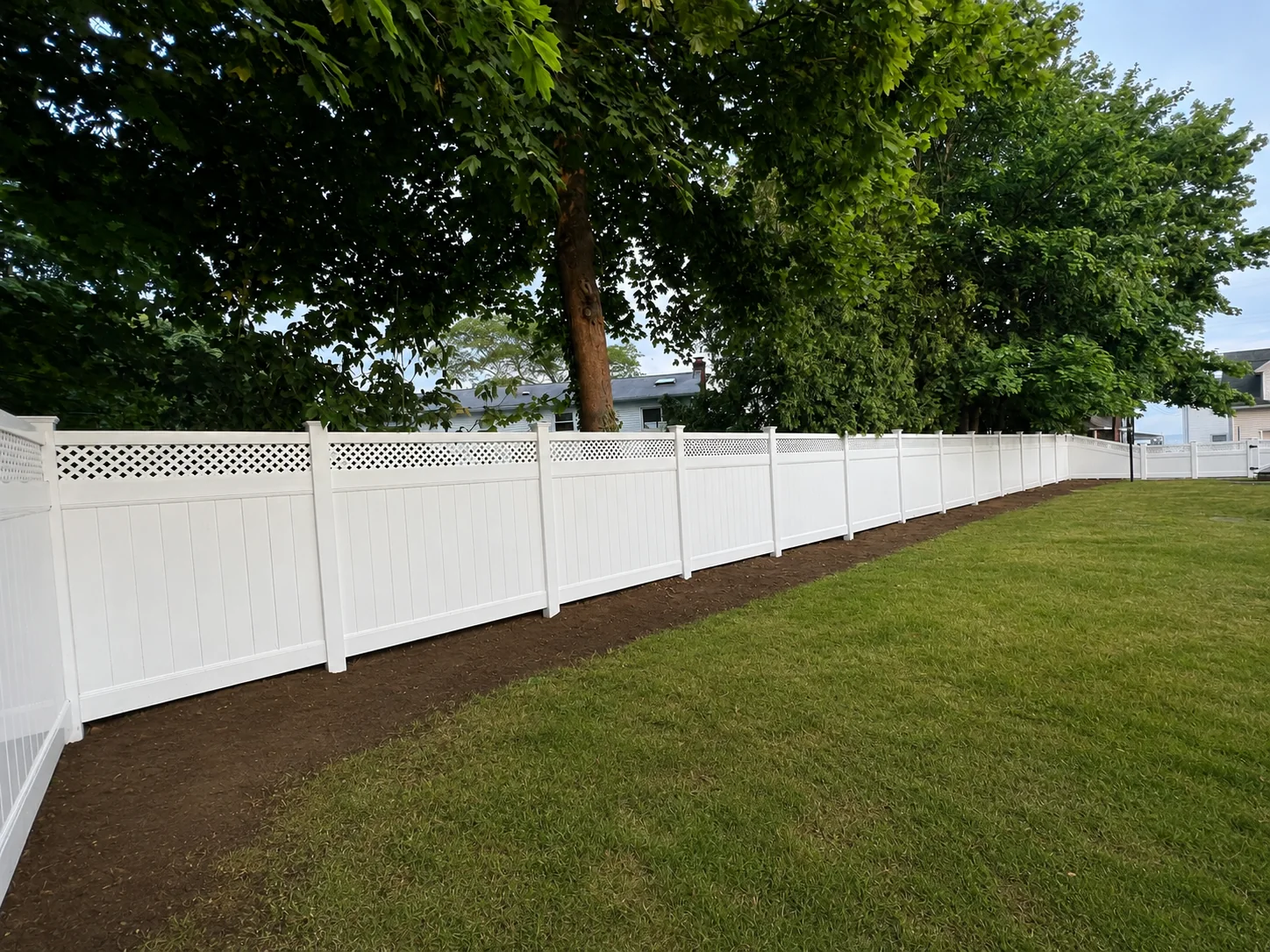
White vinyl privacy fence with lattice top enclosing a tree-lined yard in New Castle County, DE.
Permit-exempt does not mean rule-free. New Castle County still enforces height limits, material standards, and visibility requirements, and code enforcement can act on a violation regardless. The New Castle County fencing fact sheet covers these standards, found in UDC §§40.03.410E and 40.04.110H.
Most residential fences can reach 6 feet with standard panels and materials, or up to 7 feet measured from grade where the site slopes or posts extend the frame. NC5, NC6.5, NC10, and NC15 zoning districts are capped at 4 feet in the street yard, the section of yard facing the road. Side and rear yards keep the standard allowance.
Approved materials include wood, brick, decorative masonry, stone, wrought iron, manufactured vinyl, aluminum, and PVC. Sheet or corrugated metal, plywood, and CMU block are prohibited, except where CMU forms a retaining wall. Materials not designed for fencing, spikes, and barbed or razor wire are also prohibited residentially.
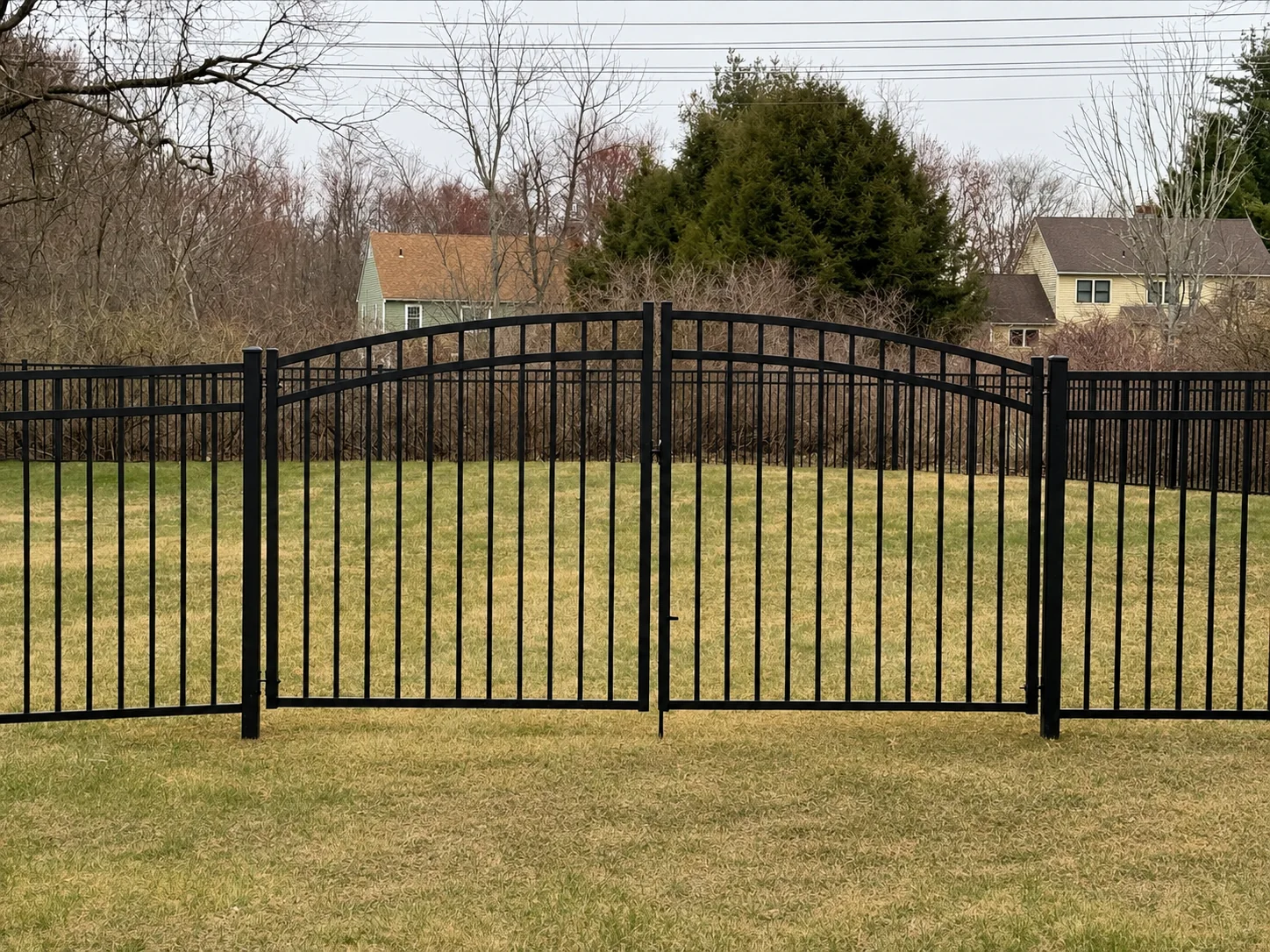
Corner lots require a clear visibility triangle where two street lines meet, kept free of fencing for 25 feet along each street line, a sightline safety rule that applies regardless of the height otherwise allowed. Open materials handle it well: an aluminum fence for corner lots keeps the sightline clear while still marking the property line.
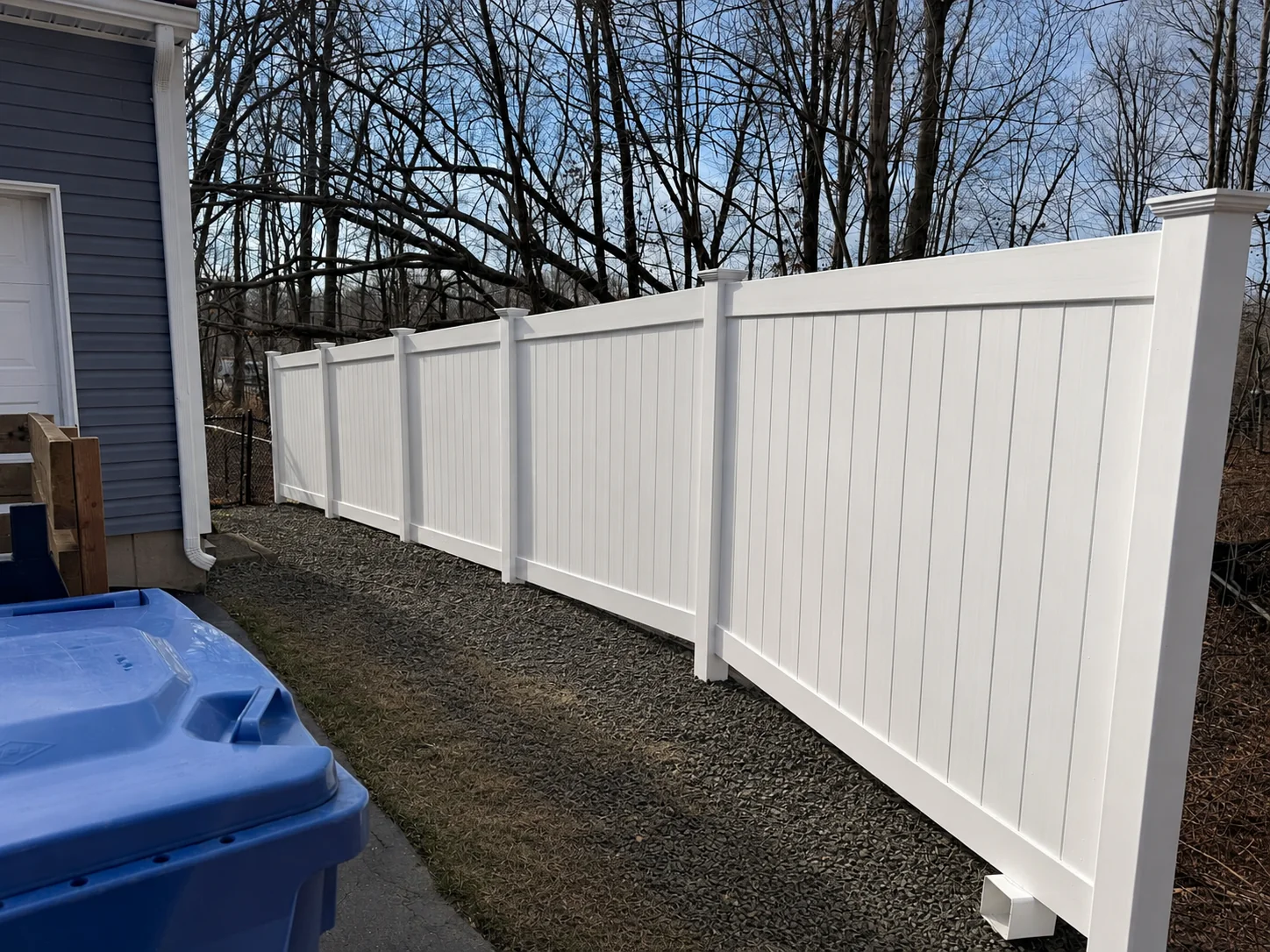
Two situations trigger an actual fence permit in New Castle County: a pool barrier, and a fence on a property inside a FEMA floodplain. Pool barriers fall under New Castle County Code Chapter 6 §305 and the 2024 adoption of the International Swimming Pool and Spa Code. Floodplain fences follow a separate set of standards.
The official pool barrier requirements PDF lays out the specifics adopted with the 2024 ISPSC. The barrier must stand at least 48 inches above grade, with no more than a 2-inch gap to grade (4 inches over a hard surface unless it's pool mesh). No opening can pass a 4-inch sphere, vertical member spacing can't exceed 1¾ inches, and chain-link openings cap at 1¾ inches unless slatted. Gates must self-close, self-latch, swing away from the pool, and have a release at least 54 inches high, or be recessed at least 3 inches poolside with no opening over ½ inch within 18 inches. A separate pool permit also applies whenever a pool, spa, or hot tub is 24 inches or taller, or has its own circulation system. Full details are in the International Swimming Pool and Spa Code.
If it does, any fence there must comply with UDC Article 10 and needs its own floodplain permit, separate from the pool barrier process above.
County rules do not override your homeowners association or deed restrictions. A fully code-compliant fence can still violate your HOA's covenant, a separate approval process Tri-State handles directly for customers, covered further down. You can read more fence FAQs on this.
Yes, if your property sits inside either city rather than unincorporated New Castle County. Both run their own process.
Wilmington's Land Use and Inspections Department handles fence permitting inside city limits, at 302-576-3030 or [email protected]. We couldn't verify fees, height limits, or timelines from a primary source, so contact the department directly. Outside city limits, our Wilmington Delaware fence company page covers the surrounding area.
Newark regulates fences under its own zoning code, Chapter 32, through its Code Enforcement Division. As with Wilmington, contact the city directly for current fees or timelines. We also provide fence installation serving Newark.
Before any fence goes in the ground, an 811 locate request comes first.
Tri-State Fence & Deck has been owner-operated and family-run for more than 20 years, led by Eriberto Torres Sr. and Jr., with a 3-year workmanship warranty on every installation; see our workmanship warranty details.
On New Castle County projects, we file the permit application when one applies, prepare the HOA architectural submission, and coordinate the 811 locate. Our residential fence installation services page covers the scope.
Since we handle that paperwork, you don't have to track down permit offices or HOA committees yourself. Request your free fence estimate to see what that looks like.
Between zoning limits, pool barrier code, HOA covenants, and 811 timing, a New Castle County fence project involves more moving pieces than the permit exemption alone suggests. Tri-State handles the permit, HOA submission, and locate as part of the installation.
Start your fence estimate , and we'll tell you exactly what your property needs before any posts go in the ground.
