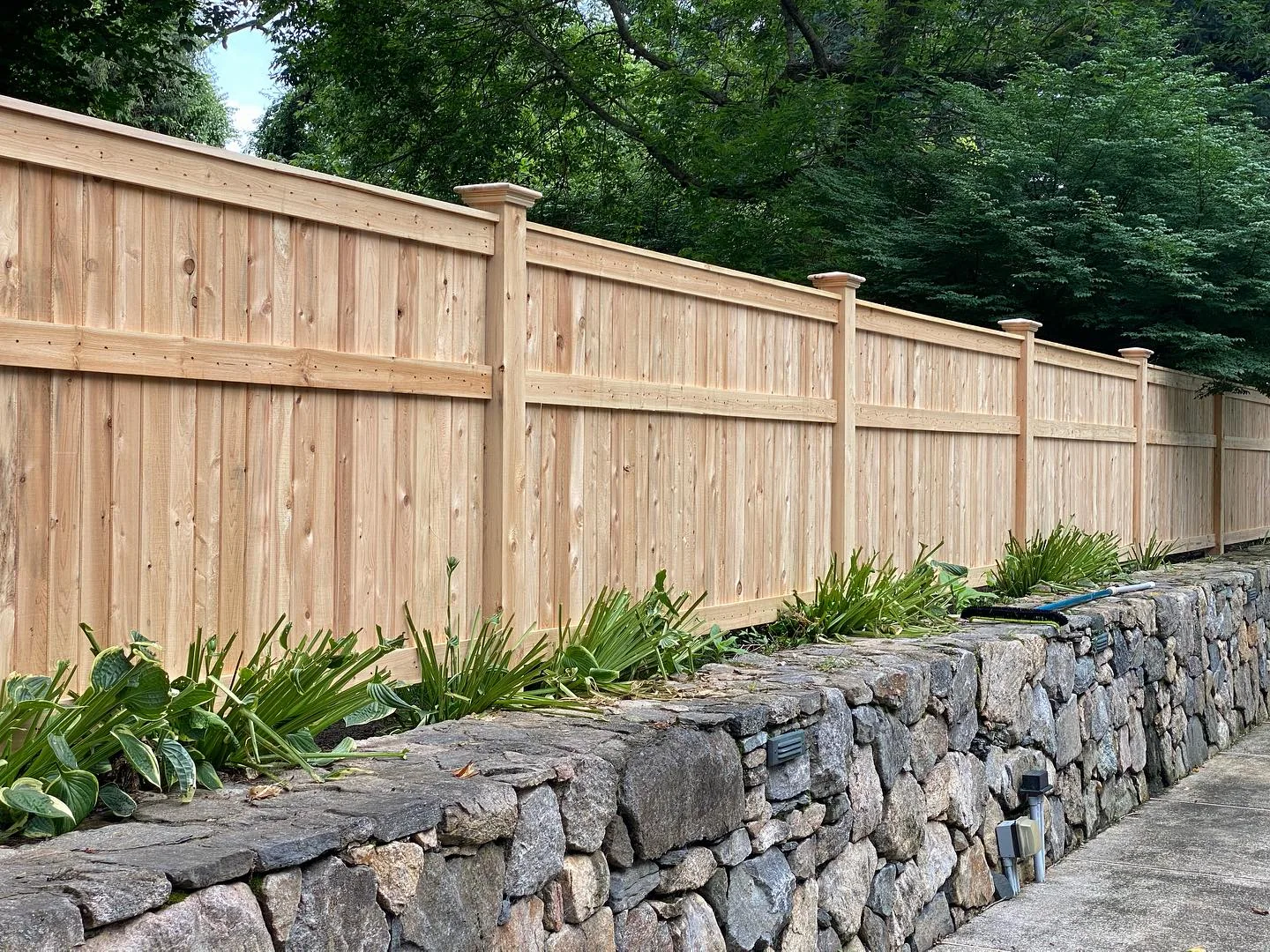
Most homeowners in Gloucester, Camden, and Burlington counties often want to know what actually holds up here. South Jersey sits in a humid subtropical climate with 40 to 51 inches of rain a year, real freeze-thaw winters, and township rules that cap most residential fences at six feet. Not every material handles those conditions the same way, and not every installation accounts for them properly.
This is a practical breakdown of the best privacy fence for South Jersey backyards — the four materials worth considering, how the local climate changes the answer, and what the permit rules require before the first post goes into the ground.
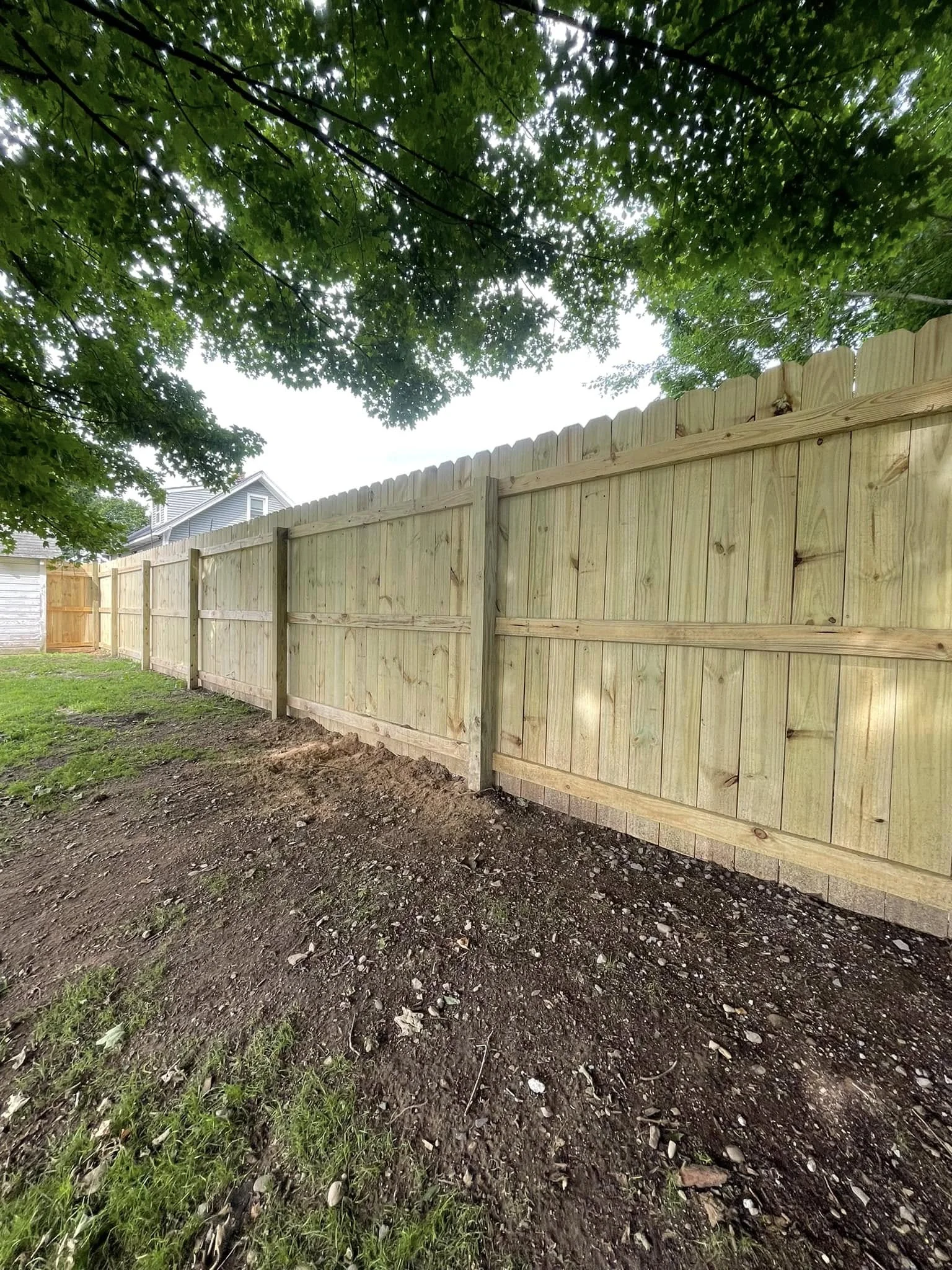
There are dozens of privacy fence products on the market, but four categories make the most sense for South Jersey homes.
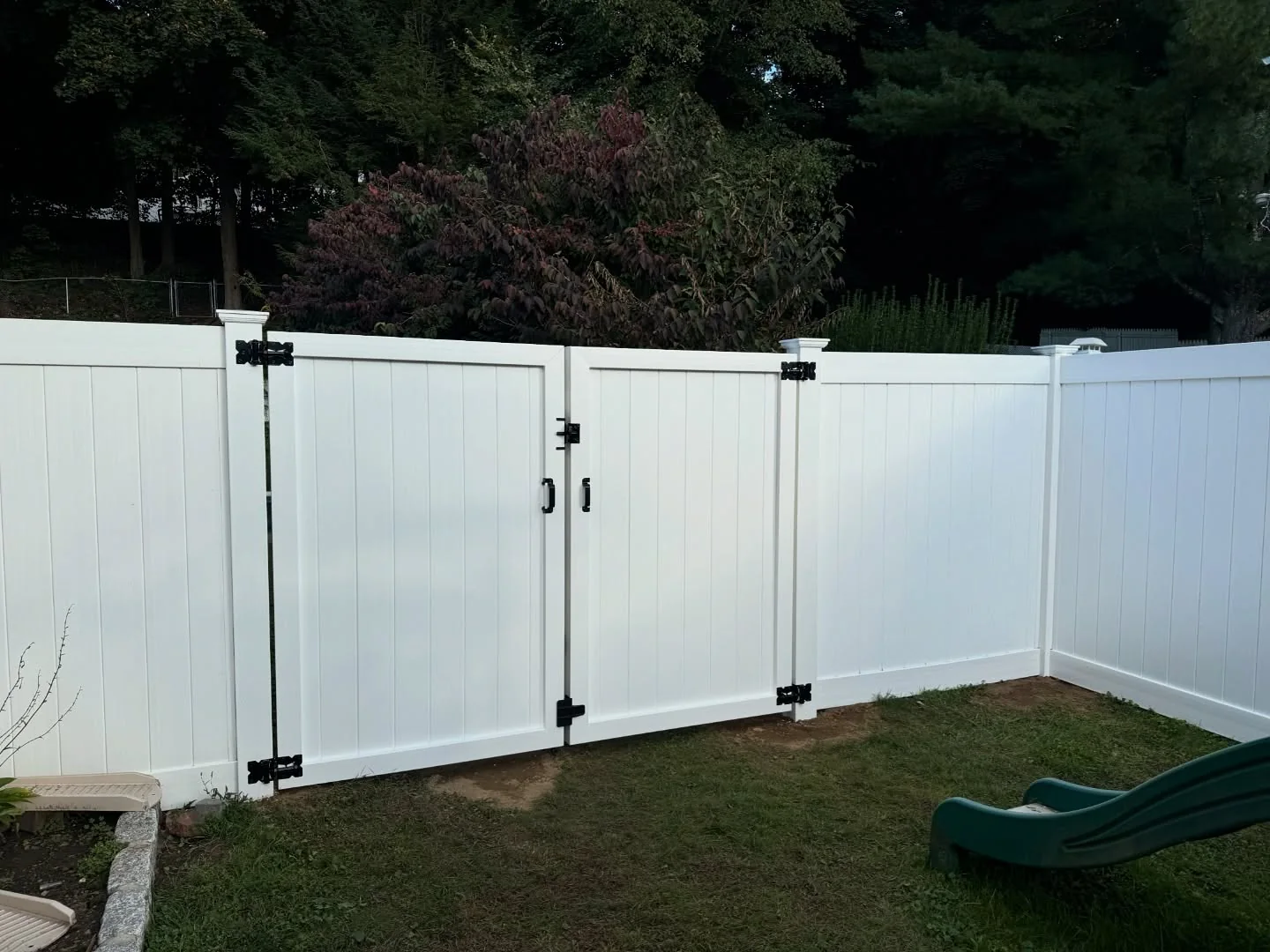
Vinyl is what most of our customers choose, and it is usually the strongest overall fit for this climate.
A quality vinyl privacy fence uses PVC panels with a minimum wall thickness of 0.100 inches for residential installs and 0.120 inches for premium-grade installs. The material also needs UV inhibitors; without them, panels can yellow and become chalky within a few years.
Vinyl handles South Jersey humidity better than any wood product, requires no paint or stain, and can usually be cleaned with a garden hose. For homeowners who want privacy without ongoing maintenance, vinyl is often the easiest long-term choice.
See our Vinyl fence installation services
Cedar is the preferred wood option. Pickets should be #1 grade or better, and any pressure-treated lumber that touches the ground should be rated UC4A or UC4B for ground contact.
Wood delivers the classic fence look, but it comes with a maintenance schedule: staining or sealing every two to three years, tightening hardware, and replacing damaged boards when needed.
Homeowners who want the character of cedar and are willing to maintain it usually love the result. Homeowners looking for an install-and-forget fence generally do better with vinyl.
See our Wood fence installation services
Aluminum privacy panels are more of a semi-private option than a full visual barrier.
The material is powder-coated to AAMA 2604 specifications, which helps it hold up through South Jersey summers and winters. It works especially well around pools, along front property boundaries, and in HOA communities that discourage solid six-foot walls.
If complete screening from a neighbor is the goal, aluminum is usually not the first choice.
Check out our Aluminum fence installation service
Composite panels combine recycled wood fibers with plastic. They offer a look that sits between vinyl and cedar, with a price point that is generally above both.
For homeowners who want a wood-grain appearance without the maintenance requirements of real wood, composite can be a legitimate alternative, although the panels are heavier and the style selection is typically narrower than vinyl.
South Jersey's humid subtropical climate brings 40 to 51 inches of annual rainfall and regular freeze-thaw cycles from late fall through early spring. Those conditions punish fences that were built for a drier climate.
Two installation details matter more than the material itself.
Post holes should be at least 36 inches deep so the footing sits below the local frost line. Posts installed too shallow will heave upward when the ground freezes and settle back down when it thaws, eventually leaving the fence line uneven.
Hardware should be hot-dipped galvanized to ASTM A153 standards or better. In South Jersey's humidity, inexpensive uncoated screws and nails deteriorate quickly, often affecting the fence too.
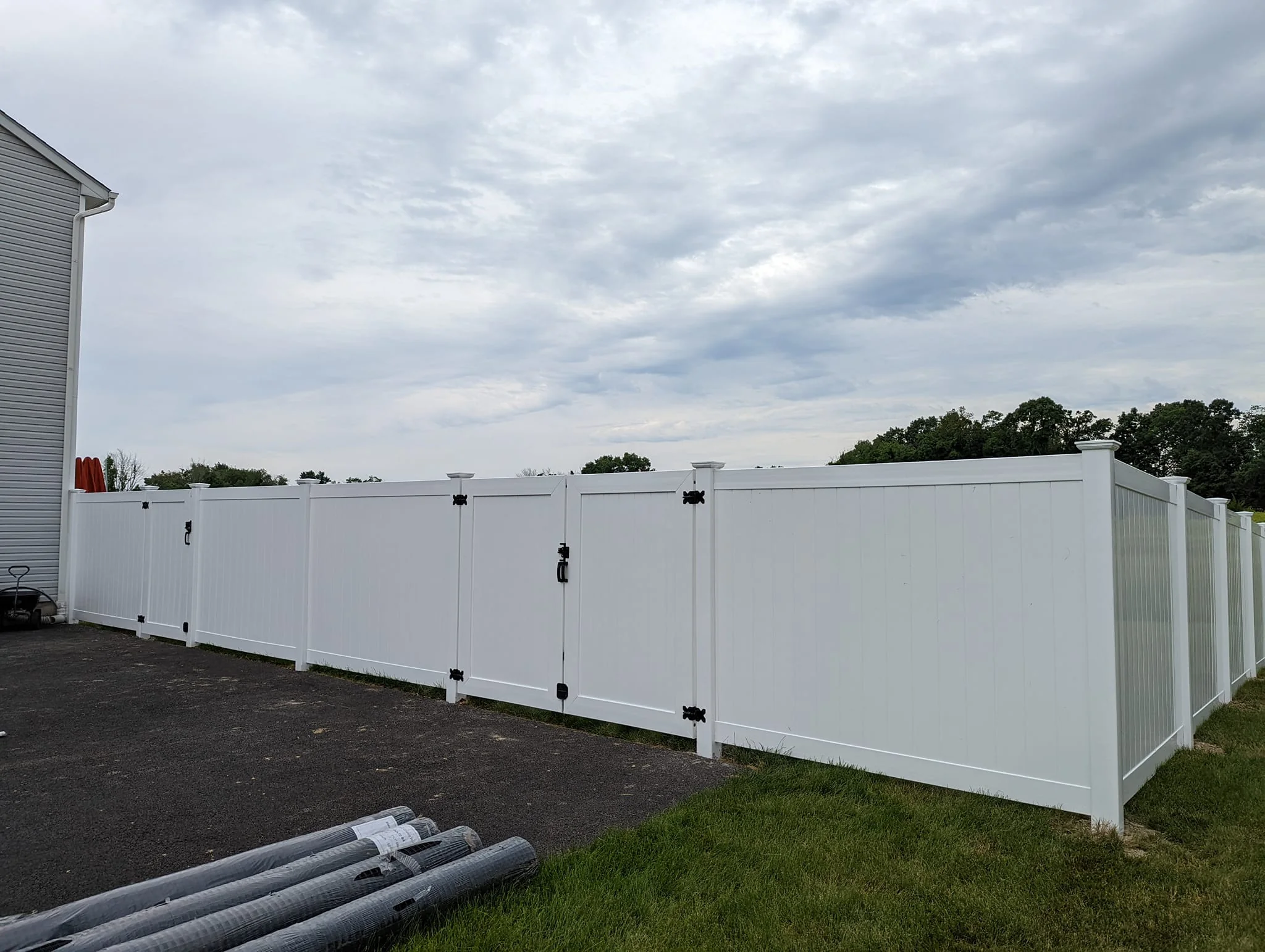
In most South Jersey municipalities, six feet is the practical maximum, so most backyard privacy fences end up being six-foot installations.
Four-foot semi-private panels make more sense in a few situations:
Style matters less than most homeowners think.
Communities such as Four Seasons at Weatherby, Beckett, and The Ridings at Woolwich typically require architectural approval before the permit application is submitted. We handle that submission as part of the project.
Not sure what your township or HOA allows? Get a free estimate and we’ll review the permit and HOA requirements before the crew arrives.
Six feet is the maximum in most South Jersey townships, including Washington Township. Corner lots and pool enclosures may have additional restrictions, so it is worth confirming the exact limit before ordering materials.
Yes. Washington Township requires a zoning permit for every fence, and a construction permit if the fence also functions as a pool barrier. A licensed land survey showing the fence location and height must accompany the application.
Vinyl generally performs best in South Jersey humidity and requires the least maintenance. Cedar is the strongest wood option for homeowners willing to stain or seal it every few years.
At least 36 inches deep. Posts installed shallower than that are more likely to move during freeze-thaw cycles.
Yes. New Jersey requires an NJ 811 utility mark-out at least three business days before digging.
Tri-State Fence & Deck has installed thousands of fences across Gloucester, Camden, and Burlington counties over more than 20 years.
Call (856) 230-7082 or request a free estimate. We’ll walk the property, review your township and HOA requirements, and give you a written quote on the spot.
Tri-State Fence & Deck Inc.
591 Mantua Blvd Suite 201
Sewell, NJ 08080
(856) 230-7082
